

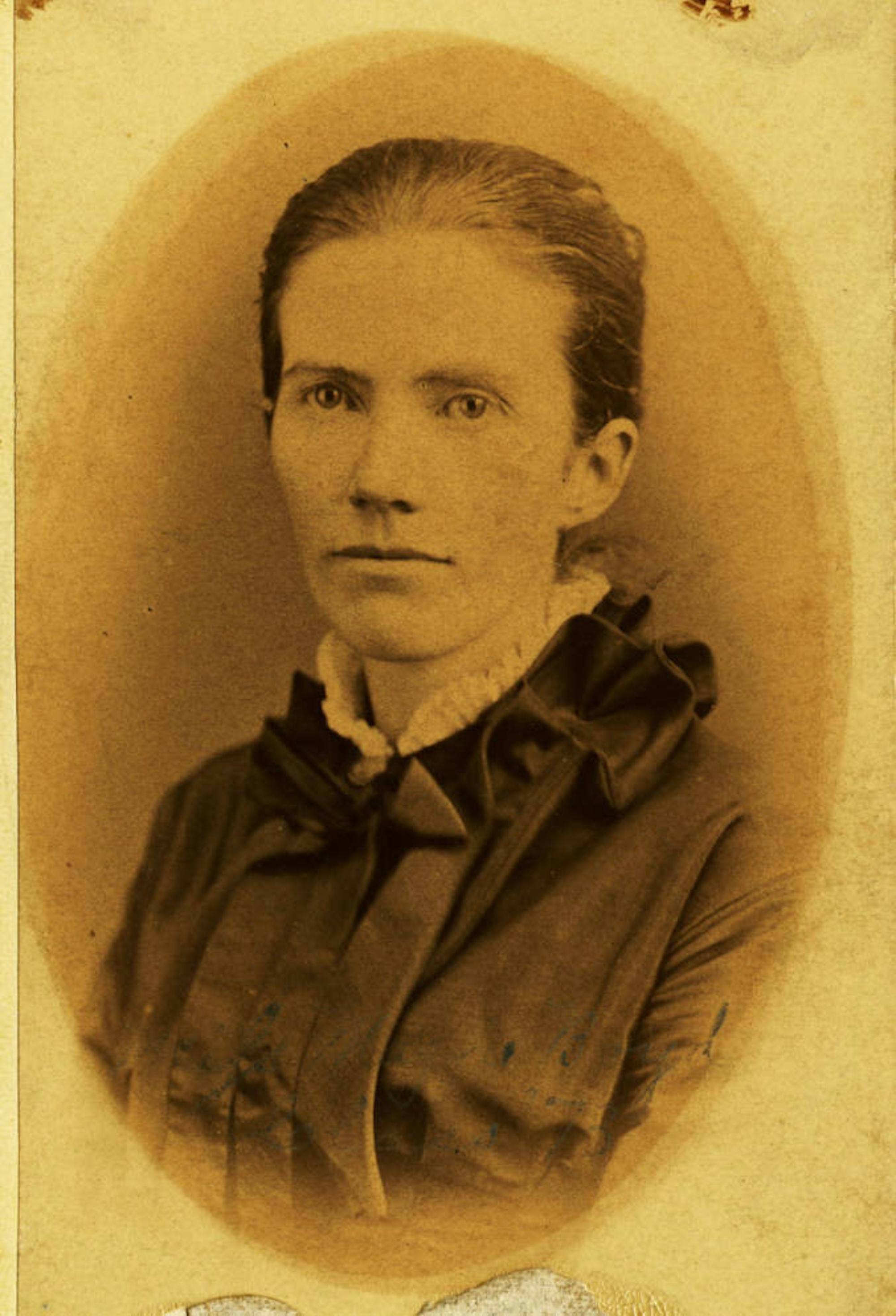
Since the first woman enrolled at Ohio University, the legacy and rich history of women in the university has inspired many to support their dreams and become the best academic versions of themselves. March is Women’s History Month, and there are endless women to recognize and support during this time.
Margaret Boyd was enrolled with the name “M. Boyd” in the 1870s because it was "unacceptable" to co-educate men and women, according to “Ohio University in Perspective” by Charles J. Ping. Boyd graduated in 1873 along with five other male students, and earned her master's in 1876.
Ping said Boyd “opened the doors” for women at OU, and her commitment to her education brought in many more women in the future. Only 40 years later, in 1916, Martha Jane Hunley Blackburn graduated, making history as the first Black woman to get her degree from Ohio University.
When William Henry Scott, former OU president, began to reorganize the faculty in 1881, he realized the women attending the university needed a woman teacher. He chose Miss Cynthia Weld, a New Yorker with “high academic qualifications and personal qualities for the position,” according to Thomas Nathanael Hoover’s “The History Of Ohio University.”
Another notable leader at the university was Irma Voigt, who became the first dean of women in 1913. She mentored hundreds of young students, whom she affectionately called “my girls,” according to the OU website, and encouraged them to dive into their studies.
Voigt also taught students to give back to the community and opened her arms to anyone needing advice or companionship. In the 1917 “Athena” yearbook, Voigt’s “Advice to the Love Lorn,” she wrote to several students and professors, who were looking for Voigt’s perspective. Also in the 1917 “Athena,” a page was dedicated to Voigt.
“The improvements in the environment of Ohio girls which have been consummated through her efforts, have been little short of wonderful,” the yearbook page said. “Dean Voigt is versatile, aggressive and her courage is indomitable. She is admired by all the girls and respected by all the men.”
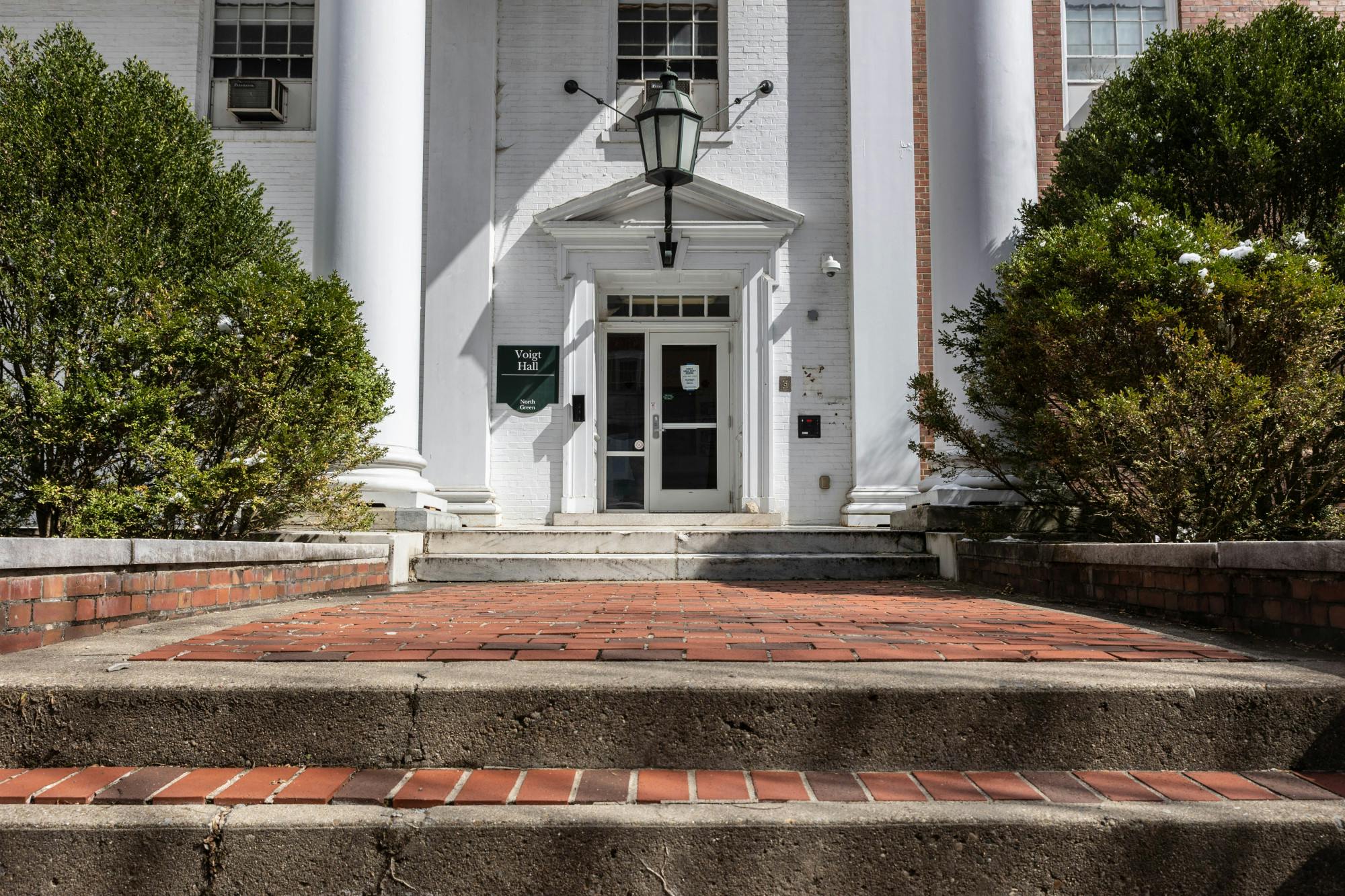
Voigt Hall opened in 1954, a year after her death, and is the only all-girls residence hall on campus today. Abby Conn, a freshman studying social work, lives in Voigt and said the dorm is a quiet, comfortable place to live. Some say Voigt resides in the hall now as a spirit, and Conn said she sometimes hears a door slam, but believes it is simply the residents.
The OU 2024-2025 class was roughly 58% women, a large difference from 1899-1900, when 36% of graduates were women, according to the university’s enrollment history. In 1905, President Alston Ellis declared the housing situation was urgent, especially for the growing number of women students, according to “The History of Ohio University.” The university received $45,000 from the legislature to build a women’s dormitory, which would later be named after Boyd in her honor. Today, Boyd Hall remains a co-ed dormitory and dining hall on campus.
This is OU’s first Women’s History Month since the removal of the Women’s Center due to Senate Bill 1, and many events celebrating the month were organized through the center. Some students mourn the loss of the center, while others do not see the purpose in its removal.
“Literally, what is the point of it being taken away?” Conn said. “It's supposed to help women and celebrate women. I don't know, I don't think there's any good in doing that.”
Sophia Schroeder, a sophomore studying biological sciences, said her sorority, Alpha Omicron Pi, has been providing resources and seminars for Women’s History Month. She said she would love to see more recognition from the university during Women’s History Month in the future, as she feels like she only got information about it from her sorority.
“I think it's important that the university takes steps to make sure that women feel comfortable and have a space where they can go,” Schroeder said. “It's nice to have places that are exclusive for women. That's why I like being in a sorority.”
This year, University Libraries is having an Art + Feminism Wikidata edit-a-thon, hosted by manuscripts archivist Greta Suiter.
The event will consist of people working to include data on underrepresented female and non-binary artists. People need to create a Wikidata account before the event, so they can jump into the work.
“80% of Wikipedia editors are men,” Suiter said. “So there's a huge disparity there,”
Suiter said the Art + Feminism initiative is working towards gender equality by encouraging women to come help add more data on women.
This year, they are focusing on paper artists, and their focus this edit-a-thon is to add data about Sara Gilfert, a fiber and textile artist and papermaking champion. They will be going through their recently donated archives by Gilfert, to honor and celebrate her work.
Gilfert received her Bachelor of Fine Arts in sculpture in the Cutler Program in 1970, and went on to found Paper Circle in 2002, a non-profit paper-making studio, teaching many the skill and art of papermaking. Suiter said a mentee of Gilfort will be present at the event to discuss the paper-making process, and the group will look at photos of Gilfort’s work, including her giant suits made from paper.
For those interested in the Wiki edit-a-thon, the event is held Wednesday from 4 p.m. to 6 p.m., in room 319 at Alden Library. To learn more about OU women and their work, visit OU’s page on legacy women promoting education.


