The White House announced Aug. 31 that the U.S. is partnering with Venezuela on an oil deal. The deal allows for the development of 17 untapped oil fields in Venezuela, which contain a proven total of 65 billion barrels of oil, according to a White House fact sheet.
The deal gives the North American Blue Energy Partners, a private oil company, rights to the 17 oil fields. The U.S. was also granted 35% equity in the parent company.
The White House contends that the deal will secure the U.S. “energy dominance for the next century.” Among the promised benefits of the deal, the White House claims the deal will lower gas prices.
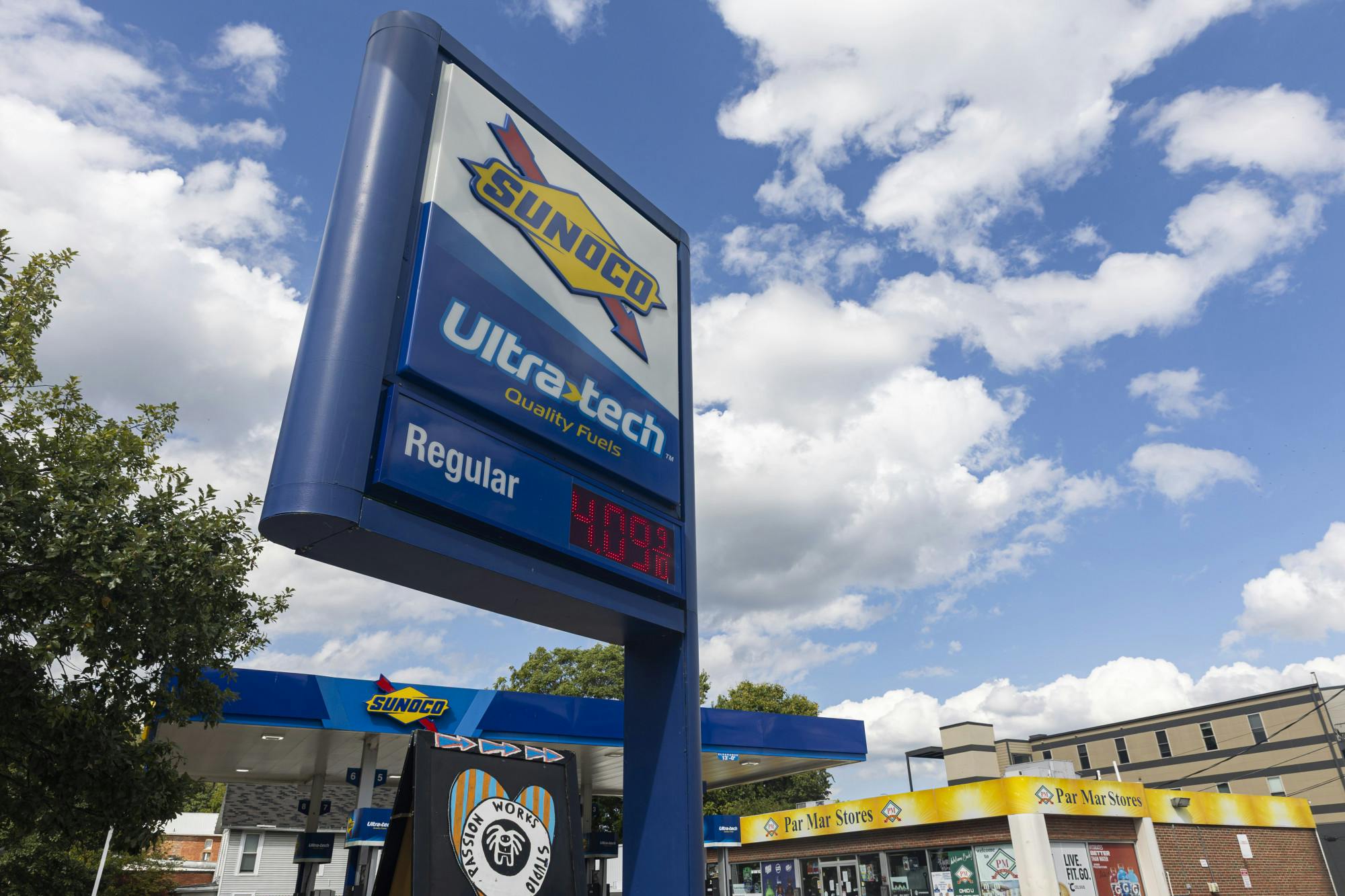
As of Aug. 31, the national price of regular gasoline per gallon was $4.071, according to the U.S. Energy Information Administration.
As of Sept. 7, the average price of regular gasoline in Ohio was $3.9139, up by $0.8736 from a year ago, according to the American Automobile Association. In Athens County, regular gasoline prices averaged $4.062, as of Sept. 7.
Despite government claims gasoline prices will decrease due to the oil deal, experts claim gas prices are unlikely to be impacted for years, according to the Associated Press.
Daniel Karney, an associate professor of economics at Ohio University with a focus on energy and environmental policy, explained that gas prices are unlikely to be impacted by the U.S. deal for about 10-15 years.
“There's a small amount of price variance across location due to transportation costs,” Karney said. “Essentially, the price of oil around the world is highly correlated … policies like this Venezuela oil deal would need to be large enough to impact the global oil market in order to have impacts on prices in the U.S. because the underlying commodity is a global commodity.”
A majority of the Venezuelan oil fields in the deal were initially controlled by China and Russia. Patrick Barr-Melej is a professor of history at OU with a special focus on modern Latin American studies. He commented on the geopolitical implications of the oil deal.
“So there's a bigger geopolitical element here in play, and that is the U.S. government's ongoing efforts to limit Chinese economic, and therefore political influence in the Americas,” Barr-Melej said.
The White House contends that its involvement in Venezuela is a recommitment to the Monroe Doctrine, a policy that claims the Western Hemisphere is within the sphere of interest of the U.S., opposing foreign interference. With the oil deal, the Trump administration argued the value of limiting the influence of Russia and China in Venezuela, according to a White House fact sheet.
“So, this is this renewed effort, right, to push especially Chinese and Russian influence out of the hemisphere,” Barr-Melej said.
The oil deal promises to have strong economic benefits to both countries. The U.S. will be allowed to purchase 20% of the oil from those fields at cost, according to the AP.
Karney also noted the economic impact of the deal for the U.S.
“It turns out that refineries in the Gulf Coast in the United States are uniquely suited to refining this kind of oil,” Karney said. “So, kind of when that becomes online, those refiners will have extra business.”
The development of the oil fields in Venezuela is projected to *bring in billions of dollars in taxes, boost the country’s economy and provide *thousands of jobs.
The White House released another statement Sept. 2, which clarifies that the deal is between a private company and the U.S., not between the U.S. and the interim Venezuelan government.
The White House claimed the deal is a testament to the power of the “America First” foreign policy initiative of the U.S. and said it is a part of the three-phase plan for Venezuela. The plan includes initiating stability, economic recovery and reconciliation, which can eventually lead to a democratic transition. According to the White House, the oil deal is a step in ensuring Venezuela has a stable economy.