

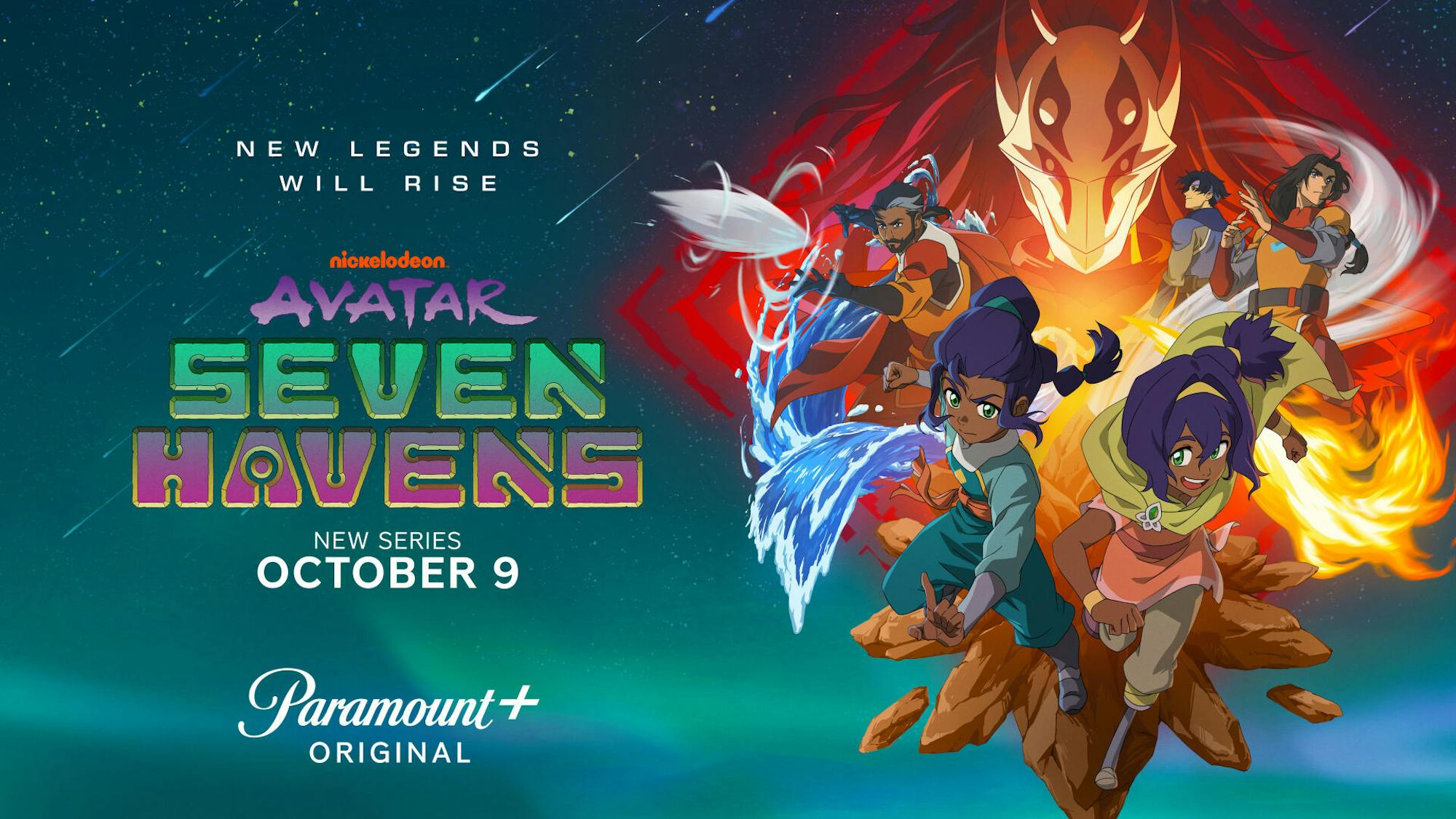
Avatar Studios released the first three episodes of its “The Legend of Korra” sequel series, “Avatar: Seven Havens,” on Oct. 9.
“Seven Havens” takes place 200 years after the end of “ The Legend of Korra.” After a worldwide apocalypse decimated the planet, humanity was driven back and forced to take refuge in seven cities spread across the globe. Now the few survivors do anything they can to survive in a world filled with environmental cataclysms. Those who live in the Seven Havens have also learned to hate the Avatar, blaming the once legendary protector of the world for its current state and preparing every day to eliminate the Avatar should they ever reemerge.
Lucky for those in the Havens, the Avatar has not been seen since the death of Avatar Korra centuries ago. Unfortunately for them, now there are two avatars, in the form of twin sisters Pavi and Nisha. With the help of the secret organization, the Order of the White Lotus, the sisters work to find a way to save the Seven Havens from disaster while also trying to discover their forgotten past.
Where the previous shows utilized historical East Asian-inspired designs for the four elemental nations, “Seven Havens” largely forgoes this visual language in favor of a futuristic, almost alien design. The world looks completely unrecognizable compared to the previous shows, trading the earth-esque environs for a storm-filled desert with strange plants and oddly-shaped rock formations.
The designs of the characters themselves also lack much of the same flair the previous shows prided themselves on, instead utilizing an angular, minimalist design for a majority of the benders appearing. While there is still clear Asian inspiration in some aspects of the cityscape the first few episodes take place in, most parts of the world still feel distinctly different from everything else in the “Avatar” franchise.
The music is also noticeably futuristic compared to earlier projects. The soundtrack utilizes techno and synth sounds in a majority of backtracks for different scenes. The audience can occasionally hear more classical instruments in scenes revolving around Pavi, but the majority of moments still have a futuristic feel because of the music.
While “Seven Havens” may not look or sound like previous “Avatar” projects, it still certainly feels like an “Avatar” series in a narrative sense. The way the story progresses and the mannerisms of the character immediately remind the audience of characters in projects of the past.
Pavi and Nisha, for example, feel almost like stand-ins for the two previous protagonists. Pavi is akin to Aang in the early episodes of “The Last Airbender,” being a young child afraid of their role as the Avatar and wanting to simply enjoy their nomadic lifestyle without the weight being the Avatar brings. Nisha, inversely, after living in a White Lotus compound for years, is all too keen to take up their role as the Avatar just like Korra. The two sisters have an oftentimes sweet dynamic together, but their vastly differing opinions on being the Avatar lead to them butting heads occasionally.
One thing immediately sticking out about the first three episodes from a storytelling aspect was how the show handled Korra’s legend, pun intended. The world's hate of the Avatar, especially of Avatar Korra, read almost immediately as a reflection of the conversations the “Avatar” fanbase has been having about Korra for years. During “The Legend of Korra” airing and in the years following, Korra was constantly compared to Aang and received ample hate from many parts of the community. Despite the show and the character’s good reception from critics and the wide audience, Korra was remarked as the worst Avatar and a failure compared to her predecessors.
Despite the show immediately painting Korra in the light her detractors painted her in, blaming her for the apocalypse the world now faces, “Seven Havens” seems to be setting up a bait-and-switch regarding the truth of Korra’s legacy. With how much the show pounds into the audience the apocalypse is Korra’s fault, it’s not hard for the thought to emerge in the audience what the world knows may not be the whole truth. With 10 episodes still left to air in the current season, it is possible the coming episodes may reveal Korra was not nearly as bad as how the world or the audience seem to depict her as.
With its first three episodes, “Seven Havens” puts itself in a solid spot to inherit the legacy of the “Avatar” franchise. Despite the immediate whiplash of the futuristic design the series utilizes, the core of the previous series has its moments to shine. Fans can hope these next 10 episodes have more such moments and the series can become a worthy successor to “Avatar: The Last Airbender” and “The Legend of Korra.”
Rating: 4/5


