

By Isabella Ardetto
Review contains spoilers for “Avengers: Endgame Encore.”
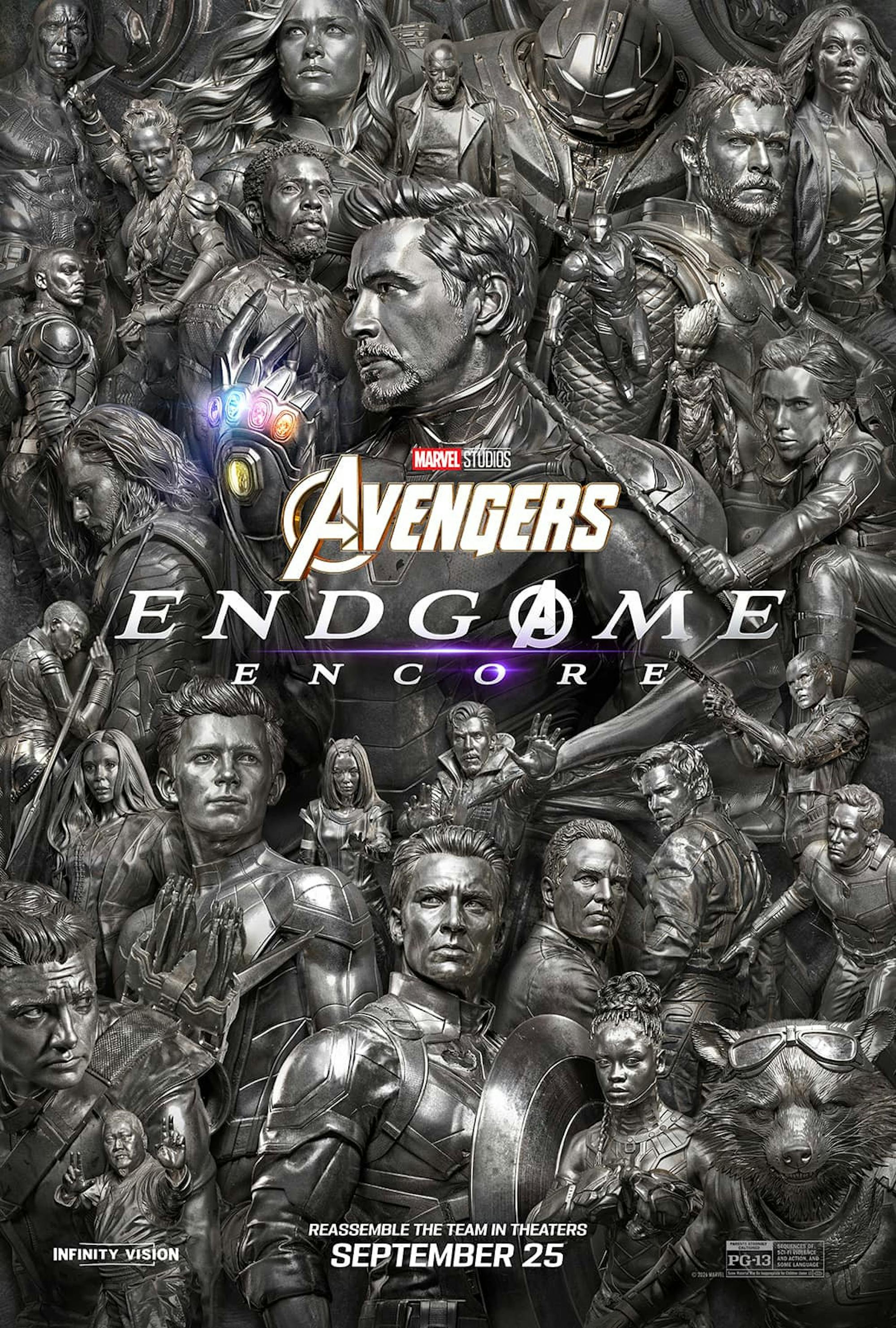
For years, “Marvel” fans have argued over Steve Rogers’ decision to go back to the past and what it really meant for the MCU. “Avengers: Endgame Encore,” which hit theaters on Sept. 25, has now given that debate new life, and the answer could shape everything in the highly anticipated “Avengers: Doomsday.”
The theatrical re-release of the 2019 blockbuster added four scenes that connect the end of the Infinity Saga to “Doomsday,” ranging from an unexpected visitor at Steve and Peggy’s door to a chilling glimpse of universes collapsing across the multiverse. Disney’s official announcement introduced the re-release as a way to build a bridge between the two films though material shown varied by screening format.
The most consequential addition arrives at the end of “Endgame,” interrupting what once felt like the definitive conclusion to Steve Rogers’ story. As Steve (Chris Evans) dances with Peggy Carter (Hayley Atwell) in the past, a knock sounds at the door. As Steve slips away to hide, Peggy answers the door to find Loki (Tom Hiddleston) on the other side, and he delivers an ominous message offering help to both Peggy and Steve.
The scene cuts away before he explains himself, leaving several questions unanswered. The scene raises questions about why Loki would seek out the retired Captain America, why Steve feels the need to hide and whethere this is the God of Mischief or the God of Stories version of Loki seen at the end of “Loki” season two.
MCU director Anthony Russotold GamesRadar+ that this moment is where “Doomsday” was born, which gives Steve’s ending a very different weight. His choice of a personal life over another fight was once the emotional payoff of his entire journey. Now it may be tied to the chain of events threatening the multiverse itself. It’s still unclear whether Steve’s decision directly caused the crisis or simply left him standing in its path, but Loki’s appearance now suggests the quiet life he and Peggy built won’t stay quiet for much longer.
The new footage also showed another glimpse of Doctor Doom (Robert Downey Jr.), the new looming threat for the MCU. In a scene shown in select premium-format screenings, Bruce Banner (Mark Ruffalo) is isolated in an underground facility, experimenting with ways to keep the Hulk under control, most likely following the events of what happened in “Spider-Man: Brand New Day.”
Doom suddenly appears and announces, “I am here to collect you.” Green energy fills the frame, the Hulk can be heard roaring, and then Banner disappears seemingly taken by Doom. Why Doom wants Banner, or the Hulk, is yet to be seen but the comics offer an intriguing clue. In "The Incredible Hulk" #143, Doom captures Banner and attempts to use a device to bring the Hulk under his control, in order to use Banner’s alter ego as a weapon to help him dominate the world.
Of course, that storyline does not confirm that the MCU will follow the same path, but it does show an established history between the two characters that may be touched on in “Doomsday.” Doom is a brilliant scientist in his own right, as well as a formidable sorcerer, but Banner’s understanding of gamma radiation is just as valuable to him as Hulk’s destructive power. If Doom is preparing for a multiversal war, Banner is a prime addition to Doom’s army.
Another premium-format scene showed just how big the timeline threat facing the MCU is. At the Time Variance Authority, Mobius (Owen Wilson), Ouroboros (Ke Huy Quan) and Casey (Eugene Cordero) watch helplessly as universes collapse and vanish, the destruction speeding up until thousands have been wiped out.
As Disney’s coverage of the new footage explained, the scene depicts a catastrophe spreading throughout the multiverse. It also helps explain why “Doomsday” will bring together heroes from different realities, including the Avengers both new and old, the Fantastic Four and the X-Men.
The footage also raised questions about what Doom’s role in the collapse. He could be responsible for accelerating the incursions, attempting to exploit the destruction or pursuing his own solution to a crisis that threatens every reality. The scene does not establish which possibility is correct, but it does place Doom’s arrival against a backdrop of extraordinary instability never seen before in the MCU.
Finally, a post-credits sequence drew a direct visual parallel between Doom and Tony Stark. The familiar sound of metal hammering, associated with Tony constructing his original Iron Man armor, now accompanies footage of Doom forging his mask. The connection is difficult to ignore, particularly because Downey plays both iconic characters. Whether or not there is a true connection between the characters, Doom being some sort of variant of Stark, for example, remains unknown.
Taken together, the four scenes do more than provide extra material for fans revisiting “Endgame.” The pieces of a massive puzzle are slowly being revealed but the final picture still remains largely a mystery, and one can’t help but wonder how “Marvel” will connect them in a way that is both logical and satisfying.
“Avengers: Doomsday” is scheduled to arrive in theaters on Dec. 18.


