True crime is an interesting genre because it ponders important questions about what aspects of criminal cases should and should not be put in the spotlight.
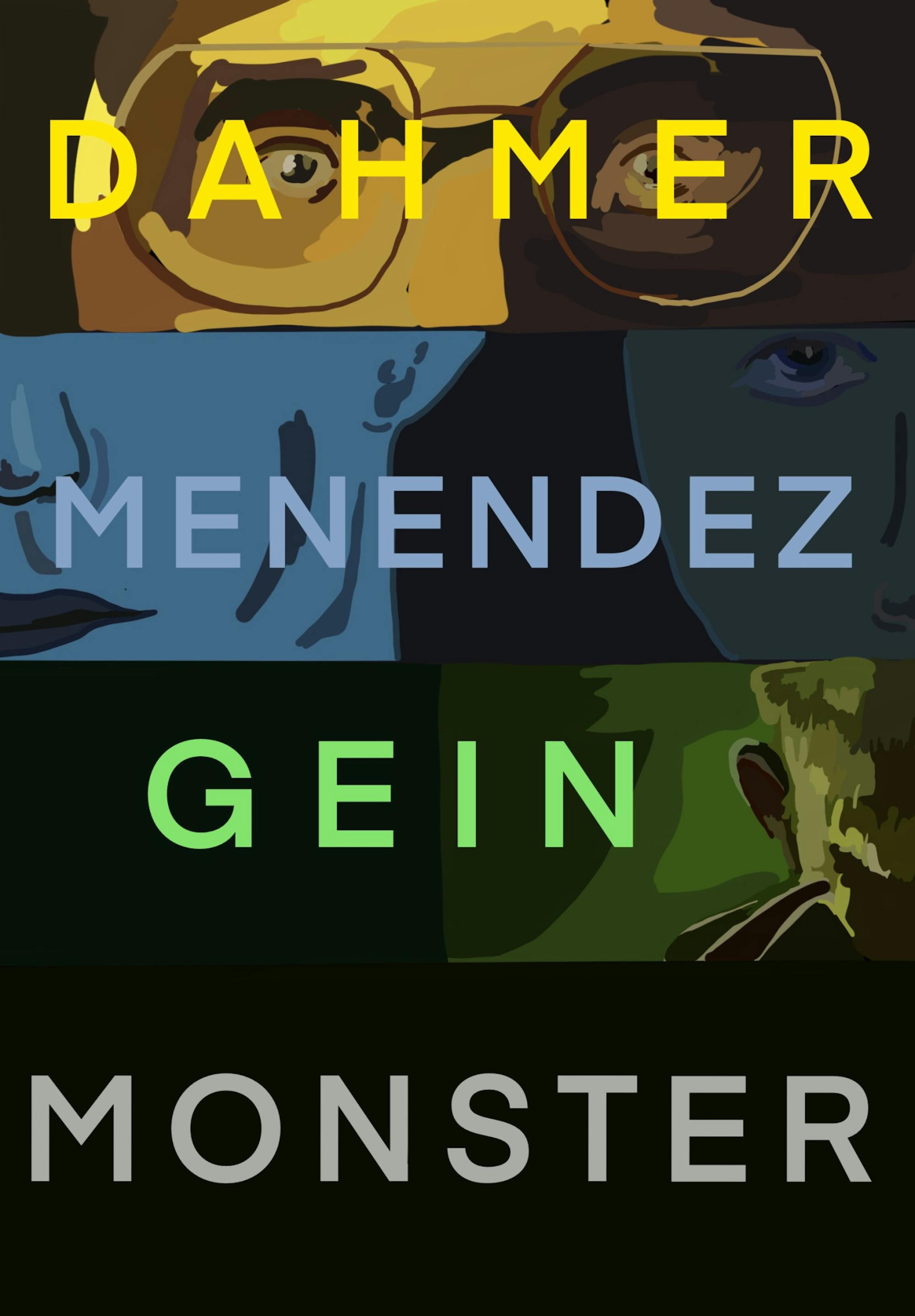
For someone like Ryan Murphy, this is a topic that is rarely given any thought when it comes to the recent and popular “Monster” anthology series available to stream on Netflix. Three seasons of “Monster” have been released on the streaming platform, and each one covers a different serial killer or psychopath.
The first season in 2022 covered the life and killings committed by Jeffrey Dahmer, and the second in 2024 detailed Erik and Lyle Menendez’s murder of their parents. The newest is all about Ed Gein, who was a graverobber, murderer and possible serial killer in La Crosse, Wisconsin.
Alongside co-creator Ian Brennan, Murphy also serves as a co-showrunner of the series and has creative oversight of each season’s subject matter. Although Murphy and Brennan are not the writers or directors of many of the episodes, their presence is definitely felt when watching the entire series.
“Monster” as an anthology series has garnered significant controversy since its first season about Dahmer. Several members of the victims’ families stated they were never consulted about the production of the show and found it to be retraumatizing.
Another criticism about the series was the portrayal of Dahmer and its attempt to humanize or even romanticize him as a serial killer. Casting Evan Peters, a popular actor and frequent heartthrob, probably wasn’t the best course of action either.
The season about Erik and Lyle Menendez and the murder of their parents drew a dispute among those who watched it because of inaccuracies, depiction of child abuse in the show and implying Erik and Lyle had an incestuous relationship.
The real Erik and Lyle Menendez, who are now 53 and 56 years old, are still in prison, and in a statement, said the show was “slander” and “disheartening.” Murphy defended the series as a portrayal of various viewpoints and theories from the case.
These same critiques and issues which are against the seasons relating to Dahmer and the Menendez brothers can be found in the latest season about Ed Gein. Similar to how Dahmer was depicted onscreen, Gein’s crimes are sensationalized and are almost played for entertainment for those who enjoy “Monster.”
Overall, what this series does wrong is by not showing the perspectives of those who should be at the center of the story -- those who were negatively affected by these tragedies.
Dahmer, the Menendez brothers and Gein should not be the protagonists in any one of the series’ three seasons. Filmmaker David Fincher is a great example of ethically covering topics similar to those present in “Monster,“ covering them throughout his filmography.
Fincher has directed many films focused on crime or on true crime. In terms of an actual real-life case that affected many, “Zodiac” accomplishes this the best. The film details the Zodiac killer’s spree from the late 1960s all the way to the early 1990s and the toll it had on people working the case.
Jake Gyllenhaal’s Robert Graysmith, Mark Ruffalo’s Inspector Dave Toschi and Robert Downey Jr.’s Paul Avery all serve as the main characters, and the audience gets to see them evolve over time from beginning to end. They are the driving force, not the Zodiac killer.
Joe Penhall’s “Mindhunter," which is also on Netflix, does everything correctly when bringing horrible true crime stories to the silver screen. Like “Zodiac,” it does not have a serial killer as the focal point and instead gives the attention to FBI Agents Holden Ford (Jonathan Groff) and Bill Tench (Holt McCallany).
That show even makes a point to ridicule Ford when he seems to become too infatuated with the serial killers he’s talking to, such as Ed Kemper (Cameron Britton).
With all of this to say, true crime stories can and should be presented in a way that’s not distasteful or misrepresenting the victims. Netflix’s “Monster” anthology series is a clear example of not following that strategy and should not be replicated by anyone else.