

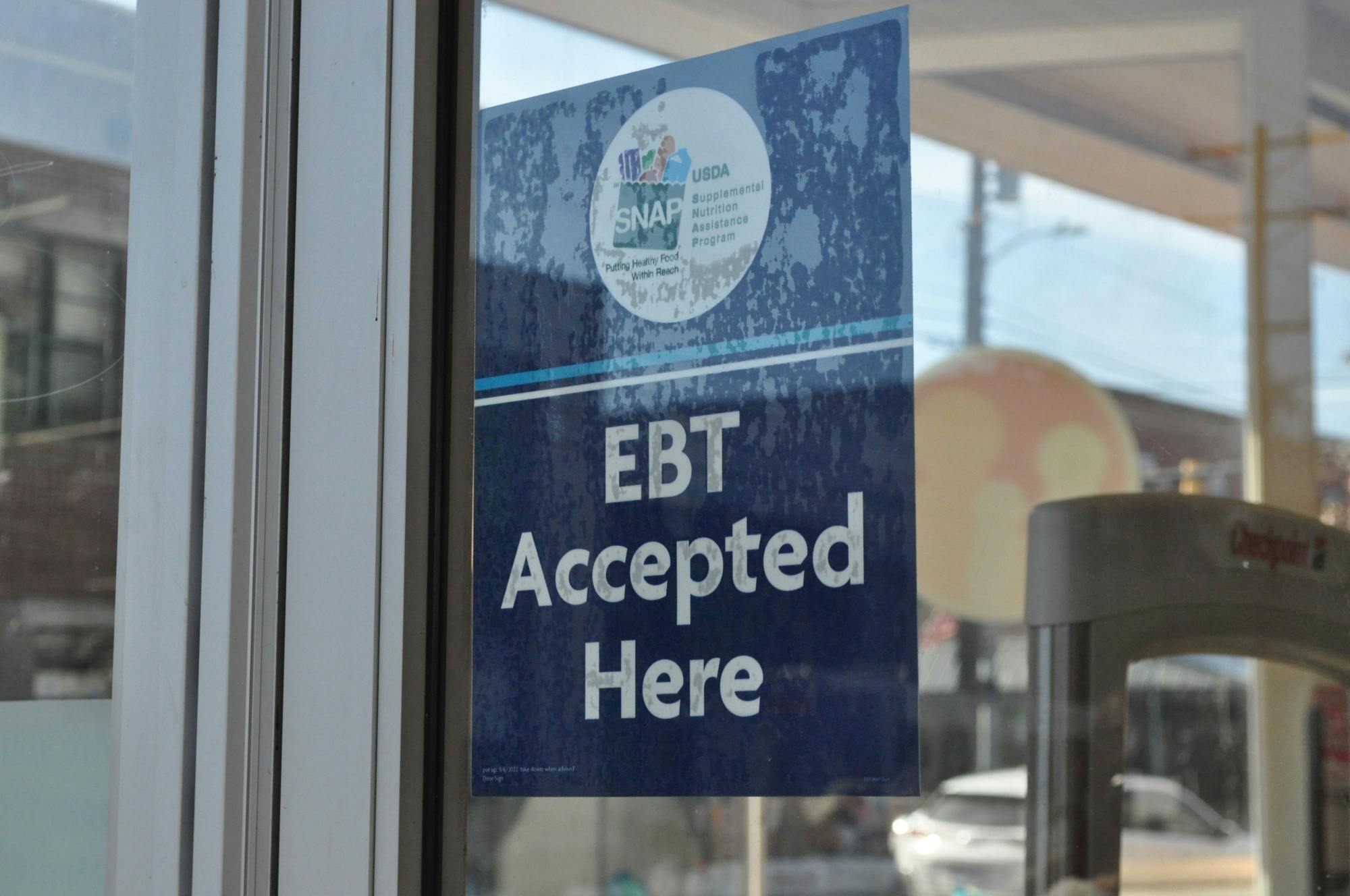
New guidelines for the Supplemental Nutrition Assistance Program went into effect at the beginning of the month. The changes adhere to the work requirements for those receiving SNAP benefits.
The work requirements were expanded to multiple groups that were previously exempt, including adults aged 55 to 64, parents of children aged 14 to 18, children aging out of the foster care system, veterans and those experiencing homelessness, according to the U.S. Department of Agriculture.
The current general work requirement includes registering to work, participating in SNAP Employment and Training and taking a suitable job if offered. The requirement also said that someone receiving SNAP benefits may not voluntarily quit a job or reduce their hours below 30 per week without good reason, according to the UDA.
Those currently receiving SNAP benefits and subject to the change can meet the requirement by working 80 hours per month, or by participating in a job program or community service.
Those who receive SNAP benefits have to provide proof of meeting these new requirements by March 1, or risk losing them, according to the Ohio Department of Family Services.
If someone fails to provide proof of meeting the guidelines, SNAP benefits will be canceled for at least a month until that person can prove they meet the requirements. If they fail again, that person is disqualified and could be disqualified forever, according to the UDA.
For recipients living in more rural parts of the state, meeting these requirements comes with its own set of challenges.
Leslie Schaller, director of programs at the Appalachian Center for Economic Networks, pointed out that those living in cities have it much differently than those living in Southeast Ohio.
“We don’t have the same level of public transportation that folks have in more urban and suburban places,” Schaller said. “Eighty hours a month now is definitely going to be a big climb.”
Transportation barriers, job availability and job type all play crucial roles in the lives of people living in Southeast Ohio who rely on SNAP benefits. Some recipients who are already working and were not previously required to meet the 80-hour goal have more pressure on them than others.
“How do parents, particularly, or caregivers navigate some of the new eligibility and still make sure their kids are getting taken care of?” Schaller said. “It’s the confluence of a lot of these factors that make it rougher and rougher for a lot of these households that have been relying on SNAP benefits.”
Another group speculated to be heavily affected is those within the higher end of the age range expansion. The new requirements include adults who are 55 to 64 years old.
Karin Bright, president emeritus of the Athens County Food Pantry, expects those within that group to be hit hard by the recent changes.
“You’re talking to people who may be retired, who may have disabilities, who are not able to work,” Bright said. “A lot of the people that are able to work already are working.”
According to a 2025 Pew Research study, roughly 22.4 million households in America receive SNAP benefits. While not every recipient solely relies on these benefits for their day-to-day food, the necessity for these benefits is expected to increase.
“Anytime there's a change to a program like this, people worry, and they wonder what’s coming next,” Bright said. “Sometimes there’s almost a preemptive kind of planning, ‘I'm eligible to get food at the food pantry. I typically don't, but maybe if we go for the next two or three months, we can get a little bit ahead.’”
Bright said the recent changes are not only putting pressure on recipients but also on the resources. With demands expected to take a high jump in the coming months, food banks are preparing now.
“As our numbers jumped so high, we were going outside our normal procurement,” Bright said. She also said the recent cuts to food banks are only making matters worse.
The One Big Beautiful Bill Act, signed into law on July 4, 2025, plans to reduce spending for SNAP by $187 billion over the next 10 years, according to the U.S. Congress. Although this will be a long-term effect, changes are starting to be seen now, with small funding cuts occurring on the state level.
For people living in Southeast Ohio, the Athens County Food Pantry and the Appalachian Center for Economic Networks will continue to provide help and resources for those relying on SNAP as changes get put into place.


