

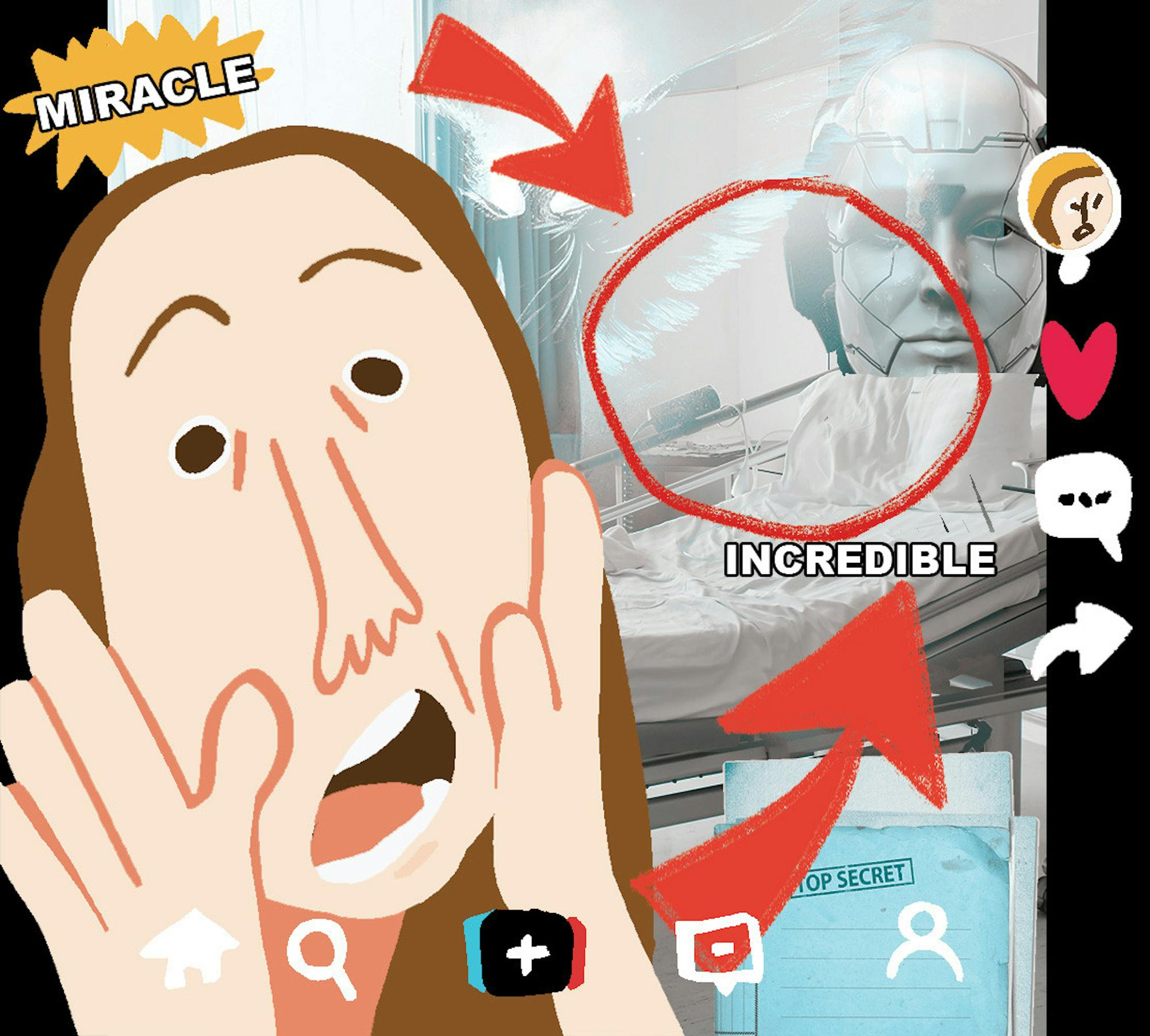
On Sep. 27, President Donald Trump’s likeness was used in a video generated by artificial intelligence promoting medbeds, a nonexistent medical technology. The video was shared by President Trump on social media before being removed.
In the video, Trump says every American is going to receive their own medbed card. With that, individuals will have access to these hospitals and special beds.
The medbed conspiracy stems from a popular far-right theory that the government hides advanced healing technology to treat illnesses. Medbeds are believed to be magical medical devices that can treat any disease, reverse aging and regrow lost limbs.
Originally, the idea came from the 2013 film “Elysium.” The “Star Trek” TV show also includes similar technology. The concept of medbeds has been in the media for quite some time; they are only seen in science fiction content.
This conspiracy is related to the QAnon movement, which Trump has been associated with since his first presidential term. Followers of the movement support Trump’s administration and often appear at his rallies, including the Jan. 6, 2021, attack on the U.S. Capitol. Those who believe in medbeds think elitist groups of people are hiding them from the poorer classes.
These medbeds do not exist. Although these have been a trope of science fiction for a long time, there is no real technology to back them up, and they are often considered a scam.
This long-standing conspiracy helped viewers recognize something they already knew: the video with Trump was not real.
The medbed scandal is not the first time the public has been confused by medical misinformation. There has been a steady incline in the distrust of medical professionals, and 70% of doctors report a decline in trust between patients and healthcare professionals from 2020-21.
The rise of social media contributed to the increase in the spread of false information. Without barriers, there is unlimited access to spread any information, even if it is untrue.
A contributing factor is the popularization of false information. Coming across false information is a common occurrence among everyday social media users.
“Brainrot” is a phrase being used to describe the effects of being chronically online. The amount of time spent glued to screens has increased, leading to people’s brains “rotting” while they mindlessly browse the internet.
The slang used and memes discussed online are bleeding into everyday speech. Some people are unable to communicate without referencing the internet or checking their phone. This has led people to believe what they see on the internet as fact without truly fact-checking.
AI developments have made it significantly harder to determine what is real and what is fake. The technology is able to copy speech and text patterns, creating realistic content. These fake posts can be hard to distinguish from reality, making it easy for people to follow and be convinced of the validity of their points.
AI has been beneficial in extremely impactful ways. It has been used to create personalized medicine, continue space research, work to fix climate change and enhance education. AI is also used by the general public as a tool for research. However, this use can inhibit the development of common skills.
Whether people are intentionally spreading misinformation on the internet or in real life, it is concerning how many believe it. The societal dependence on consuming as much information and mindless content as possible has left the need for fact-checking behind.
AI can be used to create convincing, realistic-looking content; occasionally, this is meant to trick people. In this case, it was used to trick viewers into believing the existence of medbeds.


