

The Ohio Department of Natural Resources Division of Mineral Resources Management, funded by the Abandoned Mine Lands Economic Revitalization program, is working to restore land affected by mine debris, according to the ODNR website.
Approximately $1 million in combined state and federal funding has been awarded to the Tablertown People of Color Museum to support a coal mine cleanup project and establish a new museum and community resource center in Tablertown, according to Ohio University.
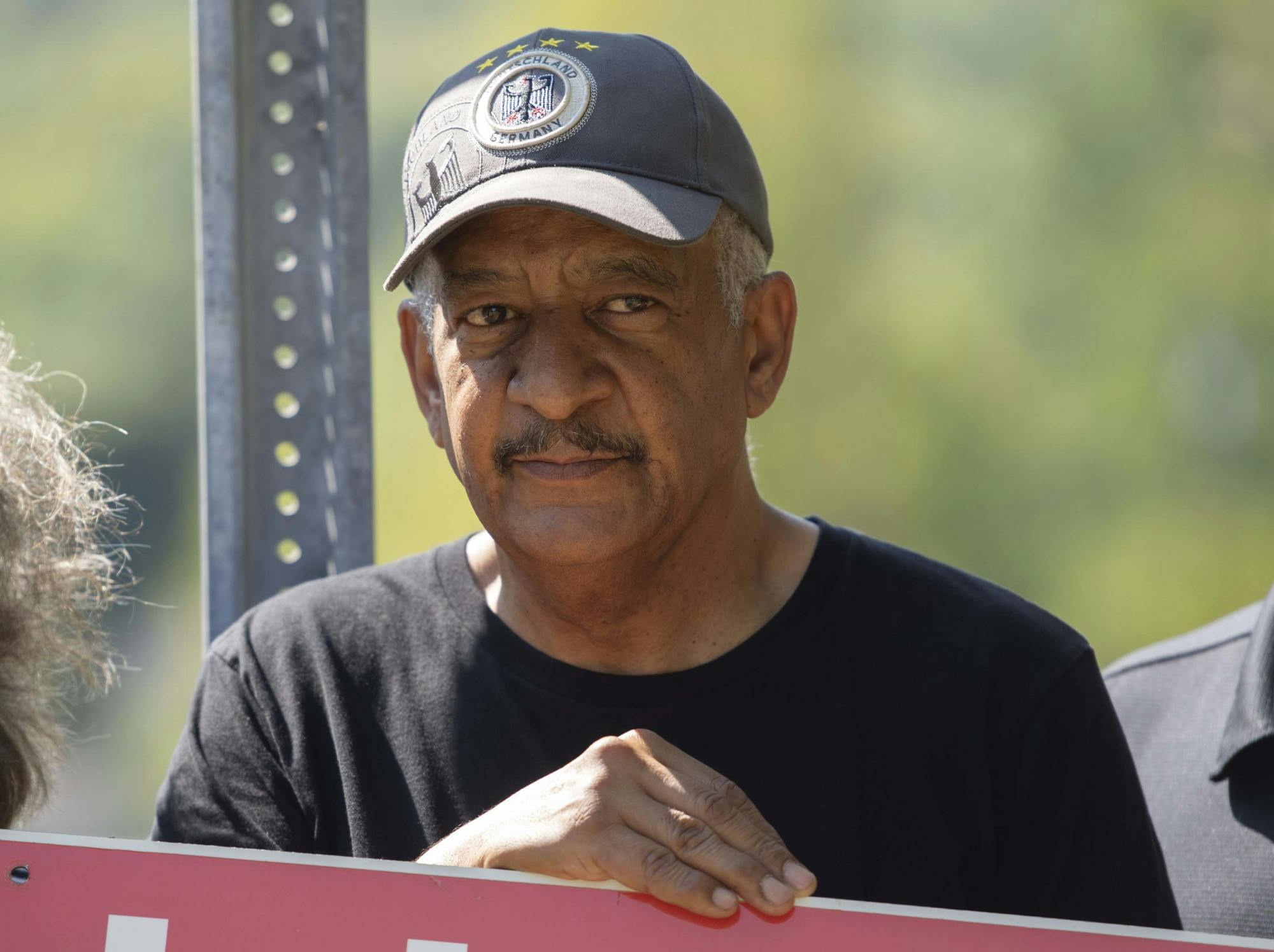
“We hope to take an abandoned coal mine and land and turn it into something productive for our community, and when you apply for grants like the AMLER grant, you realize what other communities have that you don't,” David Butcher, founder of Tablertown People of Color Museum, said.
Butcher said Tablertown lacks playgrounds, walking paths, fire departments and general stores due to decades of mining, job loss and a cyclone in 1937 that destroyed all but one and a half homes in the town.
The project spans 1.79 acres of land, according to OU's website.
He said he is grateful to OU’s Voivonich School of Leadership and Public Service for helping his organization become a nonprofit and for supporting efforts to create jobs in a historically black community with few employment opportunities.
Jennifer Bowman, director of environmental programs at OU, coordinates faculty and students who conduct chemical water quality analysis throughout the Appalachian Watershed. ODNR funds the projects, which allows the Voivinich School to identify waterways with high levels of acidity and metals and encourage reclamation efforts in those areas.
Bowman said her background in environmental geochemistry includes testing water samples as an undergraduate through the OU geology department. While earning her master's degree, she monitored Carbondale, a wetland affected by acid mine drainage. After writing her thesis on the area's water quality, a doser was installed to neutralize the acidic drainage.
Butcher said the water in Tablertown has long been polluted due to the abandoned mine.
“My wife's grandmother, Nellie Singer Flowers, is 103, and she lives across the creek from Federal Creek across from Tablertown, and last year, she got tap water for the first time that she could drink,” Butcher said.
The Surface Mining Control and Reclamation Act, the first federal law requiring environmentally responsible mining and prohibiting the abandonment of mine land, was enacted in 1977, according to the U.S. Department of the Interior.
“There was no law in place, and those are the mines we still see today, leaving a legacy of impaired water quality and thus impaired waters and streams and rivers for people and for our aquatic organisms,” Bowman said.
Buchter said state Route 329 was constructed above the coal mine, but a lack of structural support inside the mine caused the highway to begin slipping. To stabilize the road, the state and townships filled the mine with debris, effectively turning it into an unofficial landfill.
“Once the museum is built, we hope to develop a place where you can bring your children, walk along Federal Creek and see where the mine used to be,” Buchter said. “You can see the train trestle that used to cross Federal Creek. We hope to develop Federal Creek, where kids can come fish and kayak.”
Tablertown was named after Michael Tabler, the son of a plantation owner who fell in love with his father’s enslaved woman, Hannah. Tabler, Butcher’s eighth great-grandfather, emancipated Hannah and their six children and moved them to Ohio around 1830, purchasing the land that would later become Tablertown.
According to the museum’s website, Butcher learned much of the town's history from his uncle Alvin Adams, a Scripps College of Communication graduate with Adams Hall named in his honor for his Civil Rights era reporting.
“He is who planted the seed of preserving and keeping track of our family's history the best we can,” Butcher said.
In 2018, Butcher founded the Tablertown People of Color Museum in a pole barn on his property between Stewart and Tablertown. The museum highlights Appalachian diversity and the history of the town’s settlement.
Butcher said recent federal funding restrictions have reduced visitor traffic. Institutions such as OU and the Wayne National Forest, which once brought students from across the country to the museum, no longer receive approval to do so amid federal budget cuts.
“We've been here since the 1830s,” Buchter said. “They've done everything in the world to try to get rid of us, and we're still here and will be here when he's (President Donald Trump) is long gone.”


