

Spoilers for the book and movie ahead.
The most recent movie adaptation of Emily Brontë’s “Wuthering Heights” was released Feb. 13, directed by Emerald Fennell. The film stars include Jacob Elordi as Heathcliff, Margot Robbie as Catherine Earnshaw and Hong Chau as Ellen “Nelly” Dean.
The story of “Wuthering Heights," or at least Brontë’s version, is set in the moors of Yorkshire. The novel begins with a new tenant of Wuthering Heights, Mr. Lockwood, who gets told the estate’s history by Dean. The story starts when Mr. Earnshaw brings home Heathcliff decades later, when the characters’ children are venturing out. Through hundreds of pages of trauma and revenge, many people don’t read the book as a love story. Not a healthy one, at least.
The issue with Fennell’s adaptation is not the fact that it has become a love story. In fact, the story is still gripping and tragic at the end, but it is missing much of the substance the book has. Brontë’s story is 34 chapters, roughly half of those chapters following Catherine Earnshaw, Heathcliff and the rest of her family, and the second half following the children (Catherine Earnshaw’s daughter Catherine, Heathcliff’s son Linton and Hareton, the son of Catherine Earnshaw’s older brother, Hindley).
Fennell’s version only tackles the first half of the book, while omitting many plot points. In the book, Mr. Earnshaw dies in the beginning, but his character is morphed with his son's in the film. None of the children exist in the movie. Although Catherine Earnshaw does get pregnant, she loses the baby and dies of sepsis. In the book, she dies in childbirth.
In the book, Hindley Earnshaw is the one who banishes Heathcliff from ever seeing Catherine Earnshaw; however, in the movie, there is no clear-cut reason as to why the two can’t be together. When Catherine Earnshaw gets engaged to Edgar Linton, Heathcliff overhears only snippets of a conversation, and is heartbroken by her choice and runs away. Along with all of this, one of the most drastic changes is Fennell making Dean an antagonist.
Dean knew in both the book and the movie that Heathcliff was listening, but it is framed as her specifically trying to hurt him in the film. Along with this, following Heathcliff’s return, Dean finds out that he and Catherine Earnshaw are having an affair. It doesn’t happen in the book, but in the movie, viewers sit through montages of them together, hiding from Edgar Linton. Dean ends up telling Linton in the film, while in the book, this wasn’t possible because the affair was never there.
When Catherine Earnshaw begins to get sick in the film, Dean doesn’t believe her. By the time she realizes the severity of her condition, it’s too late to save her. There’s a scene, before Catherine Earnshaw’s death, where she promises that she won’t tell anyone that it’s Dean’s fault. In the book, it’s nobody’s fault, painted more as heartbreak.
Another character who was changed was Isabella Linton, Edgar Linton’s younger sister. In the movie, she is only his ward and is portrayed as an eccentric girl who becomes a victim of Heathcliff’s desires when he realizes he cannot have Earnshaw.
The scenes of her with Heathcliff are strange. Dean is the only one to truly witness the degradation Isabella is put through, like pretending to be a dog owned by Heathcliff. Although Heathcliff was set on revenge in the books, he was never portrayed as this extreme and predatory villain.
When Catherine Earnshaw dies in the book, we begin to follow her daughter, Catherine Linton. We also follow Heathcliff and Isabella’s son, Linton Heathcliff, and Hindley Earnshaw’s son, Hareton Earnshaw. Although the family tree in the novel is confusing, the movie lacks any of the complexity it offered.
All of the characters are marked for us from the beginning, with no question of who is who and who hates whom. Even when it is questioned, it is explained quickly and is extremely clear-cut, leaving absolutely nothing to the viewer's interpretation.
The novel’s page count changes with every version, but the word count is around 100,000 words. A film adaptation couldn’t go word-for-word unless it wanted its audiences to be bored, and probably wouldn’t draw much interest from people who haven’t read the book. Still, the book strays a bit too much to be considered an actual adaptation and not something vaguely based on the book.
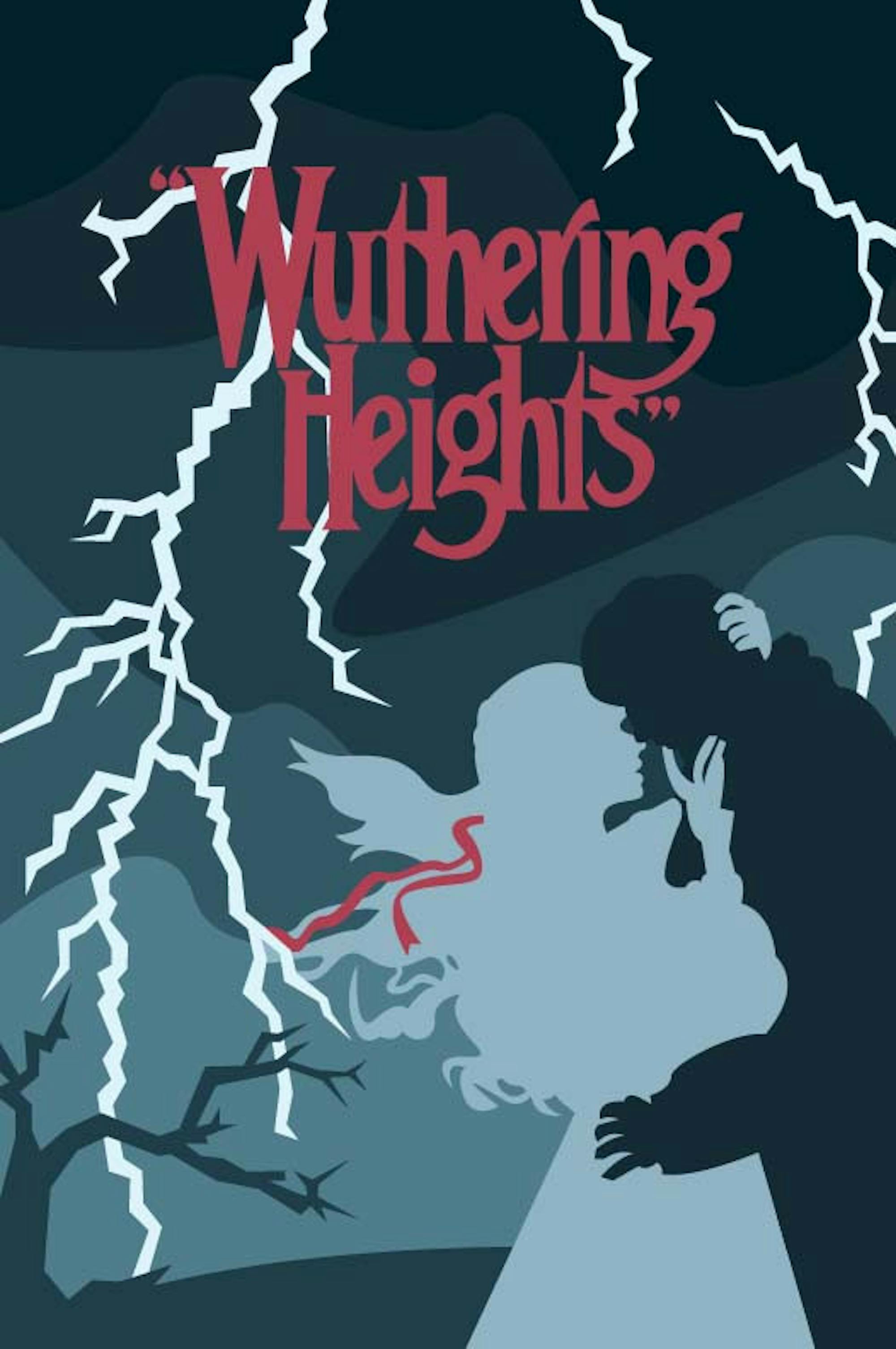
On the movie’s poster, the title is put in quotation marks. This could have pointed to the fact that it isn’t concretely rooted in the novel, but in the movie, it seems like Fennell didn’t want to fully make it interpreted. There are satirical parts, tragic parts and even romantic parts that match today’s palette, making the movie a confusing watch when compared to Brontë’s story.
The movie itself was good; however, instead of marketing something as an adaptation, it would’ve been better to be portrayed as a new story. In some parts, it seemed they slapped on the names of the known characters of “Wuthering Heights” and offered nothing else in similarity.
Ratings:
“Wuthering Heights," Emerald Fennel: 3/5
“Wuthering Heights," Emily Brontë: 4/5


