

To play Betamax tapes you need a Betamax player, to play old VHS tapes you need a VHS player and even for the recently-defunct HD video format you need an HD DVD player.
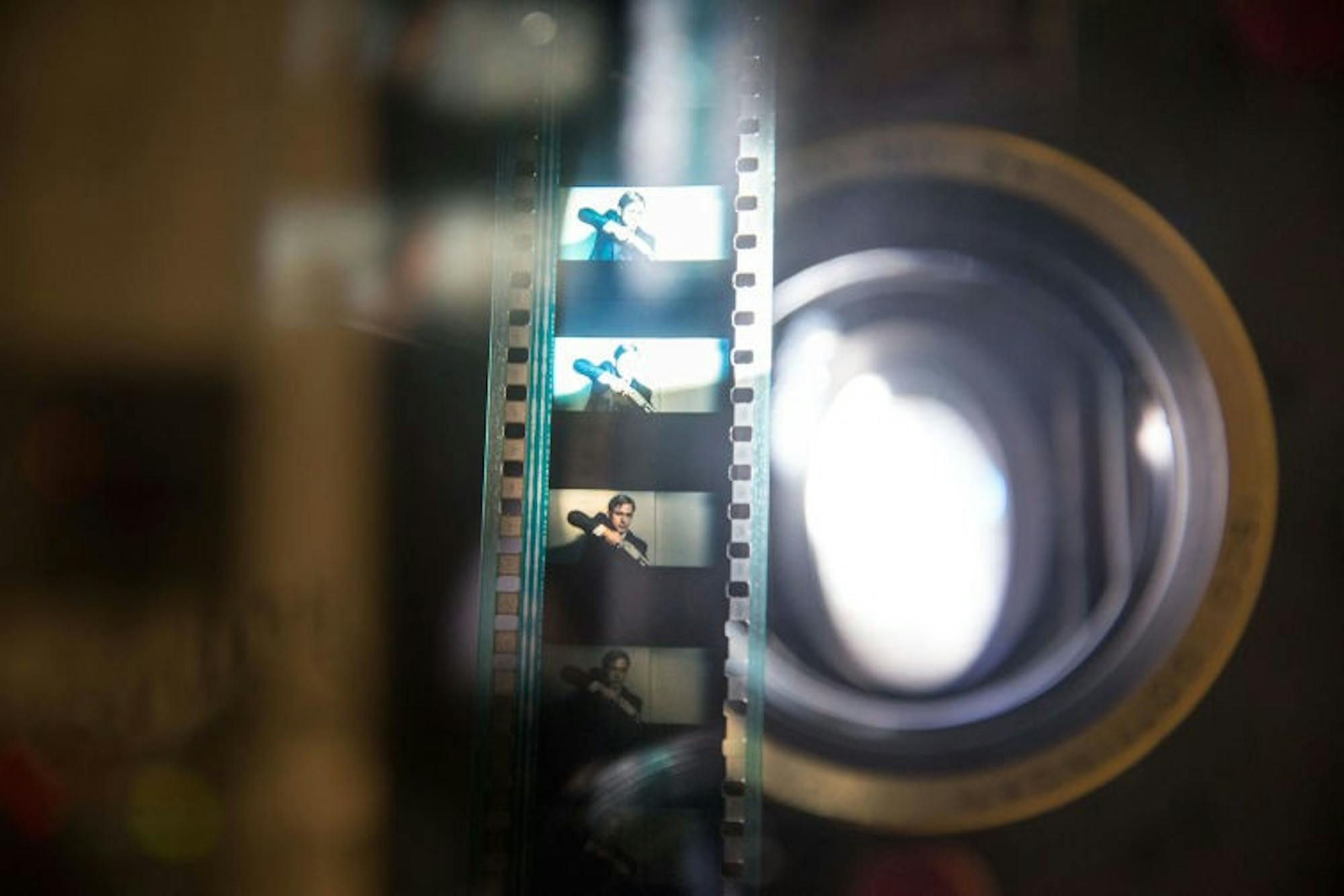
But, for over 100 years all that is needed to view a strip of good-old-fashioned film is the cellulose clip itself and a light.
In January, Paramount Pictures became the first major studio to announce it was abandoning 35mm film with December’s release of Anchorman 2: The Legend Continues as the studio’s last film release.
Students in the School of Film are expected to be proficient in both formats and have to complete assignments on both digital and film cameras.
“You’re actually able to easily see what you just shot digitally because it was just replayed on the last clip. With film you just have to trust that you got it and you don’t get to see the film until it’s taken to the lab, developed and brought back to you,” said Alex Schmitz, a junior studying film who is working on his second film, Player 2 Press Start, shot to digital.
Although the new technology makes it easier for movie makers to do their jobs, concerns over how these digital files will be stored in the future remain, knowing technology never stops advancing and people could be stuck with those old Betamax cassettes with no way of playing them.
Still, many point to film’s tactile and grainy visual appeal that digital cameras and editing are still largely unable to replicate.
“As a projectionist, I think film looks better textually,” said Hsin-Ning Chang, head projectionist at The Athena Cinema and a third year Ph.D. student studying interdisciplinary arts as well as a former film student. “You can especially see it with black on the screen; on film it’s a very creamy black but with a digital presentation there will be light bouncing around that black and it affects the depth.”
The Athena Cinema, 20 S. Court St., has been preparing for the shift in demand by switching over to digital formats back in November. However, Chang said, they are not ready to abandon film completely.
“It’s very hard to get ahold of print (film) circulating, especially for the recent theatrical releases,” Chang said. “For the classic movies there will sometimes be print, but it’s tricky because those prints are very precious, so we still need to do some work.”
To get to that next step, Chang said, they need maintenance work on the film projectors, which can be difficult and it is becoming harder to find people with the knowhow to make it happen.
Chang said she is confident that film will remain a valued product in small theaters such as The Athena Cinema, which is why they will continue to improve and upgrade film equipment.
Although Paramount Pictures switched to digital, Colin Trevorrow, director of the upcoming Jurassic Park 4 movie, announced he would be shooting to 35mm and 65mm film to give the series the same feel as its 1993 debut.
“Film is not going anywhere. There are many archives and museums that will continue to preserve and exhibit 35mm film,” said Alexandra Kamody, managing director of cinema in an email. “I prefer film for nostalgic reasons: I like to hear the 35mm projectors, I like the care and craft that goes into building and breaking down prints.”
@wilbur_hoffman
wh092010@ohiou.edu
Film Facts
- In 1999, George Lucas mixed film footage with HD digital footage in Star Wars Episode I: The Phantom Menace, and even had to install digital projectors in four theaters nationwide for the first screenings.
- In 2014, Paramount Pictures becomes the first major studio to convert to a commitment of all digital films.
- Jurassic Park director Colin Trevorrow announced he will be filming the series’ newest installment to 35mm and 65mm film in order to give the movie the same feel as the 1993 debut.
This story originally appeared in print under the headline "Film makes way for digital"


