

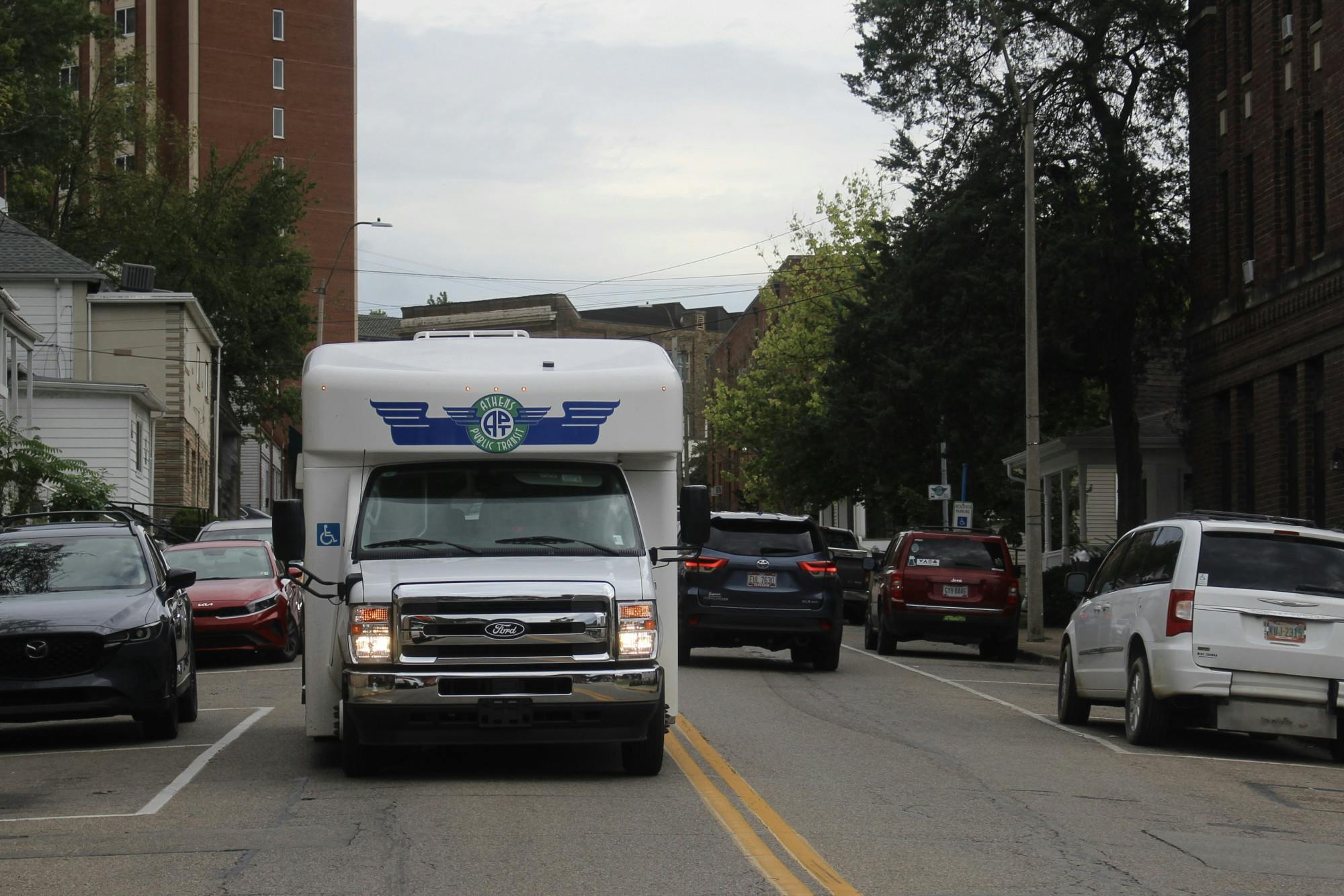
A study analyzing Ohio’s school transportation system found a massive shortage of school bus drivers employed in the state. The shortage contributes to the increasing difficulty of transporting students to school.
The Ohio Association for Pupil Transportation participated in the study, known as the Student Transportation Workgroup. They researched transportation policies and trends throughout the 2025-26 school year in Ohio, according to the OAPT website.
Ohio House Bill 96 established the workgroup, in which leading representatives of Ohio student transportation analyzed the realities of local school transit systems and devised actionable solutions.
Among the findings and policy recommendations, it was stated that for the 2025-26 school year, over 22,000 students were deemed “impractical to transport” by their school district. Over 21,000 of them were enrolled in community and chartered non-public schools whereas only 618 district school students were considered impractical to transport.
The workgroup attributed the difficulty of school districts transporting students to a number of factors, such as increasing transportation costs, a growing number of special education students who require specialized transportation and a persistent bus driver shortage.
According to a survey conducted by the Ohio Department of Education and Workforce, 14.68% of vacant bus driving jobs were filled in 2025. However, the shortage remains severe in many areas across the state, with 34 school districts filling 10% or fewer vacant positions.
Sen. Catherine Ingram was a representative on the workgroup and discussed the difficulties of a bus driver schedule, indicating it might be a reason that deters people from becoming a bus driver.
“We just couldn't get drivers, no matter what incentive,” Ingram said. “So believe it or not, the whole task force concept was, well, let's figure out a way to either create a hub or different ways to transport or to pay our drivers more.”
The Athens City School District includes Athens High School, Athens Middle School, East Elementary, Morrison-Gordon Elementary and The Plains Intermediate. The school district had difficulties keeping a consistent group of bus drivers, according to John Rogers, associate superintendent of the Athens City School District.
Rogers said today’s income trends might be contributing to the bus driver shortage.
“I think more families are taking on two full incomes instead, of one family member having a supplemental income and another family member having a primary income,” Rogers said. “And so, you just have two primary incomes in a lot more homes where it used to be a job that farmers would take on as a supplemental income. You don't have as many people needing supplemental incomes, and so I think it's a little bit of a pay issue.”
Under the Fair Bus Bill, established in 1966, Ohio school districts are required to provide transportation to and from any public or private school for every eligible student within the district. School districts must provide “payment in lieu of” transportation to any family of a student deemed “impractical to transport” via typical transportation methods available.
Initially, the Student Transportation Workgroup began in response to the bus driver shortage, but found the student transportation system was not working correctly as a whole.
Ingram said complications in bus routing came as private schools, parochial schools and charter schools increased. The increase put a burden on school districts to transport students as per each school’s diversified agendas, according to Ingram.
Ingram said there needs to be more conversation between the schools so schedules can align and help students get to school on time.
“I think there are some things the transportation division of the Department of Education and Workforce should be examining … to reporting responsibilities, schedules and what discussion is made between charter schools, the traditional public school, the parochial schools,” Ingram said.
Rogers discussed the extra burden a charter school in Logan posed for the district.
“There have been some increased requirements on us because there's a school in Logan, Ohio, called the Southeast Ohio Classical Academy and if a student is from Athens, their parents pay property taxes to our school district, then we're required to bus those students to their private school,” Rogers said. “And what that means is one of those 22 routes that used to be inside of the district is now dedicated to driving to Logan and back every day, and that cuts down a little bit on what we're able to offer internally.”
The Athens City School District has 22 bus routes taken during the school year. Currently, 21 routes have a full-time bus driver. Rogers said about 40 to 50 students ride on each bus, depending on the size.
Rogers said he is constantly trying to get the word out that there are bus driver positions open. He also mentioned potentially creating a program with neighboring districts to alleviate stressors.
“If four or five of us need subs, then we could make a pool of people who maybe they're not getting benefits from any specific school district, but they're getting work every day because if Athens doesn't need a sub one day, certainly one of the other four schools in the county do,” Rogers said.
The workgroup devised a number of recommendations for the state to implement regarding school transportation policy, including one recommendation that echoed Rogers’ idea by establishing a Regional Transportation Consortia Prototype Program.
They also recommended increasing state support for bus driver recruitment through advertising campaigns or an increase in driver wages and a push to have charter schools, public schools and community schools build stronger relationships that would allow for better coordination of bell schedules and days off.
The Student Transportation Workgroup sent their findings and all nine policy recommendations to the governor, the president of the Senate and the speaker of the House of Representatives in June.


