

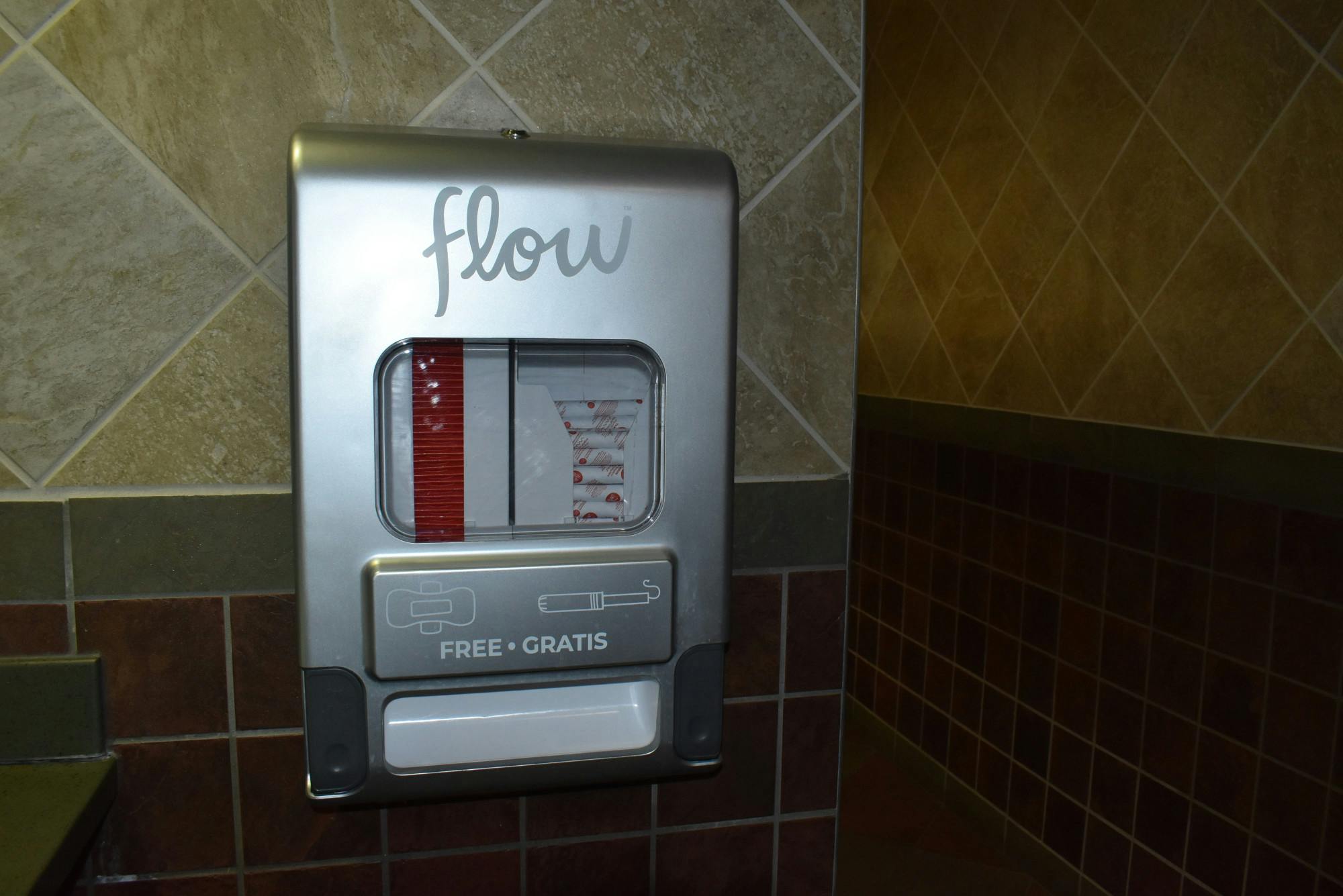
Ohio House Bill 29 is a bipartisan proposed legislative bill that would ensure incarcerated women are provided the necessary feminine hygiene products and showers when needed. The bill passed the House in May and Ohio Senate in November and now awaits Gov. Mike DeWine’s signature.
The bill, sponsored by Democratic Rep. Latyna Humphrey of Columbus and Republican Rep. Marilyn John of Richland County, answers a call-to-action from residents and organizations across the state calling for a formal policy that enshrines access to appropriate tampons and menstrual pads.
“Not everyone has a support system at home to ensure they get their menstrual products every month or to put money on commissary,” Humphrey said. “If they're working inside of the facilities, you only get but so much money a month. If menstrual products are $10 and you make $15, you have to make some choices about what you need and what you're going to get.”
In 2022, Humphrey had conversations with the Ohio Department of Rehabilitation and Correction and the Correctional Institution Inspection Committee that led to the passing of a variance, which provided free unlimited access to feminine hygiene products in correctional institutions.
“We already worked on the variance together to do at least 80% of what we were trying to do with this bill,” Humphrey said. “So essentially, we are just trying to codify what we already created in the variance for our state prisons. Again, lots of our jails are already doing this.”
Humphrey mentioned the difference between a variance and the proposed house bill, which will now confirm its stance if the current administration changes.
Since the variance has been in place since 2022, the department spent approximately $173,500 in FY 2024.
During the House Government Oversight Committee’s second hearing April 8, former incarcerated women and public advocates gave written statements calling for the bill's necessity.
Courtney Alspaugh, who formerly served five years at the Dayton Correctional Institution, worked as a plumber while incarcerated and detailed her poor experience working while not receiving adequate hygiene products.
“The sanitary pads were so poor that I would tear the cloth and cotton apart to roll the cotton into the cloth and tie off to make a homemade tampon,” Alspaugh said in the proponent. “Sometimes this was even done on the job site. A lot of days I felt depressed and didn’t want to leave my cell. Not having enough feminine products led me to begging other inmates or asking corrections officers for them — just to hear them tell me that it wasn’t their problem. I couldn’t get any help and that made me feel dehumanized and helpless.”
Heidi Arnold, a longtime advocate for incarcerated women, also wrote a proponent stating she has spent 12 years working with women in prisons and jails through mentorship upon release and academic research. She also instructed a college course within a prison for 10 years.
Arnold wrote she volunteered in the Montgomery County Jail and spent the last few years researching the experiences of women who are menstruating while incarcerated. Arnold said in her research she uncovered stories of women being refused necessary supplies by men, being convinced they must exchange sexual favors for products and how makeshift tampons have caused toxic health effects.
Additionally, Arnold raised the issue that prisons that put feminine hygiene products in housing units have only caused inmates to hoard the products, forcing women in need to buy, beg or humiliate themselves to receive hygiene products.
Pavel Vasiliev, assistant professor of instruction in sociology and anthropology at Ohio University, has done extensive research in criminal justice.
“It's a systemic, structural issue, partly because the corrections has been run by men,” Vasiliev said. “Most inmates used to be men, and they still are, but the population of women skyrocketed from the 80s, and in many ways, the old thinking was that kind of man as the average inmate, so the only budget for those particular situations is called vengeful equity.”
According to a fiscal note and impact statement for HB 29, as of March, the population of the Department of Rehabilitation and Correction’s three correctional institutions totaled 3,669. The three institutions include the Ohio Reformatory for Women in Marysville, the Dayton Correctional Institution and the Northeast Reintegration Center in Cleveland.
A 2020 study through the American Civil Liberties Union of Ohio, stated since 1980, female incarceration has increased by 617% in jails and 600% in prisons.
Vasiliev raised two main concerns with the inadequate feminine hygiene resources provided to women. He said there are health risks that could arise with using the same products multiple times, possibly causing toxic shock. He also discussed how guards can manipulate the items, using them as a form of leverage on inmates.
The bill was unanimously passed by both the House and the Senate, passing in the Senate Nov. 24. Once DeWine receives the bill, he will have 10 days to sign it into law or veto it.


