

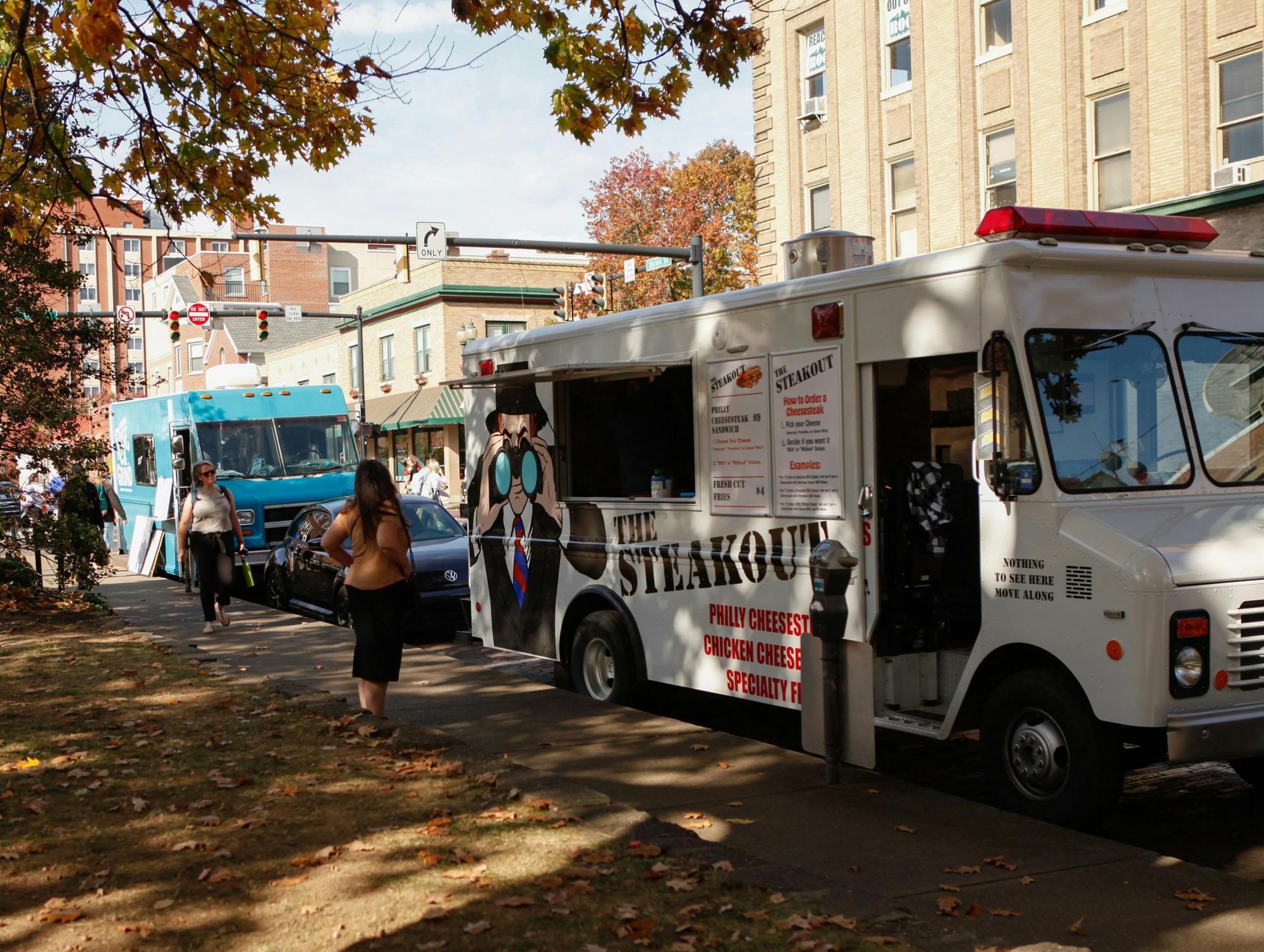
Food trucks have become a daily presence at Ohio University, where students and faculty encounter them at multiple high-traffic campus locations, from the top of Morton Hill to the corner of Court Street.
Two trucks operated by private vendors, Rise & Grind Coffee Truck and The Steakout, sit near Alumni Gateway. Both accept only cash or card, offering specialty drinks and meals such as the Caramel Kiss Latte or Philly-Style Cheesesteak.
OU Culinary Services operates two additional food trucks, The Hungry Cat and Brick City Deli On The Go, which accept university dining currency, including Traditional and Flex Meal Plan Swipes, Flex Points and Bobcat Cash.
Chito Trinidad, assistant director of retail operations, said Hungry Cat was first launched in 2015 as a solution during renovations at Boyd Dining Hall.
“Big trends back then were food trucks, and so not only did we want to expand our venues and locations, but people eat in different places,“ Trinidad said. “We wanted to be on track just like we're doing now, with adding different services and things like the Micro Stores, when we're getting into new technologies and new avenues of delivering food goods and services."
Frank Pazzanese, executive director of culinary services, said the university does not allow currency to be received by vendors outside of the university because the profit would be split between the owner of the truck and the university.
Meal-plan funds not used within the given semester also return to the university.
“Any profit we make goes right back to the university, and that pays for everything from scholarship funding to other activities that the university needs that money for,” Pazzanese said.
Dan Harlett, the owner of The Steakout, said accepting campus currency would drive up meal-plan prices.
“They would probably be priced pretty crazy. At that point, parents would probably be like, ‘Just use a credit card. Just buy it yourself, separate,” Harlett said
Meal-swipe values vary by location. A swipe used at a food truck costs the equivalent of $15, compared with $6.75 in the campus markets. Trinidad said the difference reflects higher food and labor costs associated with mobile operations.
“The food trucks still offer fresh-cut fruit. We try not to cut corners and provide something like canned fruit or something like that,” Trinidad said. “For a place like Brick City Deli food truck, we use Boar’s Head, higher-quality meat and cheese products. We wanted to maintain them so we could offer at least a side and a sandwich, so that’s where some of that philosophy comes from in terms of what’s available with a meal swipe.”
Despite requiring cash or card, the outside vendors draw most of their business from OU students. Harlett estimated that 90% to 95% of his customers are student-affiliated.
Pazzanese said that while food trucks require significant investment, they often generate strong returns because of small staff sizes, seasonal hours and limited product waste.
He also noted culinary is considering additional food trucks to accommodate the future McDavis Hall and upperclassman students living near the River Park Apartments.


