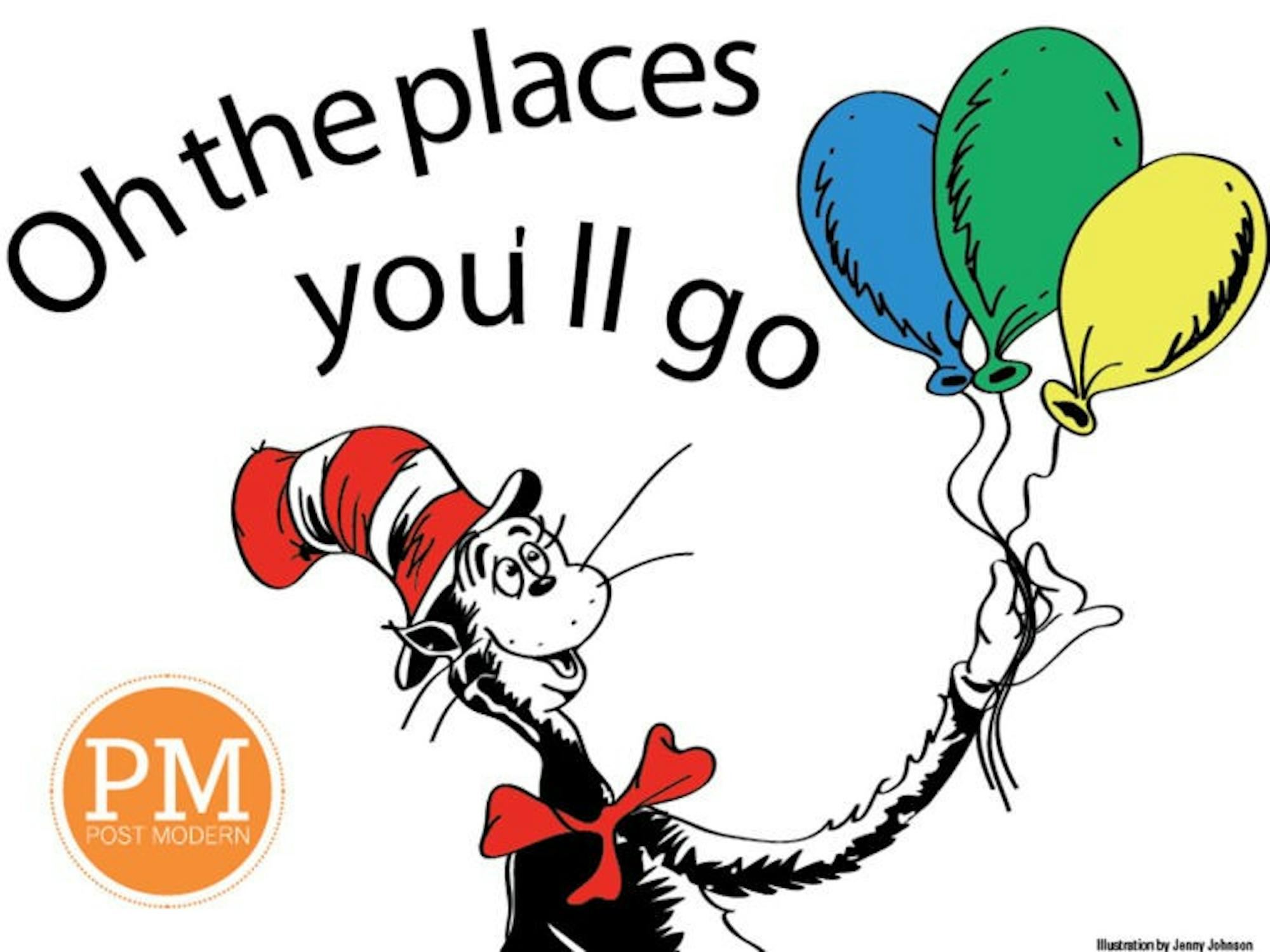
As children are introduced to the world of literature, some of the first books they encounter were written by Dr. Seuss, a man revered for his off-kilter works.
Read Across America Day, which promotes reading to children, has celebrated Dr. Seuss’ birthday since 1998.
“Everything we can do to encourage adults reading to kids is vitally important,” said Amy King, youth services coordinator for Athens Public Library.
The works of Dr. Seuss play an essential part in many children’s connection to reading, something that can be attributed to his use of made up words and absurd rhymes, King said.
“He’s silly; silliness is really important,” King said. “I think we can all use a bit of silliness. Children especially are appreciative of silliness, and it’s hard for them to get their grownups to participate in silliness. Dr. Seuss gives us a way to do that.”
While his stories’ attention-grabbing wording and colorful artwork are what initially attract children to Dr. Seuss books, the topics he covers keep the stories relevant and literarily valuable.
In books like The Sneetches, The Butter Battle Book and Horton Hears a Who! Seuss uses his silly writing style as a way to explore topics of depth and importance. That gives people the chance to contemplate big questions while giggling at the same time, King said.
“I liked The Butter Battle Book even though I didn’t know it was about the Cold War at the time,” said Hanna Brevoort, a sophomore studying history. “I remember really vividly the last page of the book where there’s the big standoff. And if it had that sort of impact on me, then I feel like it had to have impacted others, too.”
Though it’s been more than 20 years since the critically acclaimed Dr. Seuss published a book, countless childrens’ stories with great literary value continue to be released.
“The ALA (American Library Association) awards and medals just came out,” said Chris Guder, the Reference Librarian for Children’s Literature at Alden.
“Those were actually my first purchases — making sure the collection had the medal award winners — the Caldecotts and Newberys and that kind of thing.”
Many people have specific titles or a series of books that stand out in their memories, something King said can often be contributed to the people who introduced them to those stories.
“That book connected them to a person they loved,” King said. “So it was a book they shared with someone who was important to them, and it created a bond or was part of a bond.”
Being read to by adults gives children the chance to experience books in an interactive yet personal way, as many people use special voices when reading to kids.
“My mom and dad used to tag team read to me — they would each read specific books to me,” said Kelli Lupas, a senior studying biology. “I liked it when my mom read more though because she did all the voices.”
Sharing books with the people they love and those who care for them, encourages many children to develop a love of, and interest in, reading. The discovery that they can be transported into different worlds and experience new things through reading is something which keeps many people interested in books as they grow older, too.
“My parents encouraging me to read was essential to my love of reading,” Lupas said. “Now it’s my way to escape and handle the stress of school. I crave it, I need that.”
Others might form more personal connections to stories from their childhoods, King said.
“Some children discover, between the covers of a book, affirmation of who they are, and that is such a powerful experience that it never really leaves them,” King said.
“Some feeling or doubt or question that they have is answered by a particular book, and it’s such a powerful experience when it happens that they go back to that book or they remember that book or they remember the feeling that book created later in life.”
Though many people find books that speak to them on a personal level at a very young age, King said others might find their personally significant books during another stage of great personal growth like the teenage years. Regardless of when it occurs, King said, connecting so strongly to a book is a powerful experience.
Revisiting the books that stand out from their childhood memories is a common practice for many people, something Brevoort said she has done several times.
“I like to go back and see if I remember the plots right and see if they were as good as I remember,” said Brevoort.
College students who want to reread a certain story they remember from their youth — even if they don’t remember the title — have the ability to search for the book through Alden’s catalogue, Guder said.
“You can search through for specific award winners and titles,” Guder said. “Or if you remember that it was about a frog, you can search that way too.”
The ability to read, something many people gain as young children, is an essential part of succeeding in American society, King said. The popularization of digital readers, however, puts the future of children’s literature, and the connections people form with reading as kids, in question.
“I think books have a harder job now competing with illuminated screens, and no one knows where we’ll be in 20 years and if people will still be reading books to their children,” King said. “I believe that there is a power and intimacy in sharing a printed story between an adult and a child that at least in its current forms, electronic books and other media, have not yet gotten to.”
bm257008@ohiou.edu
@ThePostCulture