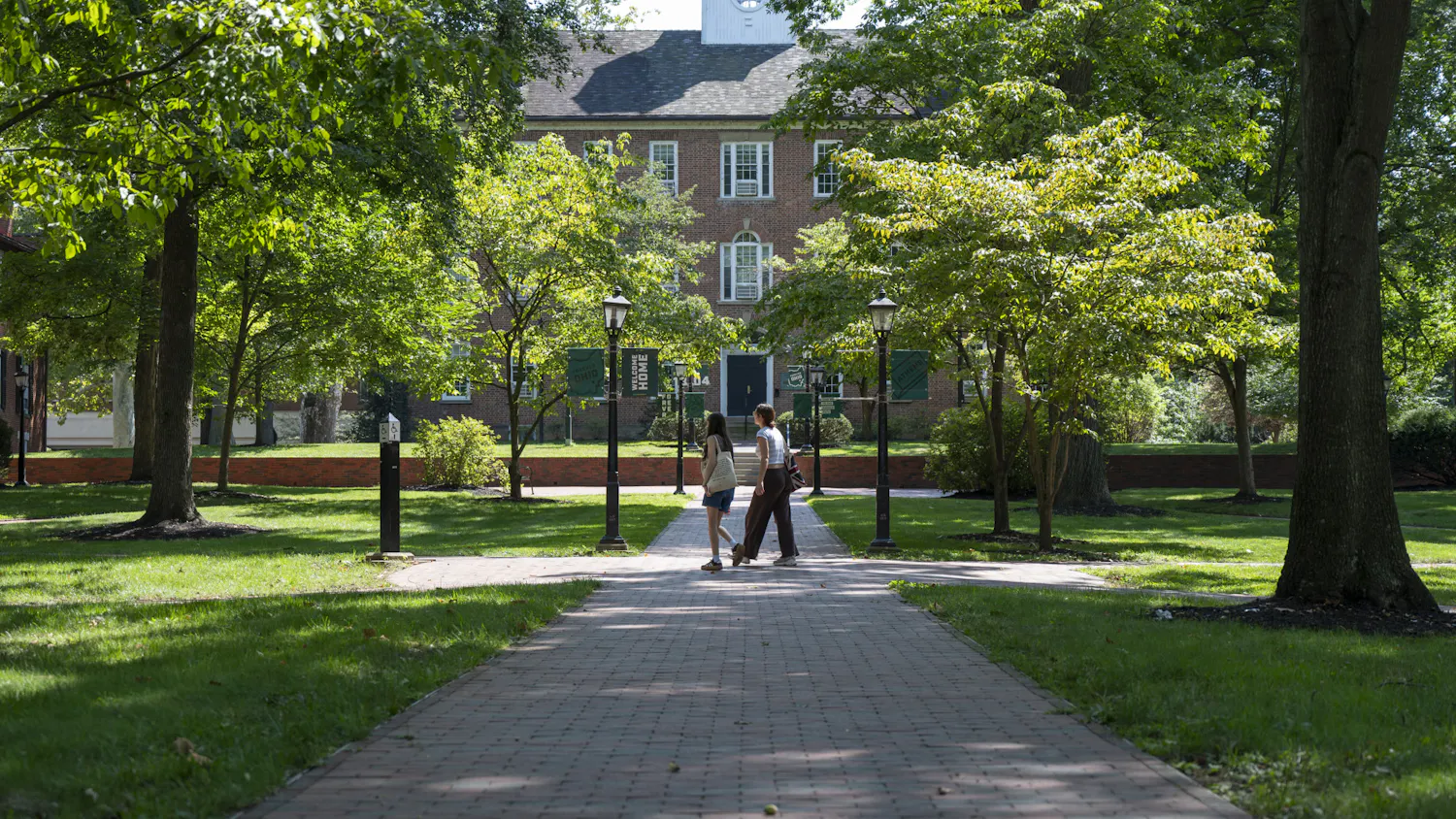
Ohio University students gathered in Bentley Hall yesterday to hear an ex-cop tell the story of how he changed his mind about the War on Drugs.
Ohio University Students for Liberty and Young Americans for Liberty sponsored Howard Rahtz of Law Enforcement Against Prohibition to speak yesterday for the decriminalization of drugs.
“Not by design, but I am probably one of the only people in the country who have fought on both sides of the War on Drugs,” he said. “The drug problem looked quite different in a police uniform than it did behind the desk at a meth clinic.”
Rahtz was employed with the Cincinnati Police Department for 18 years, but was also the supervisor of a methadone clinic in the city.
“My colleagues and I arrested thousands and thousands of people — and I’m not too sure what good it did,” he said. “Is there anyone walking the streets of Cincinnati that can’t find drugs?”
Through his experience working at the clinic, Rhatz said he found violence to be the most damaging aspect of the war on drugs.
“It’s the addicts who support the market,” he said. “Only 10 percent of addicts in this country get treatment. Let’s quadruple that and take away the market’s customers.”
Chelsea McDonnell, a senior studying psychology and sociology, said concerns over drug laws matter to the average college student.
“The drug laws in this country affect us in every way, shape and form,” she said. “There are serious implications associated with breaking those laws.”
Citing California’s medicalization of marijuana in 1995, Rahtz said further decriminalization would smother the illegal market and help violence go down.
“The medicalization of marijuana has done more to kill the dealers than all of law enforcement combined,” he said. “Let’s avoid that half-step — just legalize it.”
Rahtz said he watched the crack epidemic hit Cincinnati in the late 1980s and that he didn’t feel the arrests for possession were hurting the market.
Rahtz said through the controlled regulated market, drugs would become less dangerous.
“No one checks for quality control on crack cocaine,” he said. “THC content would be regulated and checked … much like alcohol is today.”
cd234008@ohiou.edu
@ThePostCulture