Templeton-Blackburn Alumni Memorial Auditorium will be the scene of one of the next controversial environmental discussions tonight.
The documentary film Gasland will screen at 8 p.m., and a question-and-answer session with filmmaker Josh Fox will follow.
Gasland, an idea sparked by a natural gas company’s offer of $100,000 to drill on Fox’s Pennsylvania land, has garnered both positive and negative attention while pushing hydraulic fracturing, also known as fracking, into the public eye.
Fracking is a method of removing natural gas from shale, which involves drilling an L-shaped well one-mile deep and one-mile long, then flooding it with water and chemicals. The process of flooding the well fractures the brittle shale, releasing the gasses trapped inside of it.
The U.S. Environmental Protection Agency, in a statement to The Post, said, “EPA scientists … are undertaking a study of hydraulic fracturing to better understand any potential impacts this process may have on drinking water and groundwater. The overall purpose of the study is to understand the relationship between hydraulic fracturing and drinking water resources.”
Erich Hiner, a senior studying journalism, developed the idea to use the documentary to draw attention to the debate over fracking.
Fracking is practiced in Southeast Ohio and specifically in Athens County, he said, and the family land up for purchase by the gas companies which Fox dicusses in his documentary isn’t a far drive from here.
“We’re hoping to use Fox’s star power and reputation as a filmmaker to get people thinking about this issue, because whether you support it or oppose it, it’s going to affect the way we live down here,” Hiner said.
Fox’s experiences with fracking took him on a road trip across the country.
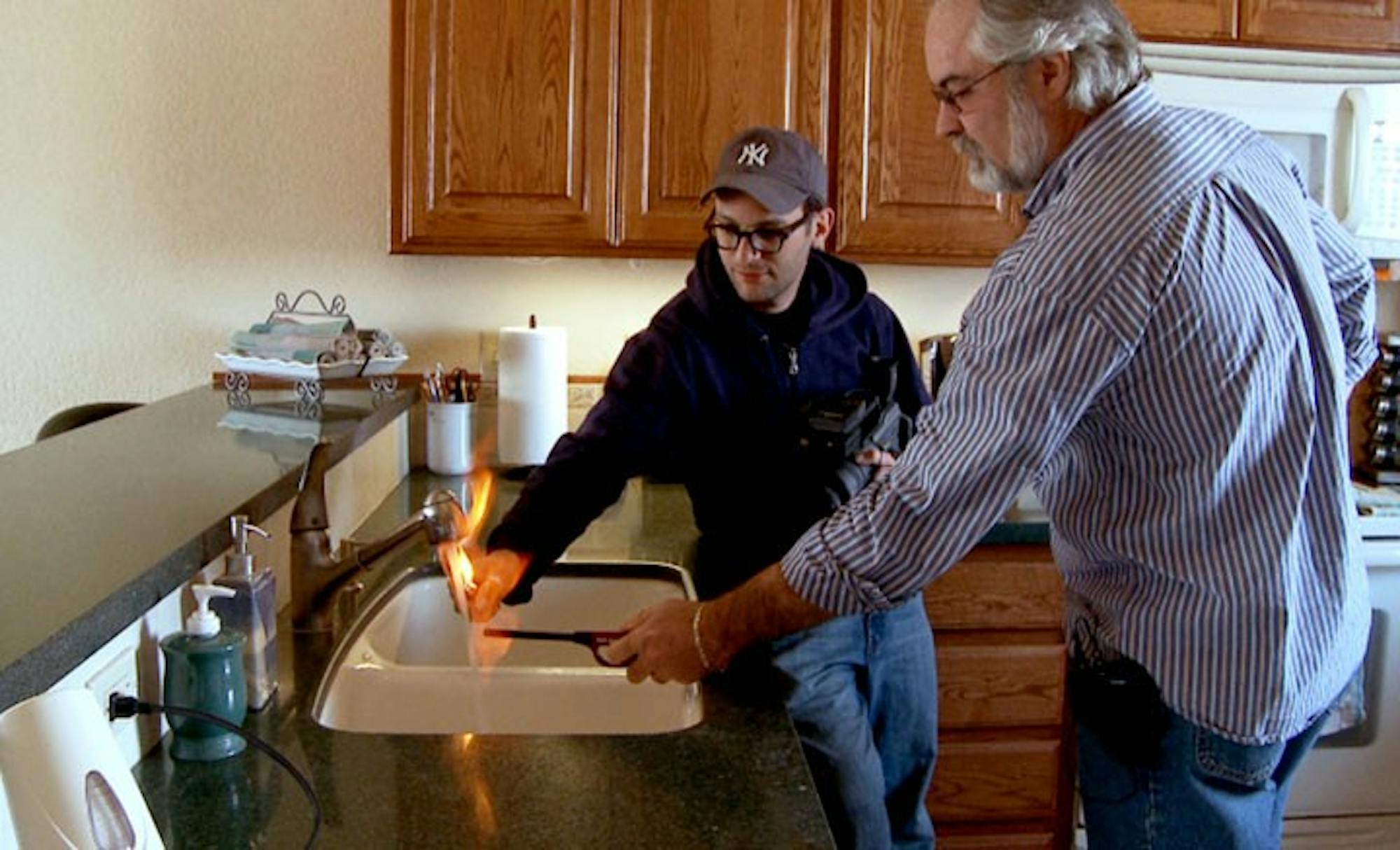
“He found people whose tap water could be lit on fire,” Hiner said. “He found people that were getting really sick. He found people who claimed that this type of natural gas drilling had contaminated their drinking water supplies.”
Whether viewers agree with Fox or not, he is a prominent authority in his field, Hiner said. Fox’s film revolves around an issue currently made timely by Gov. John Kasich’s energy policy, which supports fracking.
Hiner wanted to make clear that despite reports of contamination associated with gas existing, he said none have been proven to link directly with hydraulic fracturing.
“In the end, educated citizens are what’s going to have the biggest impact in this country,” Hiner said. “If citizens decide fracking is worth the potential harm, whatever that is determined to be in the future, so be it. But, our goal is to educate people without judging, without condemning, without condoning.”
The event is co-sponsored by College Green Magazine, ECOFIN, the E.W. Scripps School of Journalism, HTC Journalism, the Kennedy Lecture Series, OU Student Activities Commission and OU Student Senate.
The Student Activities Commission paid just more than $4,000 in order to bring in Fox to host the event, in addition to other funding, Hiner said.
sd476308@ohiou.edu
@ThePostCulture