Ranging in subject matter from the creation of children’s television to helping amputees after the civil war in Sierra Leone, 12 plays will be presented in this year’s 17th annual Seabury Quinn Jr. Playwrights’ Festival.
“I hope the audience walks away challenging the way they think about things,” said Sarah Bowden, the festival coordinator.
Each year, students enrolled in the Master of Fine Arts and Master of Arts Playwrights program present their original plays. The festival begins today and will continue through Saturday.
The 12 students currently enrolled in the MFA and MA programs present their work to the public and four professionals are brought in to critique their work. These professionals include George Brant, Keith Bunin, Laura Kepley and Jocelyn Prince.
“It’s very difficult to find professionals who are able to work well with developing writers … and have an impressive resume,” said Charles Smith, head of the MFA Playwrighting program.
These four fit the bill and possess a range of skills from screenwriting to directing, Smith said.
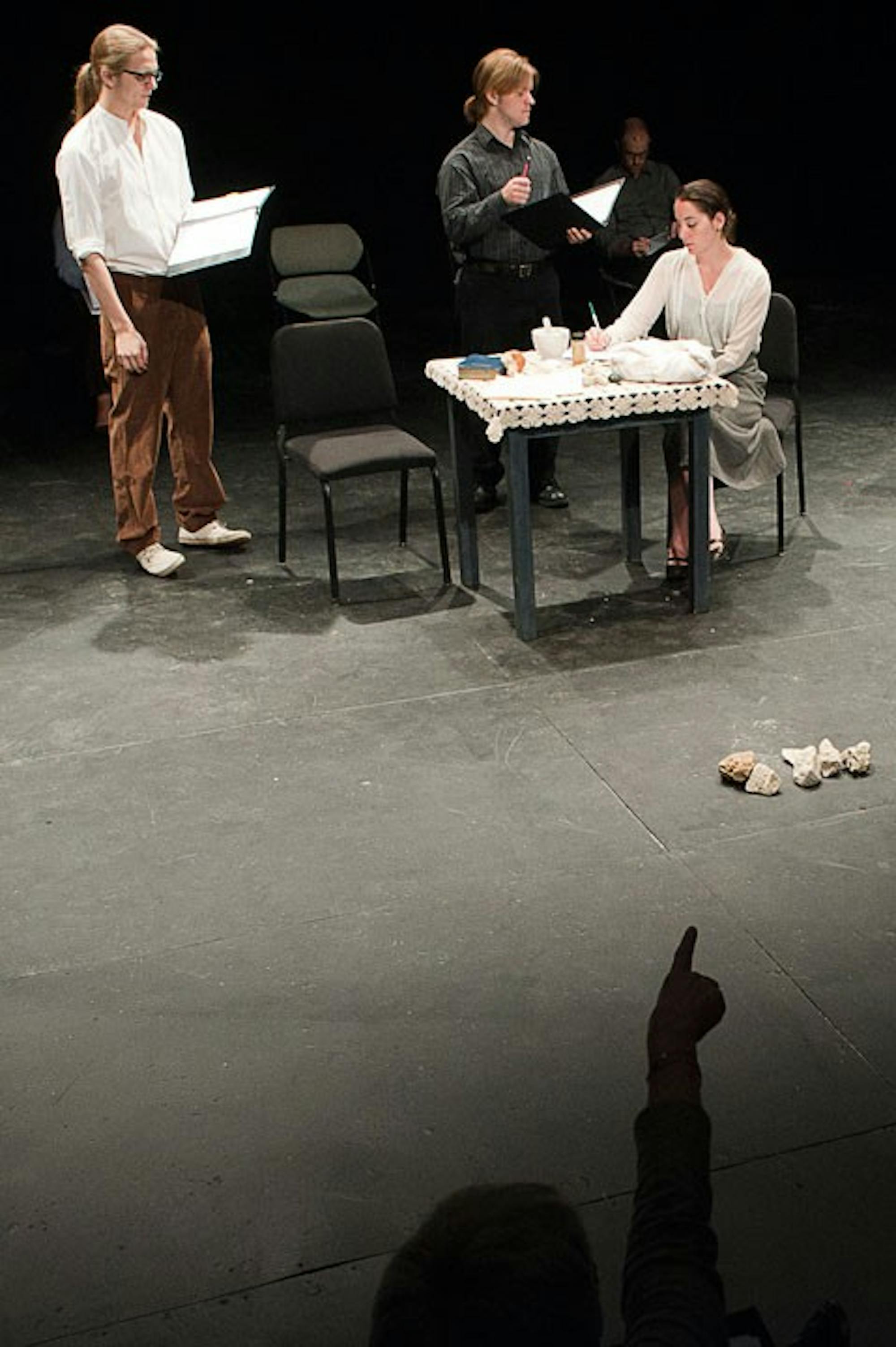
The mentors publicly critique all of the plays, and the audience is welcome to join in this discussion held after the production or reading, said Bowden, a second-year MFA student.
The two third-year students present the featured full productions, the second years have staged readings and the first years have readings. Many of Ohio University’s playwrights have moved on to present their work at Sundance or on HBO, Smith said
“When I see a play at the festival, I ask, ‘Am I going to see this writer’s work on HBO or on a main stage? When am I going to see this work later?’” he said.
The writing and production process is a journey for each student. Bowden wrote her play ‘Lively Stones” — based on Anne Hutchinson’s 1636 life in the Massachusetts Bay Colony — in complete silence to keep the language in context. She struggled to put her voice into the historical event and to make the history relatable.
“I hope the audience comes away examining the parallels between then and now,” she said. “There is a lot on culture clashes, which is eerily similar to culture clashes now like between the right and left (political parties).”
Each play aims to be thought-provoking in its own context, Bowden said.
“Hopefully, it encourages you to ask questions about yourself and your culture,” Smith said. “Once you ask questions, we think that leads to real change, one way or another.”
jc543108@ohiou.edu
@ThePostCulture