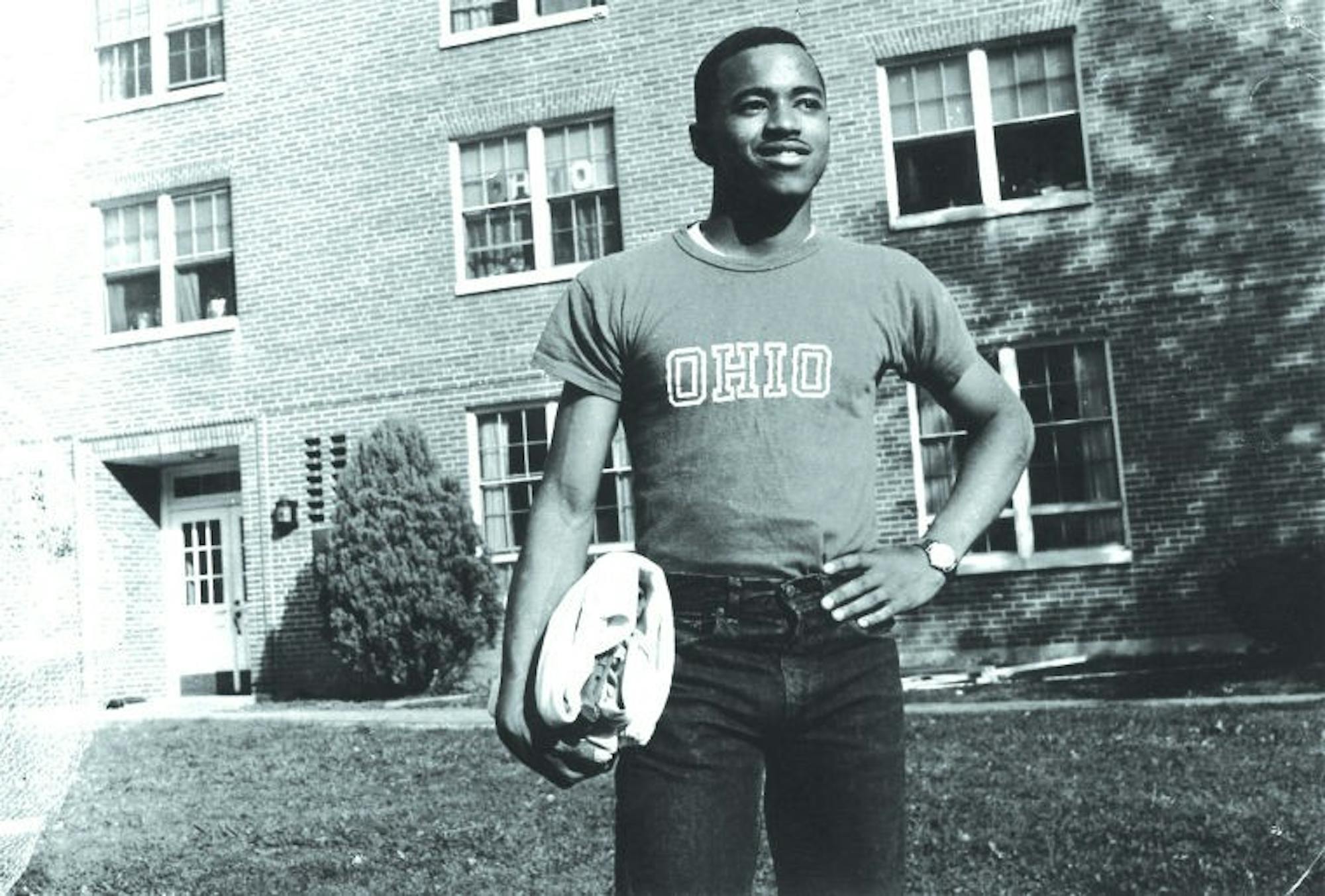
In the late 1960s, young men were being sent to fight a war thousands of miles away, and at home, the country struggled with race and gender equality.
Meanwhile in Athens, Ohio University waged its own war against a switch from a semester system to one based on quarters in 1969, which would lead to a six-month preparation time for an inevitable change.
“The big brother that we know as Ohio State was on the quarter system, so there was pressure put on us to switch,” said Ellsworth Holden, a professor emeritus in the College of Business. “(Ohio legislators) thought it was appropriate to put us all on the same system.”
Holden was a business professor when the university was told to switch. There wasn’t much notice, he said.
The university tried to fight the change and did not start planning for a switch until the spring of 1969. OU changed to a semester system the following fall, Holden said.
Almost 40 years later, OU began planning for the opposite move — a shift back to semesters. Planning began in the summer of 2008 for a switch that will take effect in fall 2012, giving the university a longer planning period this time around.
“It was a very rapid process,” Professor Emeritus Ralph Izard said. “Not nearly the same time was spent on the switch (in the ’60s).”
Izard taught in the College of Communication during the switch in the ’60s.
“It wasn’t really that complicated, but I do know they had to do it as quickly as possible,” Izard said. “It was a manageable thing.”
There was no comprehensive plan for the previous switch, and it was left up to the individual departments to figure out how to handle the change.
“I don’t remember having many guidelines from above,” Izard said.
Much like the transition that will happen next year, departments were committed to ensure all students graduated on time. If a student just narrowly missed the required credit hours for graduation, an exception was granted.
“We were dedicated to make sure every student would graduate in four years,” Izard said. “I know of no case in penalizing a student for a half credit hour.”
Under the semester system, it was common to have Saturday-morning classes; many classes would be held Monday, Wednesday and Friday or Tuesday, Thursday and Saturday for an hour each day.
After the change to semesters, Saturday classes were abolished and the standard became two-hour classes that met twice a week.
“The faculty welcomed the idea of having class twice a week and having the rest of time to concentrate on their other work,” Holden said.
Tom Hodson, director and general manager of the WOUB Center for Public Media, was a sophomore at OU when the calendar switched to quarters.
“I remember there was a concern for getting all of our hours,” Hodson said. “It was more of a big deal to faculty and staff.”
Students at the time generally did not pay much attention to the change, said OU President Roderick McDavis, who was a sophomore during the switch.
“As a student here, I didn’t notice much of a difference; it was seamless,” he said, adding that most of the student body was paying attention to national causes, including the war in Vietnam.
Tom Davis, secretary to OU’s Board of Trustees, was a sophomore at OU when the university switched to quarters and said he believes the quarters-to-semesters switch will be as smooth as the shift to quarters when he was a student.
“The interesting thing for me is I don’t remember anything that was a consequence my freshman year,” Davis said. “That’s kind of what I think will happen next year with the freshmen.”
aw366209@ohiou.edu