Editor’s Note: This is the second of a three-part series profiling impoverished residents of Southeast Ohio.
Most business owners do not find themselves living off their inventory, but the owners of one local general store often find themselves eating their expired inventory.
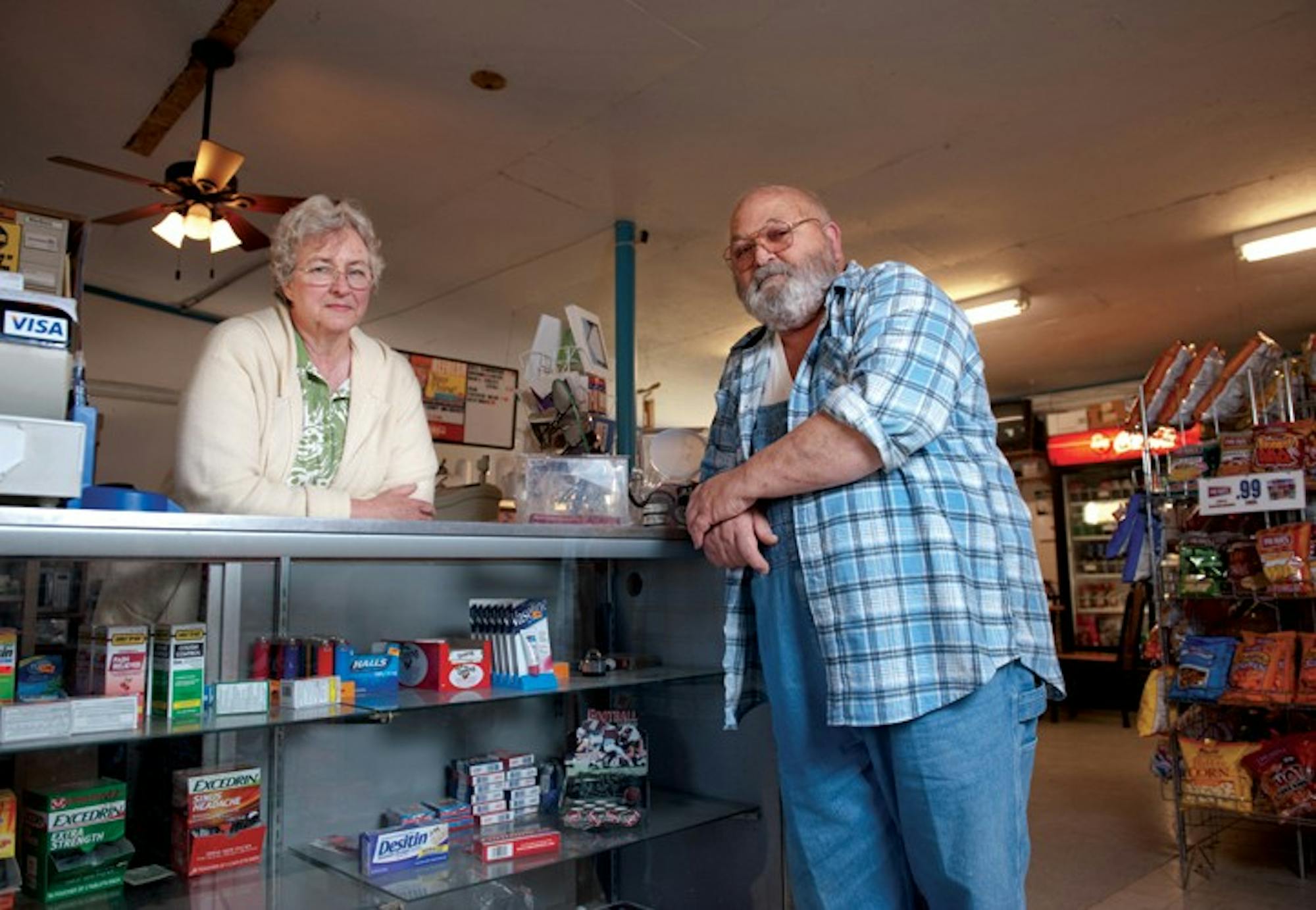
Bill and Stella Coleman, the owners of Water’s Edge, a general store located near Lake Hope in Vinton County, say they’ve yet to turn any profit from the business they opened nearly 12 years ago.
They purchased the store, located 13 miles from McArthur and 17 miles from Nelsonville, from its previous owners, who went bankrupt. The Water’s Edge is the only general store in the area — which, unfortunately for the Coleman’s, has had seemingly no impact on business.
“This is what I got of my whole life,” said Bill, who used his retirement package to start the store. “This is everything.”
Bill, a 70-year-old veteran, worked as a safety auditor for Austin Powder — a Vinton County explosives company. After multiple heart surgeries 11 years ago, though, he was laid off. He was given a monthly pension payment of $100.
Stella, in her late 60s, worked at the Kmart in Athens until it closed. She receives a monthly pension of $60.
Both Bill and Stella receive Social Security benefits.
The couple have attempted to improve their business through tactics such as product promotions but still only average about 25 customers a day. The store brings in about $350 Tuesday through Saturday but less than $200 on both Sunday and Monday.
Although the Colemans claim they live slightly above the poverty line, their Adjusted Gross Income, or income after tax authorized deductions for things such as business costs, was less than $8,000 last year.
“It’s a vicious cycle,” Bill said. “I’ve worked in here 11 years and never gotten a paycheck.”
All the money the business generates goes to the government, utilities and insurance, Stella said, adding it does pay for homeowner’s insurance along with telephone and trash bills.
“It’s tough out there,” said Lynn Gellermann, executive director of the Center for Entrepreneurship and TechGROWTH Ohio, both branches of the Voinovich School of Leadership and Public Affairs. “Capital and credit are not as accessible as they might be in a normal economy.”
The Voinovich School offers many different services, as well as capital, to Southeastern Ohio businesses, but many of its services target larger, high-growth businesses, which doesn’t include Water’s Edge. It still offers advice to local businesses on how to find capital.
“Are we out there helping hundreds of companies every year? Yes, we are … but do we have the answer and solution for everybody? No, we don’t,” Gellermann said.
There are other assistance opportunities for impoverished small business owners, but public or private loans are difficult for poorer business owners to pay back and, therefore, harder to qualify for.
“The agencies that provide the money to us … it’s taxpayer dollars, so we have to protect that money. So we require some level of collateral — credit worthiness — and that they have a plan for repayment,” said John Hemmings, executive director at the Ohio Valley Regional Development Commission.
The commission offers “revolving loan funds,” money that is given out, paid back and then “given to the next guy.” This allows the commission to take on riskier deals than the average bank but not the riskiest.
The Colemans applied for a loan from the Vinton County Development Department when they first took over the Water’s Edge, but say they were told they were denied because the previous business on the site had failed.
“(You) have to show it can be a going business (to qualify for a loan),” said Terri Fetherolf, the Interim Director of the Vinton County Development Department.
Fetherolf said she couldn’t find records of the Coleman’s loan application, but it could have been possible there was not enough outside financing or they did not present an adequate business plan.
Vinton County receives money from the state in the form of a Community Devolpment Block Grant to loan out to needy business owners.
“Unfortunately, that’s one thing people approach me about,” Fetherolf said. “I’m not aware of any direct (small business) grants.”
Grants are preferable to loans for small business owners in poverty because they provide assistance but do not have to be paid back. However, they have been increasingly hard to come by in this poor economy.
“I think the future looks a little grim (concerning grants) because you’ve got the federal deficit … the programs that fund those are all on the chopping block,” Hemmings said.
But for Bill and Stella, there seems to be no form of assistance that can pull them out of the cycle they are stuck in.
“We don’t have an endgame,” Stella said. “We are day-to-day.”
“The store is not an income,” Bill said. “We scrape every month to pay the electric bill now. It’s been real tough the last few years.”
dd195710@ohiou.edu