Many think it is a problem from another generation, but wage inequality is still alive and strong in the United States. In a tough job market, salary negotiation might seem impossible, but a group of Ohio University female graduate students learned how to successfully fight for fair pay.
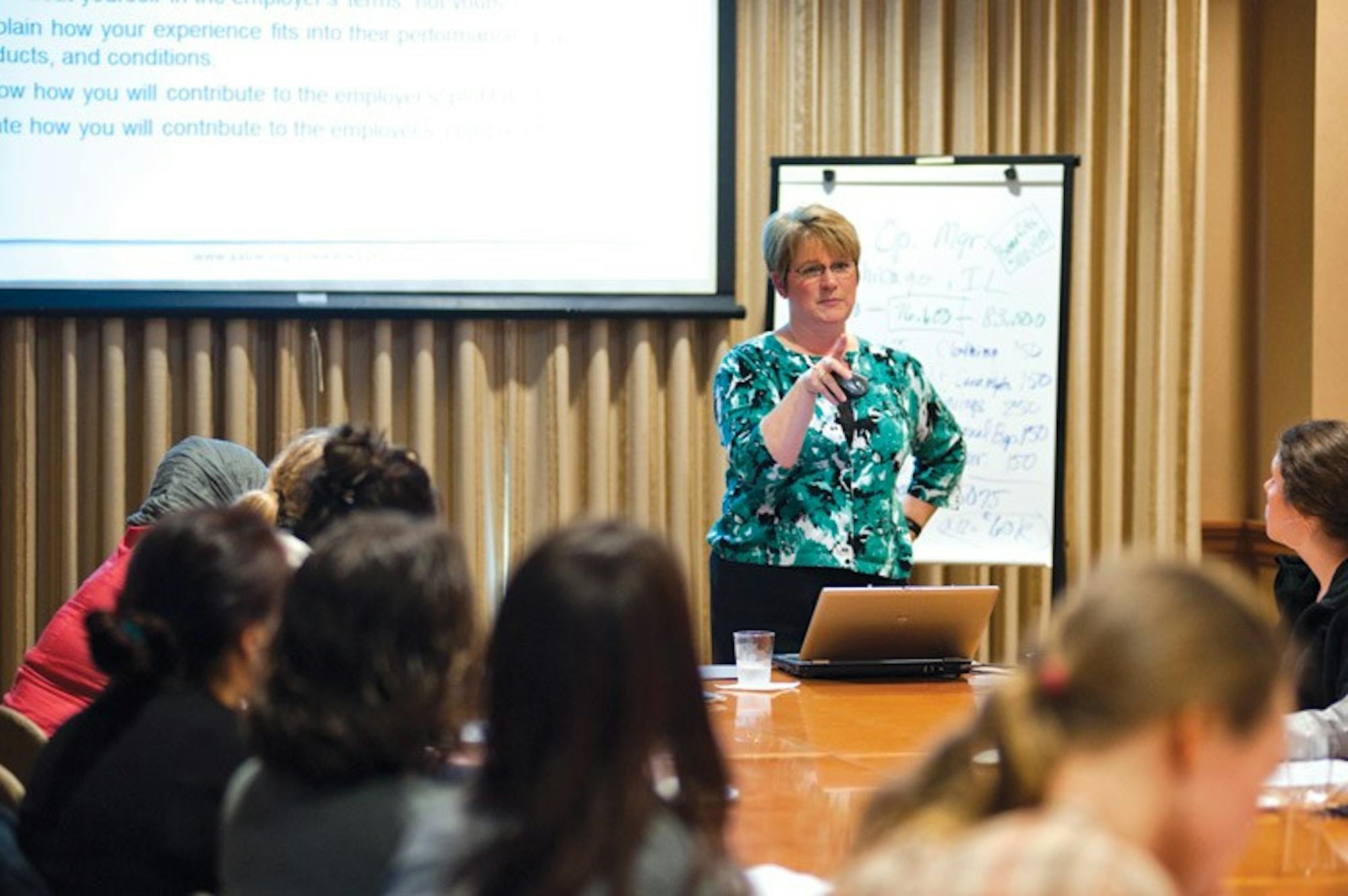
Ohio University’s Graduate College and the Women’s Center hosted a two-hour, interactive workshop Wednesday aimed at giving women the tools they need to earn fair compensation.
The workshop, titled “Start Smart,” was created through the combined forces of Women Are Getting Even, a project fighting for women’s equality in the workplace, and the American Association of University Women.
It was brought to OU after specific requests from graduate students for resources and training on negotiating salaries, said Roxanne Male-Brune, Graduate College director of grant development and projects.
The workshop explained the reason for the gender wage gap and provided participants with the resources they need to accurately benchmark their specific salaries and negotiate for equal compensation.
Lisa Rismiller, University of Dayton’s Women’s Center director, facilitated the workshop, which was capped at 20 students per presentation because of its interactive nature, though Male-Brune said many more expressed interest.
“Within three days of advertising, registration was full,” she said.
The two most important principles of salary negotiation are discussing salary only after you have been offered the job and knowing what you are worth in the marketplace, Rismiller said in her presentation.
Those are important skills for women as, more often, men will ask for a higher wage compared with women, said Kimberly Field-Springer, a graduate student studying health communications.
“Don’t sell yourself short. Don’t do it,” she said.
Both Male-Brune and Susan Dietzel, director of the Women’s Center, are now trained to facilitate a workshop, and they plan to host many more.
They are exploring ways to eventually introduce a similar idea to undergraduate female students, female faculty members and even male students because of the vast amount of positive feedback received, Male-Brune said.
gm220908@ohiou.edu