

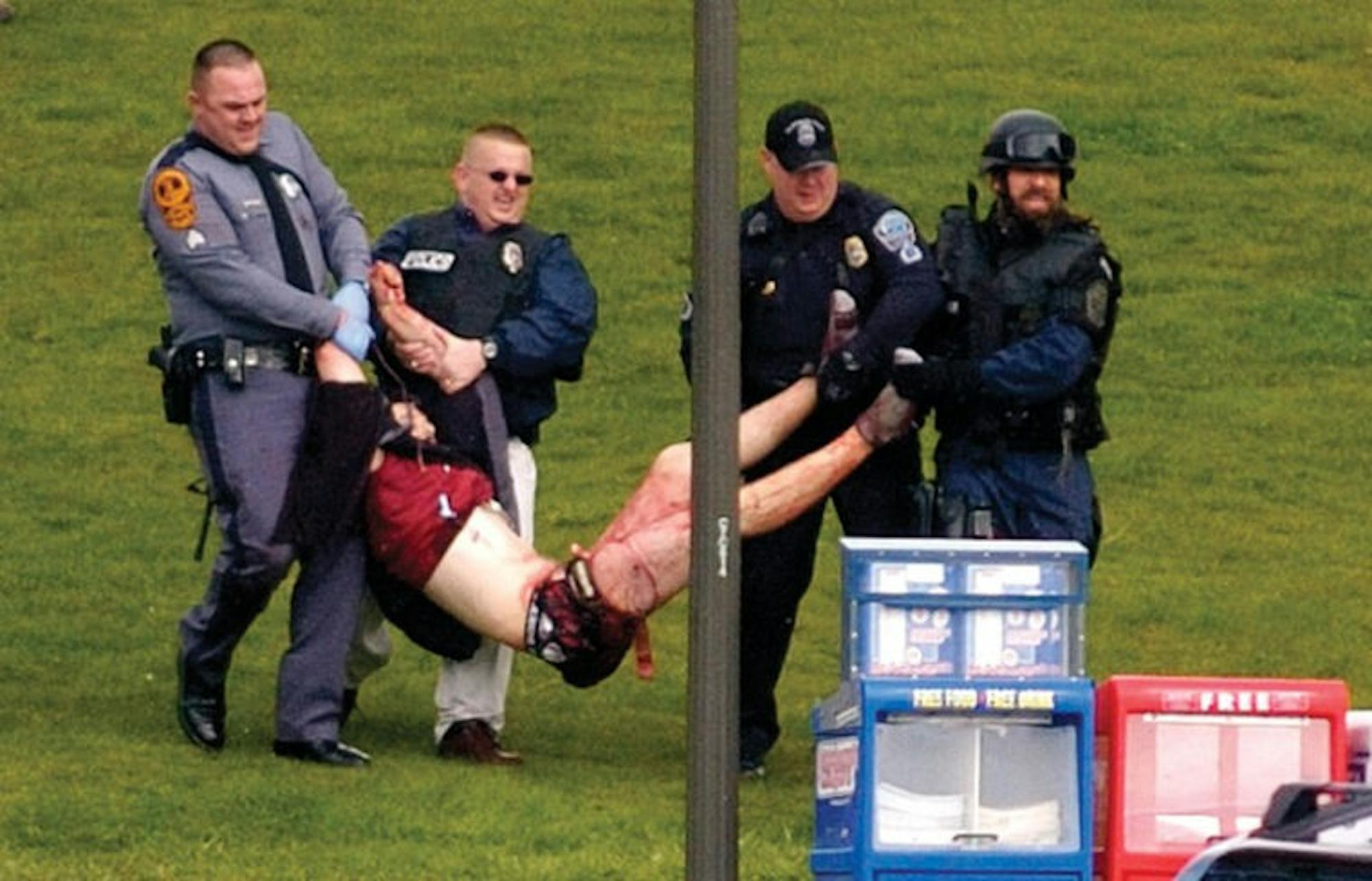
On April 16, 2007, Seung Hui-Cho, a senior at Virginia Polytechnic Institute and State University perpetrated the largest college shooting in U.S. history, killing 32 and wounding 25 others before committing suicide.
After shooting two students in a Virginia Tech residence hall, Hui-Cho was able to leave campus, mail a package and kill an additional 30 people before committing suicide. The horror lasted for two and a half hours.
The incident underlined flaws in the communication systems and alert procedures of American universities.
Just six months after the massacre in Blacksburg — Ohio University President Roderick McDavis approved the Critical Incident Response Team, which was created to aid Athens and OU in the event of a similar crisis.
The team is seldom called into action, said Becky Watts, McDavis’ chief of staff, noting that the last time was when a tornado touched down in The Plains on Sept. 16, 2010.
Consisting of university officials — including OU Police Chief Andrew Powers, Dean of Students Ryan Lombardi, Executive Director of Residential Housing Christine Sheets, and Emergency Programs Coordinator Jill Harris, among others — the team has never been called into action because of a threat of violence.
Once informed of an emergency, it is important that police officers know how to handle a situation, Powers said. He added that the Athens Police and OU Police departments have completed active-shooter training together and that units from both forces would be dispatched in the event of a university shooting.
Ron Brooks, an officer and active-shooter trainer with APD, said that, since such events happen so rarely, it’s difficult for officers to maintain proficiency with crisis skills.
Brooks cited a 2005 event in which Ryan Salim, then a senior studying English, abducted his roommate and forced him to drive throughout Ohio for 17 hours.
They then returned to Athens, and Salim entered Alden Library’s Learning Commons with two guns and ammunition, at which point OUPD and APD officers teamed up to apprehend him. Salim was later found not guilty of felony counts of carrying concealed weapons and abduction by reason of insanity. Brooks said the special response team could be sent to the crime scene, but expressed doubts about its efficiency.
“The problem with those teams is that it takes time for units to be called in, get their equipment gathered and head to the scene,” he said. “That’s why we train street officers.”
In the event of a shooting, Powers described a variety of different strategies students could use. After notifying OUPD, those include staying indoors if in a separate area from the shooter; or, if an active shooter is in the building, either escaping or barricading doors.
If and when possible, OUPD encourages students to overpower the shooter, he added.
“We encourage students to fight back,” Powers said. “If everyone attacks a shooter at once, it will put the person on the defense and he can more easily be disarmed.”
Patricia McSteen, associate dean of students, said that, in the event of a school shooting, a member of the response team would follow procedure and update the OU homepage with emergency alerts.
Powers added that a new text-messaging system was implemented this year. In the event of an emergency, the university will send text messages in addition to emails, television announcements, updates on OU’s website and Facebook pages, tweets about the incident, and outdoor sirens.
“It’s almost too much,” said Christy Jones, a sophomore studying outdoor recreation and education. “When the armed robber was on campus earlier this year, I was receiving texts, calls and emails every five minutes.”
Despite occasional incidents — such as Jan. 26, when Billy Caudill, a bank robbery suspect who was considered armed and dangerous — many students such as Stacy Holdeman, a sophomore studying nutrition, feel safe in Athens.
“Overall, I feel pretty safe on campus,” Holdeman said. “Everyone’s really friendly. I’ve never felt endangered or scared.”
bl171210@ohiou.edu


