

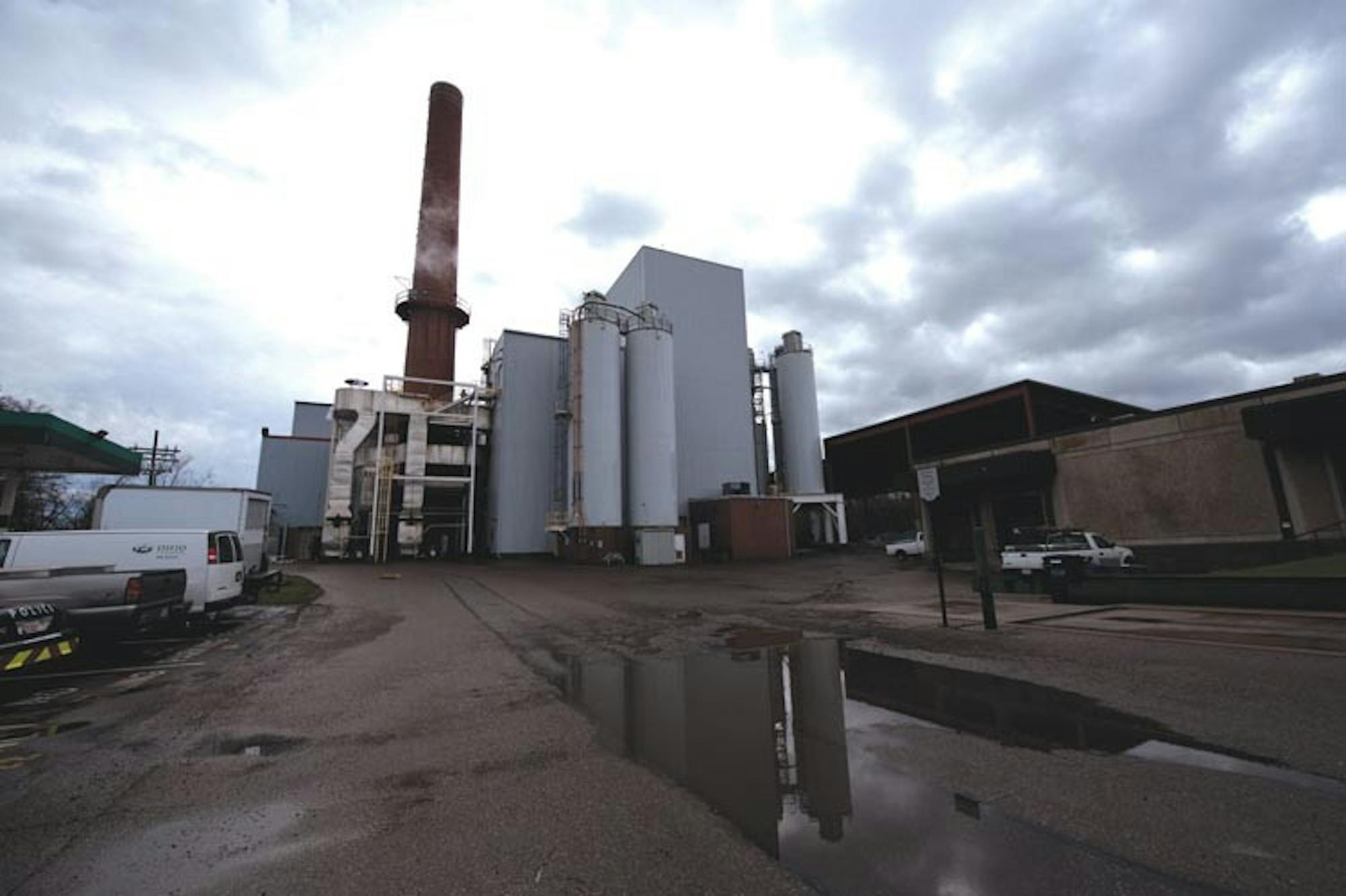
Ohio University is kicking its natural-gas initiative into high gear, announcing Thursday that Lausche Heating Plant will be running solely on natural gas for the next five months.
The low cost of natural gas allowed Ohio University to begin a five-month test of its boilers with the capacity to run on natural gas. Two of Lausche’s four boilers are able to run on natural gas.
Until now, OU has relied primarily on coal for its energy, with natural gas only accounting for 15 percent of OU’s fuel usage.
The university has a plan to transition off coal completely by 2015. Natural gas is environmentally safer than coal, as it produces fewer greenhouse gasses and other pollutants. Running on natural gas will reduce Lausche’s carbon-dioxide emissions by 41 percent, carbon monoxide by 41 percent, sulfur by almost 100 percent, mercury by about 99 percent, and nitrogen oxides by 75 percent, according to a university news release.
OU is expected to save $60,877 during the five-month test period, said Mike Gebeke, executive director of facilities management.
“Right now is a great time to test everything, and it’s the first time in history of Lausche that gas has been cheaper than coal,” Gebeke said.
Because of the mild winter, not as much natural gas was used throughout the United States, and the surplus has caused lower prices.
Last year, burning both coal and natural gas during the summer cost about $1.05 million. This year, using just gas is expected to cost the university $984,397.
The test period runs from March 15 to Aug. 15, and OU has the option to extend the test by two months into the fall.
“We need to convert (Lausche) or do something with the plant in the very near future, so we needed to run a test to see if the plant could run on all gas with the existing boilers that we have,” Gebeke said. “Since we’ve got a smaller capacity, (the test) has to be spring, summer and fall time. We don’t have enough boilers to get steam over the winter time.”
So far, OU has purchased 55 percent of the gas it expects to need for the test. The university will purchase the rest on the open market this summer, which means prices could drop even further.
“I believe (OU) will see the price gap of steam-plant operations in 100 percent natural-gas fuel mode is narrower than previously thought,” said Tim Strissel, director of energy management, in a news release. “The plant’s overall electrical cost is much less when only firing natural gas.”
Once the test is complete, the university will release data on the performance of the plant.
“We’re checking into the actual cost of running on natural gas,” Gebeke said. “There’s less … maintenance required than running on coal. We’re going to compare (the cost of running on coal) to what it’s going to cost to run on gas.”
If the two boilers that operate on natural gas perform well during the test, they will not need to be replaced when Lausche transitions to solely natural gas in 2015.
pe219007@ohiou.edu


