Balancing schoolwork, extra activities and a social life might push some daily habits to the wayside, but for Hiram Foster, praying is never something to be shoved aside.
Whether it is after waking up or while walking to class, there is always an opportunity to find time to pray, said Foster, a senior studying communication studies and president of Cru at Ohio University.
“Life isn’t ever going to slow down, so if it’s important, you’ll make time for it,” Foster said.
Prayer is a way to unload, talk to God and feel comforted in return, he said.
Yet while students such as Foster can take any moment to pray, for some followers of other faiths, the action might require more forethought.
Following Islamic tradition, Muslims turn to Mecca and say five prayers every day — and each prayer also has its own movements. Just like a mosque, the Muslim Students Association calls Muslims to pray at certain hours, but they don’t have to pray at that exact hour, said Rayan Alsubail, a master’s student studying computer science.
As long as someone participates in the ritual cleansing before each prayer and says it within a certain time period, it is acceptable, he said.
Prayer offers a connection to God, and it is imperative to organize the time to pray to him, Alsubail said.
Judaism also utilizes specific prayers for different events and services, but one can pray every day for happiness, strength and one another, said Kevin Feinberg, a freshman studying accounting and a member of Hillel at OU.
Prayers help people recoup from the week, and they also provide a sense of hope, Feinberg said.
“I try to be conscious and self-aware at all times,” he said. “Although I might not be saying a prayer, I want to keep the mindset and live the prayers I pray.”
Specific prayers are also incorporated into Hinduism, but the rules have changed throughout time, said Bhakti Shah, a graduate student studying education administration.
Those who believe in Hinduism believe in self-actualization and that there are three ways to reach it: Gyan, the path of knowledge; Karma, the path of action; and Bhakti, the path of devotion, Shah said.
“When someone prays, he devotes himself to the Lord,” she said. “So my kind of connection to Him is achieving a little bit of self-actualization.”
Although one can say anything to the Lord, there are traditional slokas, or special prayers, that can also be recited.
“There are certain rules, but the current generation believes that these rules are man-made and not by God,” Shah said. “God lives within you, and hence, you can connect with Him anytime and anywhere.”
And even for those who aren’t devout practitioners of a certain faith, prayer can also offer something more.
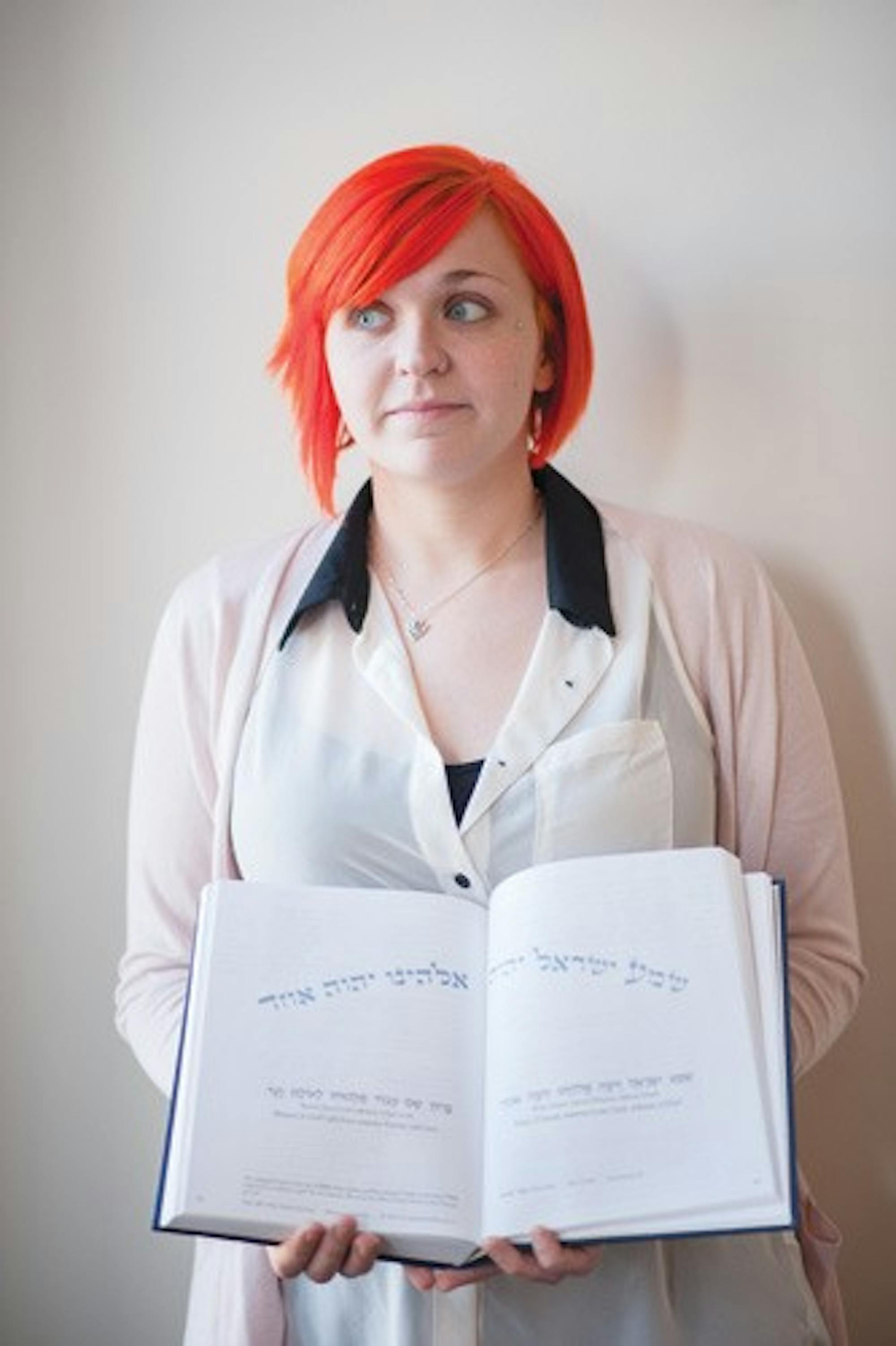
Corinne Zachry, a senior studying theater, said she wouldn’t exactly describe herself as Jewish, but has found that attending Shabbat services and praying helps ground her week.
Zachry first became interested in Judaism after taking a Hebrew course with Rabbi Danielle Leshaw of Hillel. The language sparked an interest in the religion, although she doesn’t adhere to most of the faith’s customs.
“It’s brought me a lot more peace than I had before,” Zachry said. “It is also nice to have something to look forward to and reflect on."
ao007510@ohiou.edu