Ten years ago, the United States launched a war of change.
After the invasion of Iraq on March 19, 2003 (Eastern Standard Time), the Iraq War brought about a new Iraqi government and set a precedent for the United Nations during the next eight years.
In Athens County and throughout the country, though, the 2003 invasion and subsequent conflict has changed how Americans — both civilians and those in uniform — view war.
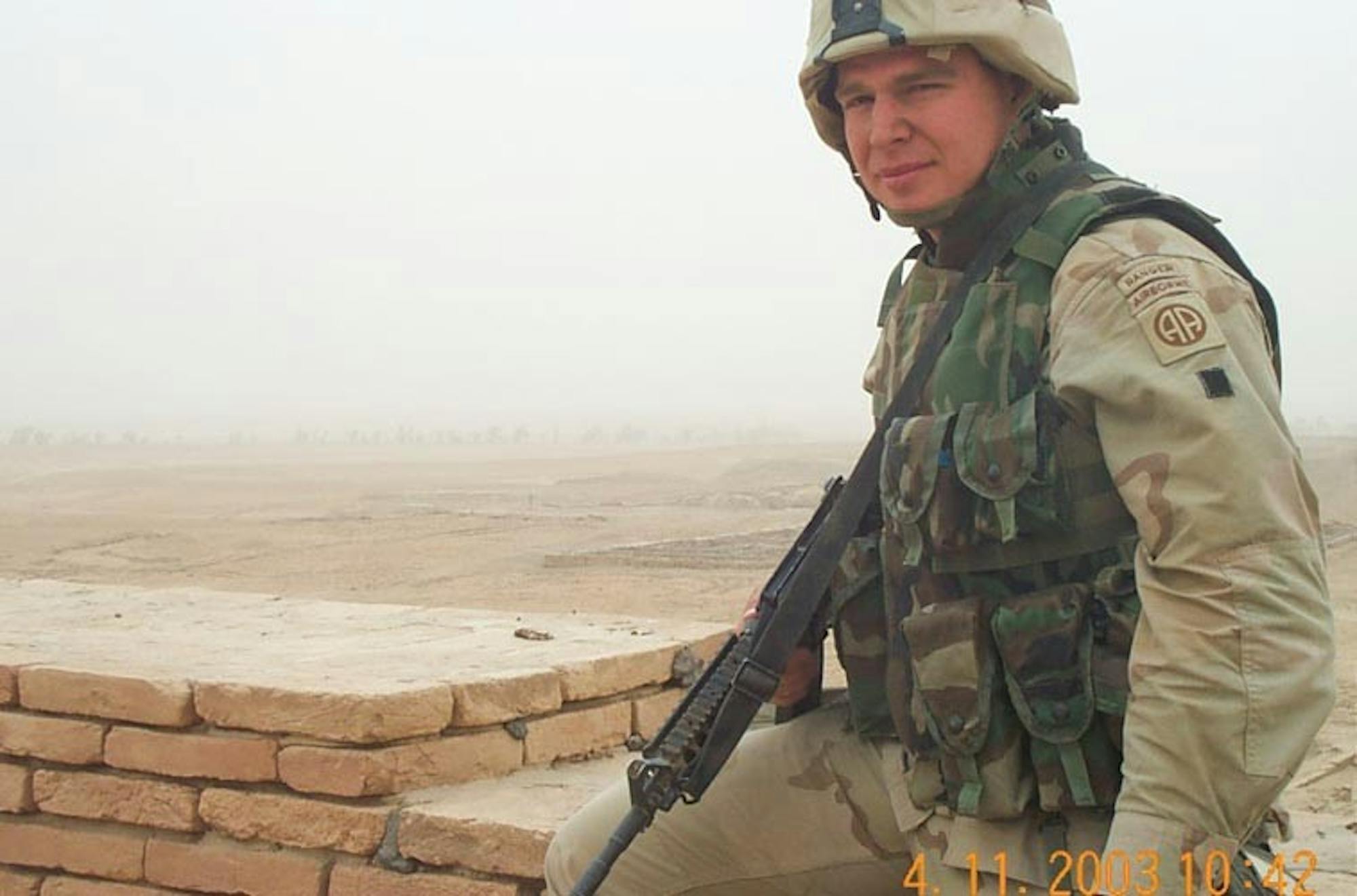
After the quick resolution of the Gulf War, Americans entered the Iraq War with the mindset that war was always easy, said Andy Stone, director of Engineering and Public Works, who had two tours in Iraq for the Army and the Ohio National Guard.
“The Gulf War was an anomaly and made us think we could zip over and win a war,” Stone said. “I think there was a lack of understanding by a whole number of Americans that war is not easy. (They learned that) it is painful and hard.”
Stone was a paratrooper in the Army’s 82nd Airborne Division, destroying weapon caches and maintaining security checkpoints in Iraq from March until May 2003.
Stone said that when President George W. Bush announced the end of major combat operations in May 2003, many U.S. soldiers didn’t realize they could be returning to Iraq.
“We came back around the time they said, ‘Mission Accomplished,’ so they pulled a lot of soldiers out,” Stone said. “This facilitated the growth of the insurgency, because we didn’t go in planning to have a long-term commitment or occupation.”
After returning stateside, Stone took a position at the City of Athens, but by 2005, Stone had redeployed as a member of the Ohio National Guard, this time to oversee construction projects and make security checkpoints more defensible.
Stone is currently a Major in the Ohio National Guard.
The second phase of the Iraq War led to an evolution of the U.S. Armed Forces, said Capt. Cullen Lind, one of three brothers from Guysville who enlisted in the U.S. Army during the Iraq War and one of two who served in Iraq. Guysville is about 10 miles from Athens.
“The Army is always evolving, but (in the last 10 years), our understanding of counterinsurgency and resiliency has increased and improved,” Lind said.
“We’re also more sensitive to concerns like post-traumatic stress disorder.”
Lind, who served as a platoon leader alongside the Iraqi Army in 2008, said he felt “part pride and part concern” while he and his two younger brothers juggled tours in Iraq and Afghanistan.
With three children actively serving abroad, Lind’s mother, Bettie Bow, said she received a lot of support from Athens County residents but that an emotional rift existed between military families and other civilians.
“Most of the people around here, though they were supportive, didn’t really know what it’s like,” she said. “Nobody knows what it’s like to get a phone call in the middle of the night to hear that something has happened.”
When the Iraq War officially ended in December of 2011, Bow said many of her worries subsided.
“It’s better now that the war has settled down,” Bow said.
sh335311@ohiou.edu
For a story on Ohio University Iraq War veterans, click here.