

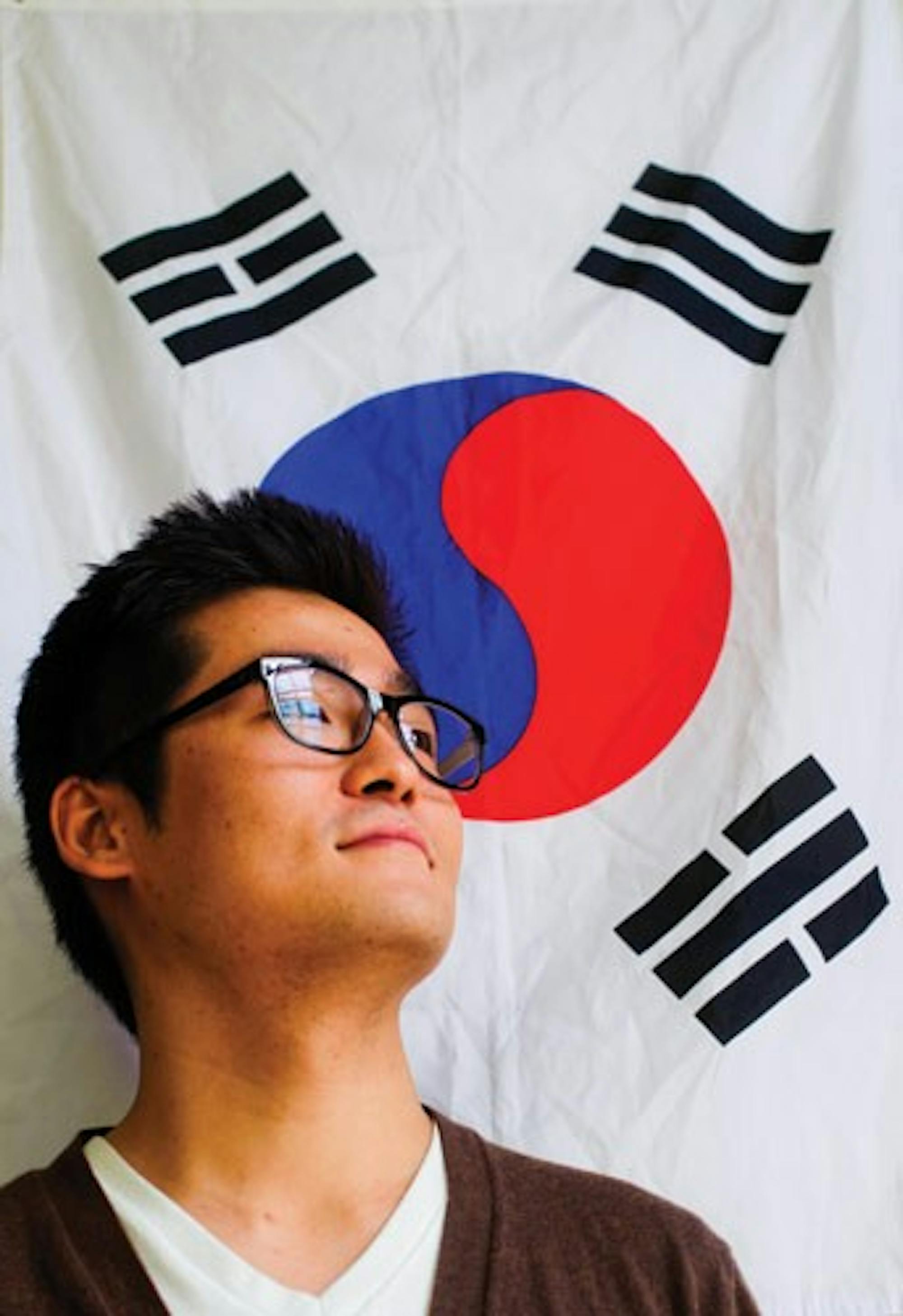
Between a war that conceived a law mandating all South Korean male citizens to enlist, and mounting threats from North Korea, some Korean international students at Ohio University face stressful predicaments.
Though some OU students have expressed worry about nuclear threats from North Korea after prominent attention in the media, Jeanne Gleich-Anthony, a professor in OU’s department of history, said the threats are not something to worry about for those in the U.S.
“Since (Supreme Leader) Kim Jong-Un has just recently taken power … many outside observers of North Korea feel that much of the rhetoric and actions are more for his domestic audience,” Gleich-Anthony said. “It is a means of demonstrating his toughness and strength to his people and to the leaders of the North Korean army and Korean Workers’ Party.”
Gleich-Anthony said the danger of a nuclear attack on U.S. soil is not likely; however, for others, it might be more relevant.
“The real danger in all of this is not that North Korea can or will ‘nuke’ the U.S.,” she said. “It is more about this situation escalating into an actual military conflict on the Korean peninsula.”
Yong Ik Lee, a 24-year-old South Korean, currently resides in Wonju of the Gangwon province, which he said has a heavy military presence.
“North Korea has made threats before, so this is not something we’re not familiar with,” Lee said. “But I think most people are feeling that this time something’s different.”
Lee also served in the military. He was given an honorable discharge after serving from 2010 to 2012 and then was put automatically into the National Reserve. If war breaks out, he said he would automatically be enlisted.
Sung Hoon Park, a 27-year-old Ohio Program of Intensive English student at OU, came from Cheonan, South Korea, in 2012 after serving two mandatory years in the Korean Army from 2005 to 2007.
“You could consider it as practice (for war),” Park said. “No matter where you are, you have to go to war. If war breaks out, you must go.”
South Korea has a conscription law, which requires all male citizens between the ages of 18 and 30 to enlist into the Army. Knowingly evading service ultimately sends the offender to prison for up to three years and requires them to pay a fine equal to $45,000, according to Immigration Daily.
“I’m not afraid if I get called back,” Park said. “I’m more annoyed. In America, you have more freedom. You can choose to enlist if you want to or not. In Korea, that’s not an option. We don’t have that choice. Even if you are studying in America, you must go.”
OU has about 30 registered Korean international students on all campuses, according to the Fall 2012 enrollment head count statistics.
There are exemptions from military duty for international students. These exemptions include obtaining a green card or permanent residence in another country, renouncing citizenship in Korea or marrying an American citizen, according to Immigration Daily.
Park said the conflict in Korea does worry him to an extent because of his family who currently resides there.
“Every once in awhile, North Korea appears on the news. I call them and see if they’re OK,” he said. “I think they’re worried a little.”
After hearing some OU students make negative comments about North Koreans, Park said he hopes they will not make generalizations because of the conflict.
“North Koreans, they’re not bad people; the government is,” Park said. “People think we are different because we are divided, but we can’t be different. On the inside, we are the same. We are still the same people.”
hy135010@ohiou.edu


