

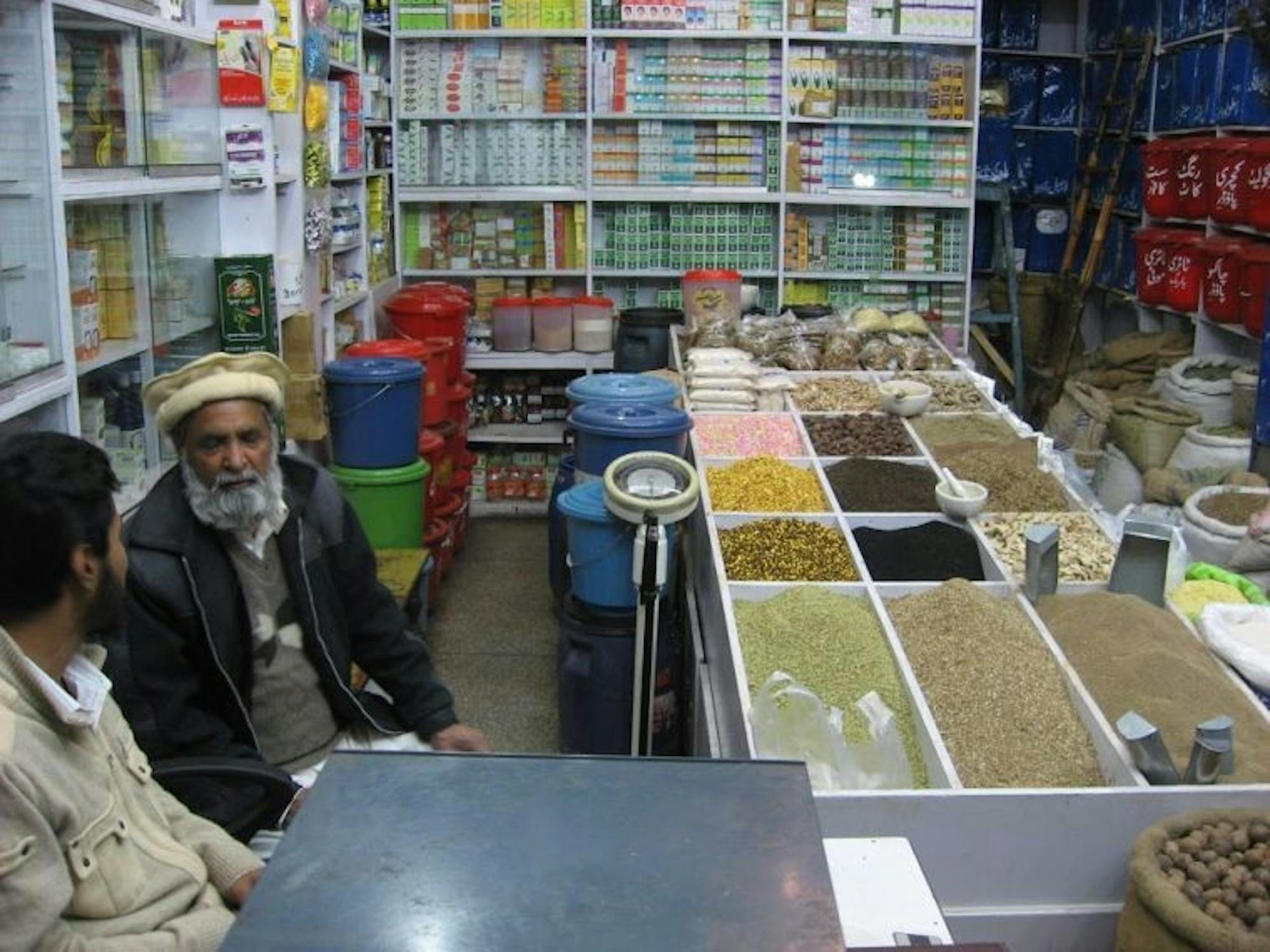
A medicine incorrectly identified as a natural supplement could be the difference between life and death.
That’s why Ohio University is researching a technique known as “DNA barcoding”— a process to identify plants and organisms’ unique genetic codes—funded by a $400,000 general grant by the National Academy of Sciences.
“If there was something like eggplant in your coleslaw, and you didn’t have any reference sequences for eggplant, you wouldn’t find a match,” said Melanie Schori, a post-doctoral fellow in the environmental and plant biology department. “The biggest challenge with DNA barcoding is establishing enough references to know whether a particular portion of DNA will actually work for identifying species.”
Despite OU’s three years’ work on research, the concept of DNA barcoding has been used for about 10 to 15 years.
The DNA barcoding process starts with extracting an organism’s DNA. Depending on whether the organism is a plant or animal, parts of the DNA are extracted with a process called polymerase chain reaction and translated into readable sequences created by OU’s Genomics Facility.
“The idea behind barcoding is that around 500 base pairs of DNA sequence is enough to match one species and one species only,” Schori said in an email. “In reality, it doesn’t always work, especially for plants, where two or three different pieces of DNA might be needed in combination to identify individual species.
“To determine which organisms match, you need to generate barcodes from what are called voucher specimens. These are samples where you know the identification.”
AlexaRae Kitko, a junior studying cellular molecular biology and biochemistry, interned in the research department through the Honors Tutorial College and said this research helps establish international relations with Pakistan, which has limited access to Western medicines and instead rely on natural remedies.
“I had little training experience in a lab until doing DNA barcoding,” Kitko said. “I’ve always really enjoyed the natural world…it’s amazing to see the diplomacy between us and Pakistan.”
More than 70 percent of Pakistan’s population depends on medicinal plants for self-treatment, said Zabta Shinwari, professor and chairperson of biotechnology at Quaid-i-Azam University in Islamabad, Pakistan, in an email.
“The problems come when identification becomes a major hurdle in quality assurance of this medicine, and sometimes adverse action of these medicines even kills patients,” Shinwari said. “Hence, a method was needed to quickly and accurately identify the plants, and DNA barcode will be the answer.”
Shinwari also said barcoding will help keep medicine at an affordable cost for Pakistanis, maintain a high quality of medicinal plants and establish relationships with medicinal plant collectors.
“They will be able to get better prices for their collected material and also help in conserving biodiversity as collected material will not be wasted,” he said.
Although DNA barcoding has come a long way, the university does not plan on continuing the research since grant funding for the project is close to being completely used.
“There’s not much grant money available for DNA barcoding at this point, unless you’re working on neglected groups like insects or protists,” Schori said. “I think the future of barcoding depends on interest and support from industries — if they can authenticate the ingredients that they’re using in their products, it will give them a level of quality control they don’t currently have.”
hy135010@ohiou.edu
@HannahMYang


