

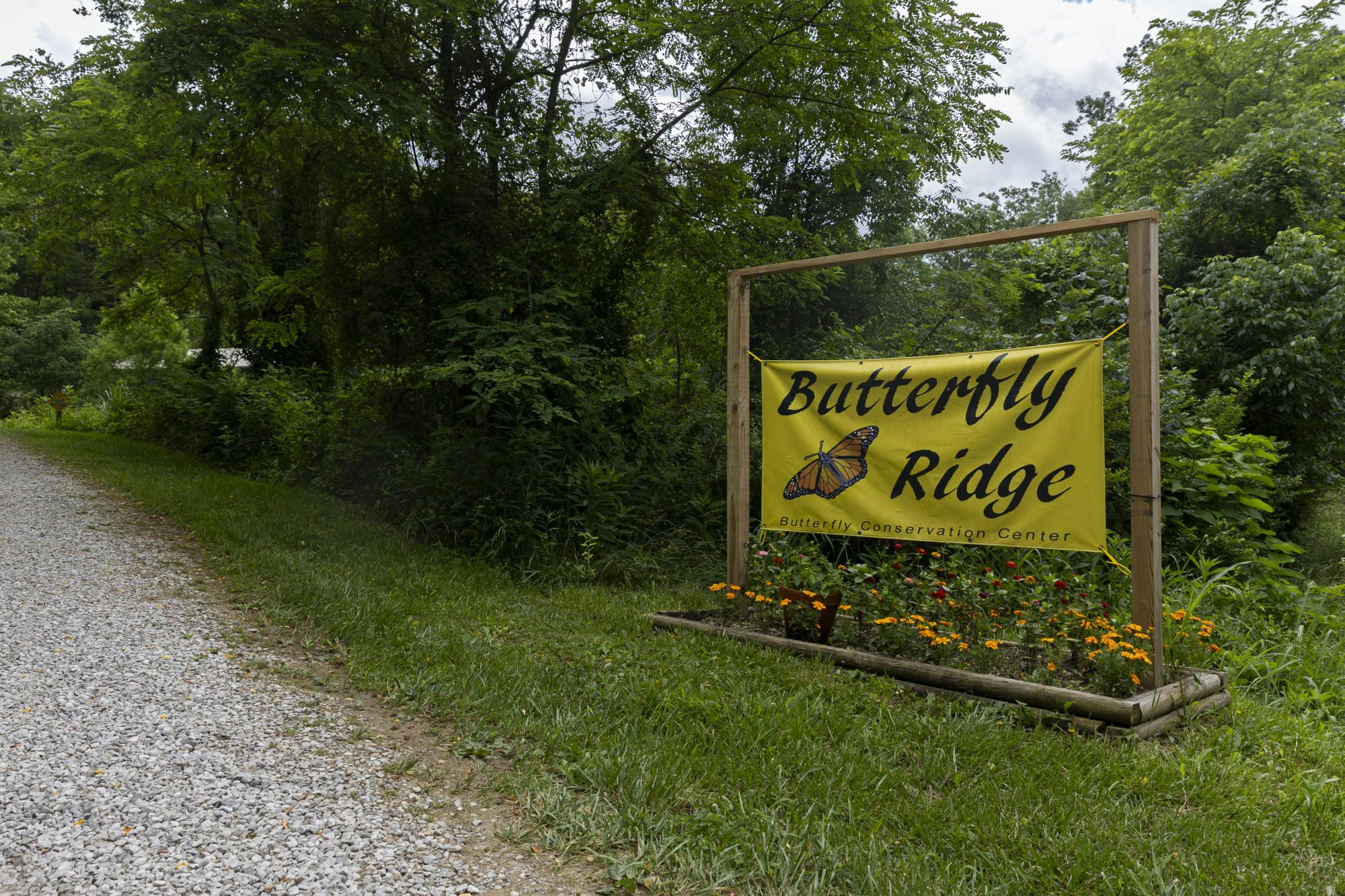
According to a study by Michigan State University published by the journal Science, the abundance of butterflies dropped 22% across the U.S. from 2000 to 2020. Of the 134 species found in Athens, 94 are in decline. The primary reason for the decrease comes from habitat loss critical to butterfly populations.
Just a 10 minute drive north of Hocking Hills State Park resides Butterfly Ridge Conservation Center in Rockbridge, Ohio, where pollinator populations are on the rise.
The center lies on a 21-acre property that has been in the family of Chris Kline, Butterfly Ridge co-founder and director, for 162 years. He opened Butterfly Ridge with his wife, Kris, in 2017, but said the idea to open first came to him in 2014.
“A lot of the jobs I had eventually worked their way around to butterfly related stuff, and so we thought, well, ‘we know butterflies, we know how to teach people, so why don't we do a butterfly thing?’” he said.
Compared to the decline in butterflies and moths on the state and national level, the population and diversity at Butterfly Ridge is up over 300%, Kline said. This sharp increase comes from how the property is managed. It is divided into multiple small habitats for butterflies and moths, including wetland, prairie and wooded areas. Each habitat attracts different types of pollinators.
Kline said when his father owned the property, he frequently mowed much of the land. When he inherited it, Kline changed the land to be more conducive to pollinator habitats.
He said small changes in the way land is managed can help native plants and animals of all kinds.
“That brush you just cut, maybe instead of burning it, you just let it be in a pile in the back corner of the yard,” he said. “Maybe instead of putting weed and feed on the lawn, you just let the clover do its thing. There are butterflies that use clover as their caterpillar host plant. It's just a matter of rethinking how we do things.”
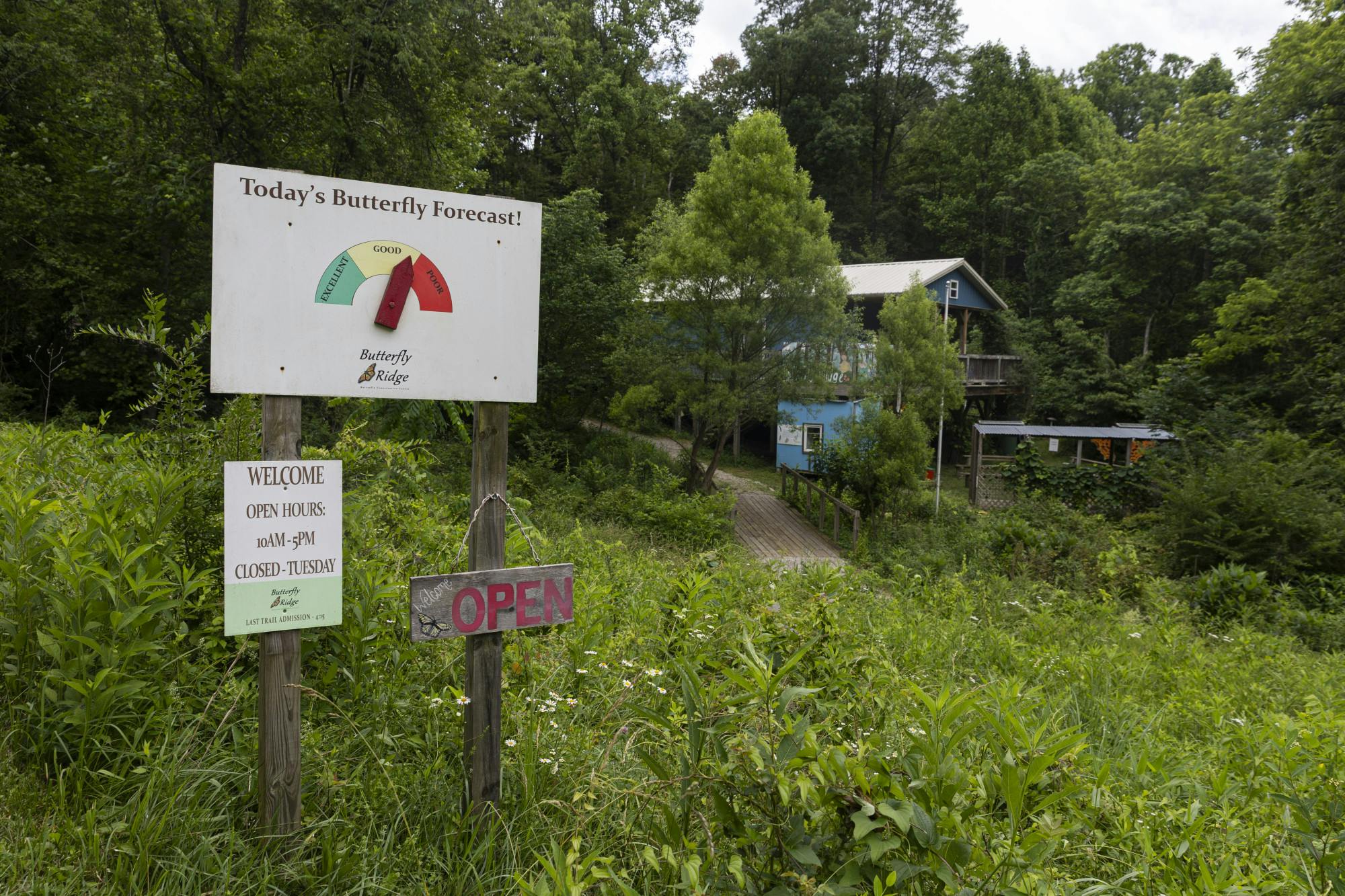
Guests enter at the nature center and gift shop, where they can learn about butterflies and moths. A one-mile trail weaves through the land for visitors to explore. Various signs can be found on the trail for visitors to learn about native pollinators and what they might see.
Each day, the center posts its butterfly forecast on social media, giving guests an estimate of how many butterflies and moths they may be able to see. The forecast is based on multiple factors, including weather and temperature, and is broken down into excellent, good and poor categories.
Along with the daily education it provides, Butterfly Ridge also hosts various events during the season, most focusing on moths in the evenings. Mark Corcoran, from Cincinnati, is a participant in past Butterfly Ridge and said he recommends them for anyone in the Hocking Hills area who is interested in native pollinators.
“I would recommend it for anybody who's interested in nature,” he said. “It's a protected habitat, and they have a good amount of different types of plants for butterflies to view during the day and at night. Because of the biodiversity of plants they have in that area, you'll get a lot of different types of moths to the setups they have.”
Many of the pollinators on the property can be fairly small, so Kline recommends slowing down to have a better chance of seeing them.
“If you focus on your peripheral vision, if you watch for shadows on the ground, that will give you clues,” he said. “One of the things we try to convince people to do, we have lots of benches and picnic tables along the way. Just park yourself on the bench and sit there for a half an hour and let nature come to you.”
Butterfly Ridge is open every day except Tuesdays from 10 a.m. to 5 p.m., and admission is $6 per person. Admission to the trails ends at 4 p.m., and online tickets must be bought 24 hours in advance.
Kline said the issue of pollinator decline is able to be fixed by changing land management practices.
“It's a problem we've created and we can solve,” he said. “It's a matter of looking differently at how we select the plants for our garden and how we manage our properties.”


