

Correction appended: A previous version stated that one dimension of the OBBBA will grow the Global Domestic Product. The article has been corrected to say Gross Domestic Product.
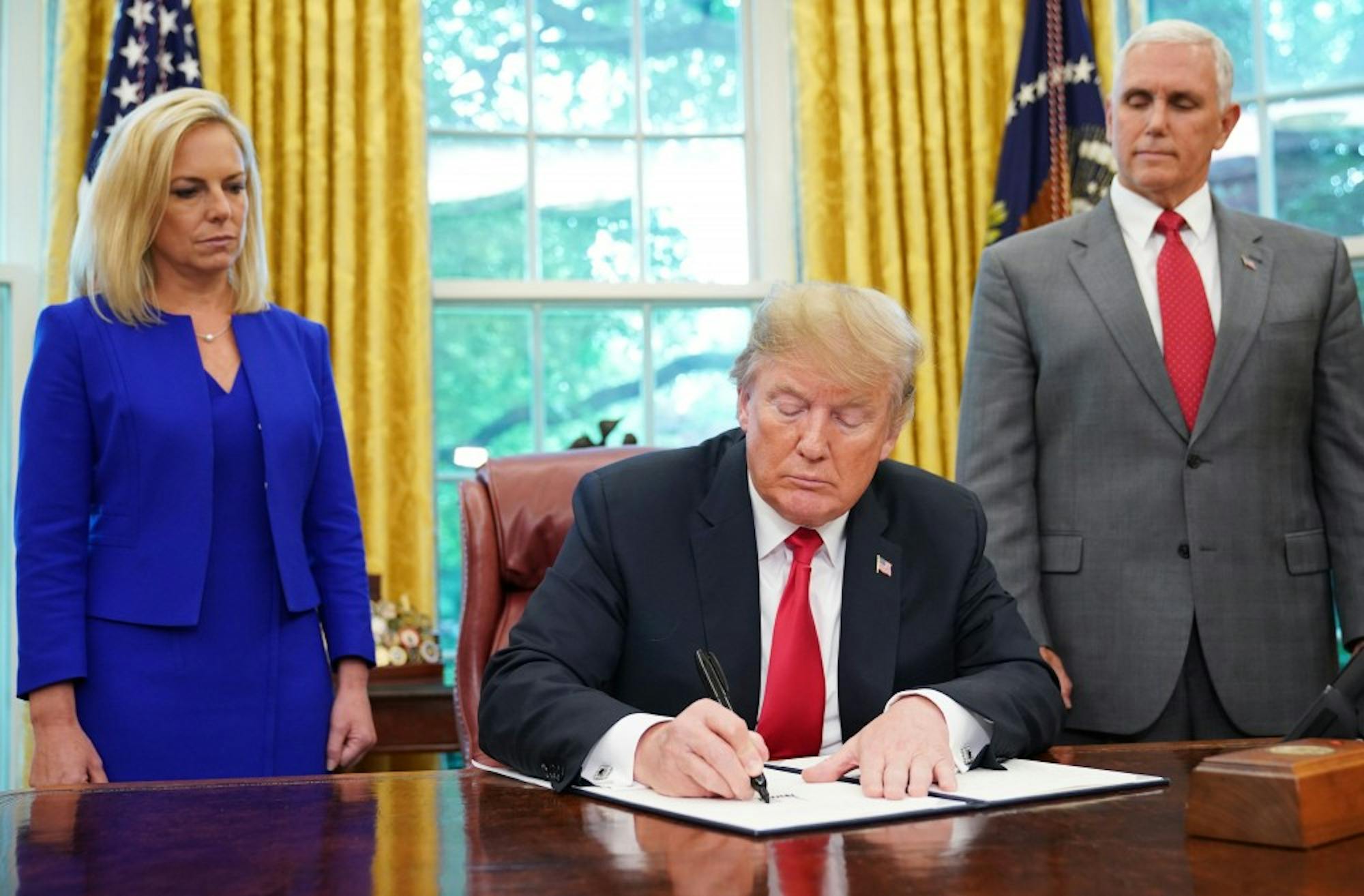
The Trump administration's One Big Beautiful Bill Act passed Congress and was signed into law by President Donald Trump on July 4.
The almost 900-page-long legislation includes extensive economic reforms that provide tax cuts totaling around $4.5 trillion, along with new legislation in regards to universities, according to The Associated Press.
According to Section 81001 of the OBBBA, the cap on the Parent PLUS program will be modified to $20,000 annually and $65,000 for the student's total college education, effective July 2026. The Grad PLUS program will also be eliminated.
Other parts of the OBBBA place stricter limits on borrowing amounts for loans, such as setting a lifetime limit of $257,500 for any single borrower across federal loan types, excluding Parent PLUS Loans.
“The University is aware that the federal government has officially passed its spending and tax legislation, and we are currently reviewing the final version of the bill in order to fully assess and understand its potential impacts on both the University and the communities in which it serves,” Ohio University spokesperson Samantha Pelham said.
The bill has stirred differing opinions across the American public. According to a survey conducted by Pew Research, 49% of Americans oppose the legislation, 29% are in favor and 21% are not sure.
Proponents of the bill argue it will provide relief for working middle-class families across the country through tax cuts like no tax on tips. Opponents of the bill often argue it will benefit high-income individuals and families, leaving the middle-class and lower-income with fewer resources, according to the AP.
“In terms of the effects on economic activity, income distribution, and overall well-being, I would characterize the OBBBA as an expansionary but regressive fiscal policy,” associate professor of economics Roberto Duncan wrote in an email.
Duncan goes on to elaborate on his characterization of the OBBBA into two dimensions. He argues the business incentives, tax exemptions and income and corporate tax cuts will stimulate spending and investment, therefore growing the Gross Domestic Product.
He then identified the regressive dimension by highlighting the bill’s policy of lowering high-income households' tax burden and reducing funding for low-income households receiving social welfare programs.
The OBBBA will also make drastic steps to fulfill the Trump administration's goal to conduct the largest mass deportation in American history. According to the AP, the bill will provide $350 billion for the U.S.-Mexico border and for the development of 100,000 migrant detention facility beds.
The AP also said the OBBBA will provide billions of dollars to fund shipbuilding efforts and airtime advancements. The legislation will also invest $25 billion towards a project to build the Golden Dome missile defense, a system that intends to intercept foreign missiles.
This new legislation will also bring changes and expansive cuts to the social programs of Medicaid and the Supplemental Nutrition Assistance Program. Medicaid and SNAP are social welfare programs designed to provide impoverished Americans with healthcare and food assistance.
The bill also implements numerous tax deductions available from 2025-2028, allowing workers to deduct up to $25,000 of qualified tip income annually from their taxes, according to the IRS.
Similarly, individuals who receive overtime pay can deduct any pay that exceeds their normal hourly wage. Under the OBBBA, individuals who purchase a qualified vehicle will be able to deduct the interest paid on their loan.
“Overall, because the tax cuts are the dominant component of this bill—far larger than the changes to spending and transfers—the public deficit is expected to rise,” Duncan wrote in an email. “Current estimates place the increase between $2 trillion and $3 trillion over the next decade.”


