

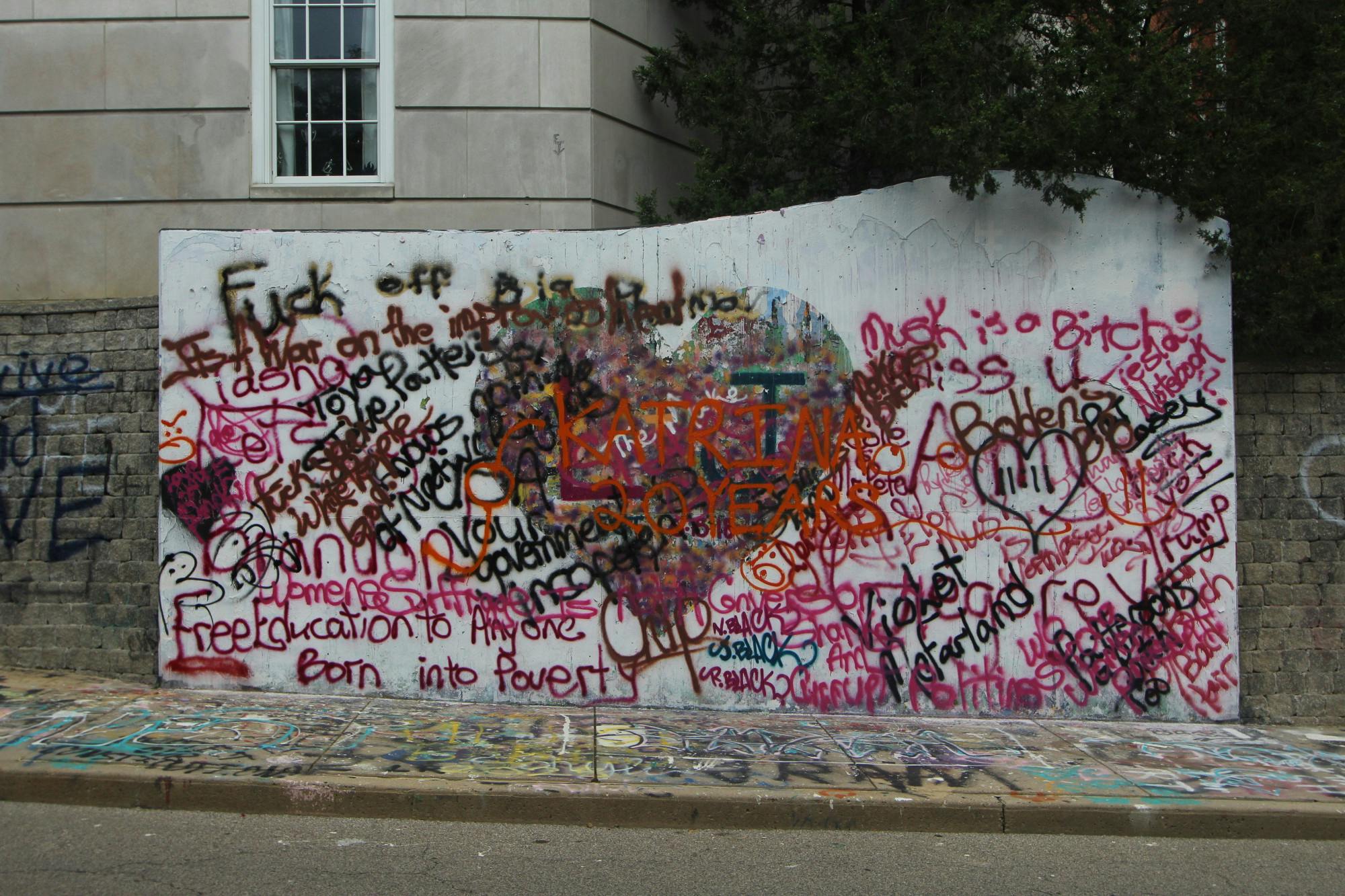
Recent state and national political legislation has been affecting students at Ohio University, particularly in relation to the ban on diversity, equity and inclusion or DEI organizations.
With divisive opinions on politics splitting much of the U.S. in half, students have felt more comfortable expressing their beliefs, even in a prejudiced manner.
After a video surfaced on TikTok in April of a student stomping on LGBTQIA+ flags in Howard Park, the OU Student Senate passed a campus bigotry bill, according to a recent report by The Post.
According to the report, the Senate’s campus bigotry bill stands as a catalyst for the start of increasing support for minority groups.
“Ohio University is dedicated to supporting every Bobcat with resources tailored to meet their individual needs,” Sam Pelham, a university spokesperson, wrote in an email. “From academic support and mental health services to career advising, accessibility accommodations, emergency assistance, and more, we offer a wide range of support services to help students thrive.”
Although OU’s official support centers for certain groups have been closed, the Student Senate is pushing organizations to use the Senate Appropriations Committee, or SAC. SAC is the Student Senate’s funding commission, which provides semesterly and bi-weekly funding to student organizations for programming.
“We have a plethora of resources available and more than $150,000 available to our students that they can use to program effectively, including programs that may have been previously labeled as DEI programming,” Student Senate President Dan Gordillo wrote in an email.
The Student Senate has emphasized that students will not be left to build these communities on their own.
“We’re hoping to bridge organizations together to assist in filling the programming gap,” Gordillo wrote in an email. “Having several organizations unite to work together will, hopefully, create better and stronger programming.
Additionally, the Student Senate plans on relieving the political tensions on campus by providing a space for students to talk about their needs in a safe environment, Gordillo mentioned.
“We need to hear concerns from students, so we can push for them with the appropriate administrators and university leaders,” Gordillo wrote in an email.
Senate Bill 1, which took effect in June, requires major changes to public universities, mainly forcing them to cut DEI programs. The bill became evident at OU when the Women’s Center, Pride Center and Multicultural Center were closed over the summer.
Members of those communities have expressed disappointment with the closures.
“It would have been nice to have been able to just go to a center,” Zoe Elmore, a freshman majoring in creative writing, said. “Where there were people that were like me, where I could possibly meet new people, make new friends, make connections, and I think it's just about using a safe space.”
SB1 also requires university professors to stay neutral about topics that could be considered “controversial,” according to a recent report by The Post. This could translate into a reduction in professors’ academic freedom regarding classroom topics and has even resulted in the removal and merging of certain course options.
“I remember going to OU Discovery Day two years ago, and I had seen a boost for LGBTQ studies, and that's no longer a course here, because I tried to sign up for it during my orientation, and the advisor I was with said, ‘We no longer offer that course,’” Elmore said.


