President Donald Trump’s One Big Beautiful Bill Act passed July 4, bringing changes to the Supplemental Nutrition Assistance Program.
The OBBBA shifts SNAP payment to states, eliminates and modifies how benefits are determined, changes who qualifies for SNAP and revises exemptions for work requirements, according to the bill summary.
In the 2024 fiscal year, 41.7 million Americans utilized SNAP benefits, with an average monthly payout of $187.20, according to the United States Department of Agriculture. In Athens County, 8,519 people (13.73% of the population) received SNAP benefits, according to a SNAP data map.
Valerie Stillson, the public relations coordinator for Hocking-Athens Perry Community Action, said SNAP is one of the nation’s most effective tools for addressing hunger.
“Currently, for every one meal that the network of food banks and food pantries provides, SNAP provides nine,” Stillson said in an email. “SNAP helps working families, older adults and disabled Americans weather tough times by allowing them to choose the fresh, healthy food that works best for their families.”
The Congressional Budget Office predicted May 22 the bill would cause the program's participation to be reduced by 3.2 million people on average every month from 2025-34.
Starting in the 2028 fiscal year, state-matching funds will be required for allotments. The match amount will be determined from the state’s SNAP payment error rates, which are determined from the accuracy of benefit distribution. In addition, 25% administrative costs are placed on the federal government, while states are responsible for 75%.
“I would hope that no state takes what I would view as the extreme option of just sort of ending their participation and SNAP altogether,” Paul Shafer, an associate professor and co-director of the Medicaid Policy Lab at the Boston University School of Public Health, said. “I think the more progressive states will find a way, whether it's through increasing taxes or making cuts elsewhere. I think it's just going to be hard.”
Exemptions to the Able-Body Adult Work Requirements will now be made for parents who have children under seven years old, which previously was made for having children under 18 years old, and those under age 65 must work to meet those requirements.
Recipients of SNAP have also been limited to U.S. residents and immigrants who have a citizenship status of Cuban and Haitian entrants. People from the Oceania region of Marshall Islands, Federated States of Micronesia and the Republic of Palau are now eligible to receive SNAP benefits.
In a paper published by Shafer and six other authors, it was found the risk of food insecurity had increased by 5% since the end of the COVID-19 emergency allotments.
“Obviously, a lot of the economic stimulus efforts … that happened during the COVID-19 pandemic started to unwind around 2023 when the public health emergency was ended,” Shafer said. “We've also seen rising inflation, particularly in food prices, which has made groceries pretty expensive and sort of a struggle point for families.”
It is tough for college students to qualify for SNAP benefits. According to the Government Accountability Office, 3.8 million college students experienced food insecurity in 2020, and 59% of SNAP-eligible students did not receive benefits.
“People are coming from different circumstances and different levels of family support,” Shafer said. “If you can't afford a generous meal plan, especially living in either isolated college campus areas where there isn't easy access to a supermarket or if you live in an urban area where there might be access but costs might be higher, you can see why college students might have a harder time.”
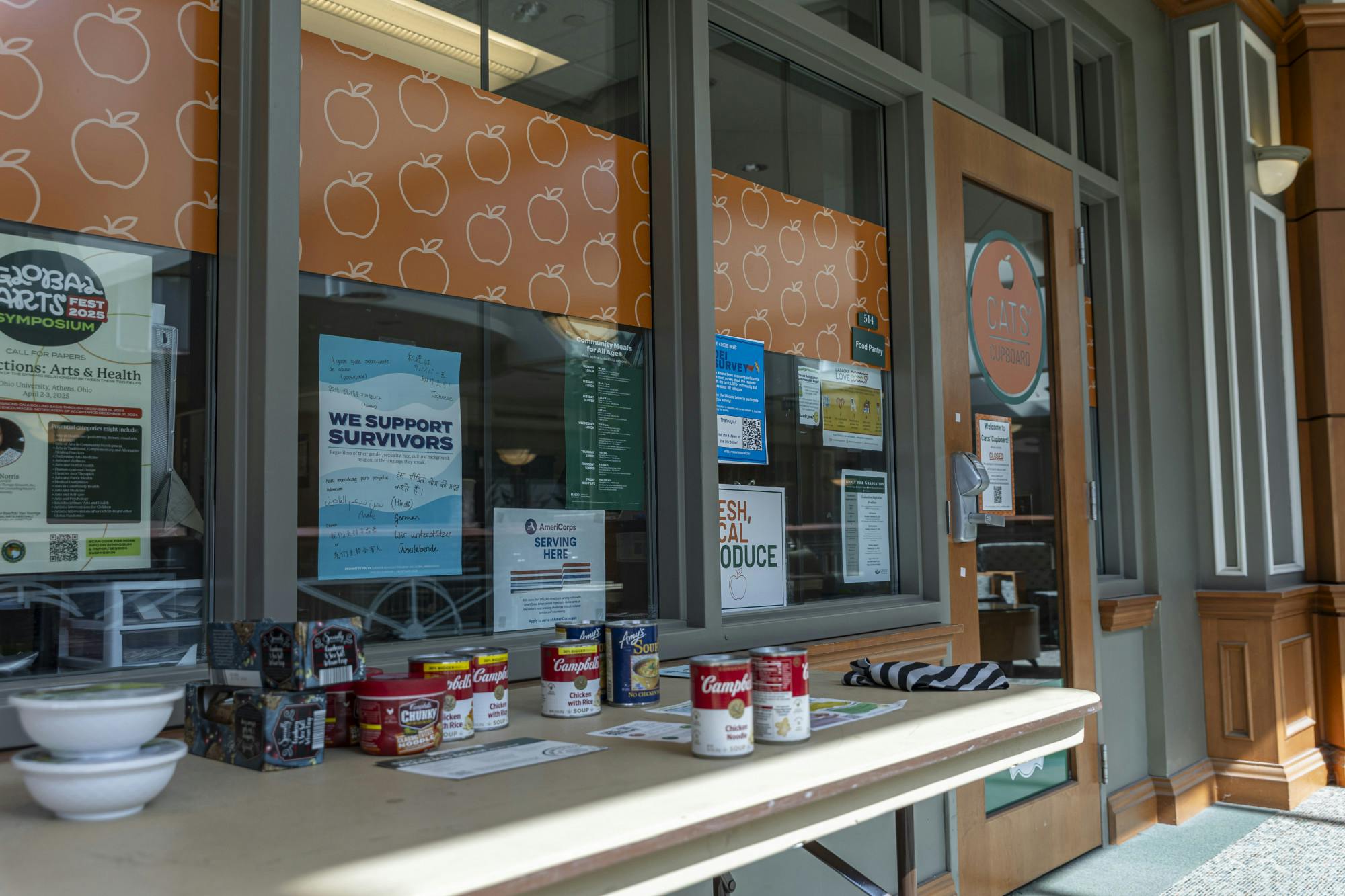
According to Michelle Gorman, a campus community health worker, Cats Cupboard, Ohio University’s food pantry, has seen approximately 3,000 total visits since Jan. 1. The pantry is open to all students, does not take SNAP benefits and requires no income verification. The university also assists students with determining their eligibility for receiving SNAP, and Jefferson Marketplace accepts SNAP benefits.
“Ohio University is committed to supporting students facing food insecurity and financial hardship through a variety of resources designed to meet both immediate and ongoing needs,” Sam Pelham, a university spokesperson, said in an email.
Shafer said to further help with food insecurity, universities offer meal swipe donation programs; however, he said schools often fail to publicize them.
“Even though overcoming the stigma as a student, electing to receive those, I think there's more work that can be done there,” Shafer said.