

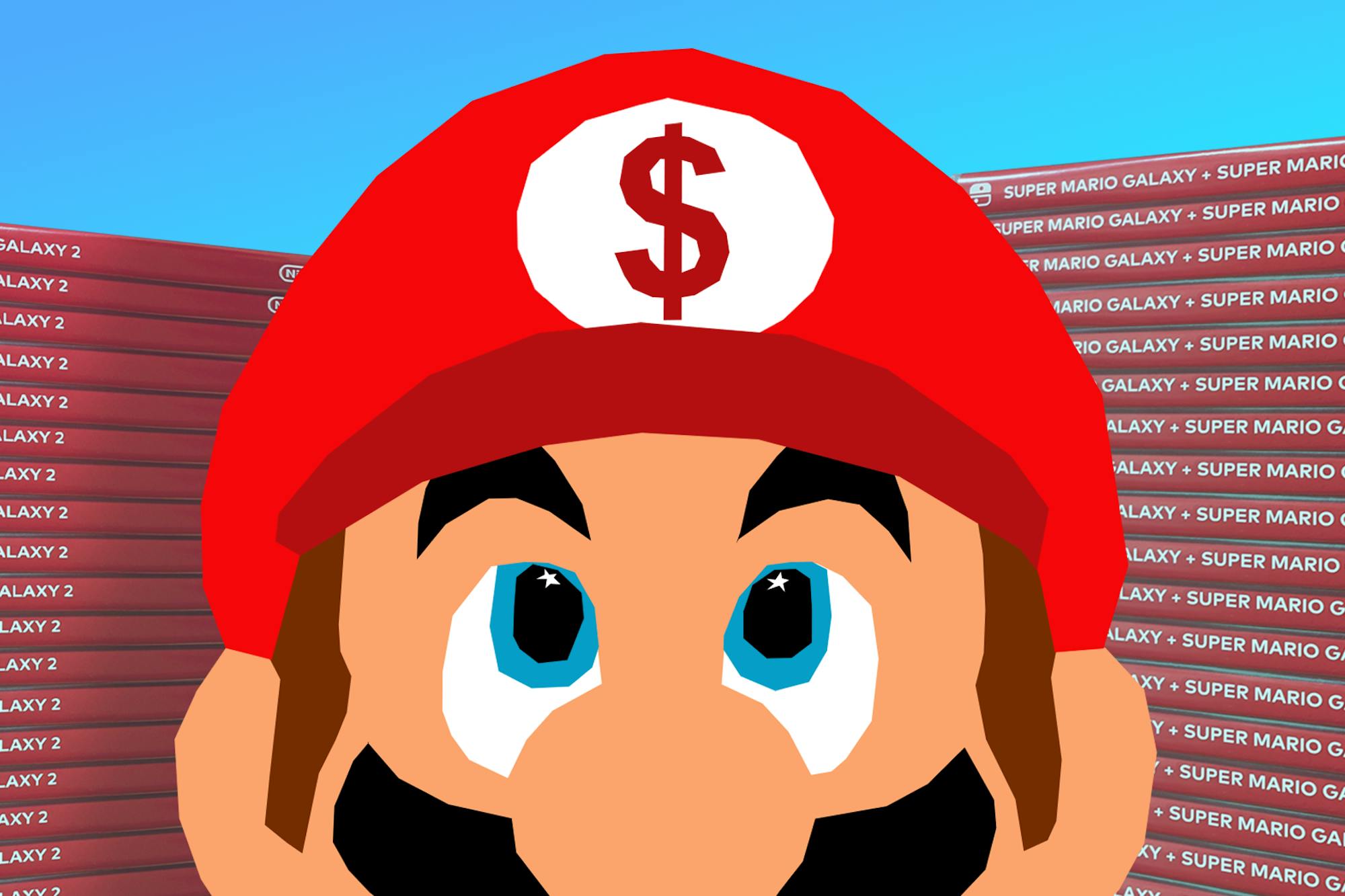
Last week, “Super Mario Galaxy + Super Mario Galaxy 2” hit store shelves in the form of rereleases on Nintendo Switch. These two beloved Wii games from 2007 and 2010 are some of the most praised games from the system and era, hence why they were renewed for a new audience. However, these titles come at a staggering cost that illuminates the money-first, audiences-second mentality that seems to be pushed by Nintendo and many other video game publishers.
Both “Super Mario Galaxy” and “Super Mario Galaxy 2” on Wii are widely-loved games that are still praised to this day. Whether it is due to the Wii being the system people have the most nostalgia for these days or because these games are the grandest take on Mario seen before or since, the titles have amassed a cult following among fans and critics alike, being described as “the pinnacle of three-dimensional run-and-jump gameplay” by IGN back in 2007.
On Wii, the games still hold up tremendously well, only being held back by the limitations of the system itself. The Wii could only output in 480p resolution, which is much lower than the 1080p and 4K displays consumers have become accustomed to twenty years after the Wii’s debut. This display leaves the beautiful imagery seen in both games being shown as a blurry mess, especially when shown on modern displays that highlight the fuzziness.
Another clear downside of the Wii originals is the forced motion/pointer controls used for many actions in the game, such as the spin move and cursor, which get old quickly and lessen the experience.
Despite these issues, both Wii titles launched at $49.99 back in the day, but were quickly discounted to a seemingly-permanent cost of $19.99 with the Nintendo Selects label and rereleases on the Wii U eShop at that price. For the past decade, both “Super Mario Galaxy” and “Super Mario Galaxy 2” have been consistently valued at twenty dollars. Even the release of “Super Mario 3D All-Stars” in 2020 included the first in the Galaxy series, with the full package being $59.99 with three games total.
With the Nintendo Switch package “Super Mario Galaxy + Super Mario Galaxy 2” announced a few weeks back in a Nintendo Direct, many were excited to reexperience these titles with fixed issues and then some. The games were released together in a bundle and separately as a digital-only buy.
The games received relatively few new additions or changes. The ability to press a button instead of shaking the controller to spin was carried over from “Super Mario 3D All-Stars,” and the resolution has been increased to up to 4K on Switch 2, but other motion/pointer issues were not addressed well or at all. Pointer controls are still necessary and require motion inputs to function, apart from menu selections.
This leaves players forced to awkwardly move around the controller extensively for these titles, which is particularly uncomfortable in handheld mode, where users must tilt their whole system or take their hands off the controls to touch the touchscreen, neither of which is a sound solution.
A well-implemented solution using the second analog stick would have been much appreciated to make the games more comfortable and accessible to audiences.
In all, the games include little else apart from what came with them nearly twenty years ago. The soundtracks and new storybook content are cute additions that ultimately are not all too enticing, thanks to being able to experience them in full by a Google search.
The bundled edition of the game does not really feel like a collection of any sort, as the games appear as two icons on the Home screen. The bundle really does feel like “Super Mario Galaxy” plus “Super Mario Galaxy 2” rather than a new celebration of the landmark titles.
Despite this, Nintendo seems to treat the games like a grandiose celebration thanks to the astounding pricing placed on the titles. Each game is priced at $39.99 on digital storefronts and together at $69.99 on store shelves, making it the second Nintendo-published Switch title after “The Legend of Zelda: Tears of the Kingdom” (a landmark release due to its technical capabilities and large file size) to be priced at seventy dollars.
The price increase from the decade-established $19.99 was quite the sticker shock, with each game being valued at double its previous price, with no new additions that make these rereleases feel like they warrant any price increase whatsoever.
With very few new additions and a price that does less than swoon consumers, the rise in pricing seen here and permeating throughout Nintendo’s releases as of late seems less warranted than ever, and very telling of the true intentions behind new releases. With games like “Mario Kart World” at $79.99 standalone and Switch 2 Editions bolstering game prices even further, it is clear that video game companies like Nintendo are pushing business first and consumer enjoyment second, which was not so obvious even at the start of the Switch generation.
“Super Mario Galaxy + Super Mario Galaxy 2,” a package of games nearing twenty years old for seventy dollars, is a clear indicator of the pricing audiences will come to expect not just from Nintendo, but from most companies in the most lucrative entertainment industry going forward.


