

Following the era of "elevated horror" characterized by films featuring more psychological, complex stories, which was at its peak in the 2010s, the horror genre is at a crossroads as it faces an exciting future of what comes next.
Scott Derrickson’s “The Black Phone” (2021), based on the short story of the same name, brought a somewhat refreshingly simple tale to the horror scene. The story follows 13-year-old Finney Blake, a timid boy who is abducted by a killer known as The Grabber. With the help of messages from The Grabber’s previous victims on the titular black phone, Finney is able to defeat The Grabber and return to his family.
While this uncomplicated tale may seem to have a clear ending, on Oct. 17, “Black Phone 2” debuted in theaters. This sequel concerns Finney’s younger sister, Gwen, and the psychic visions she has relating to The Grabber.
Madeleine McGraw’s performance as Gwen is undeniably strong and carries the film through its weaker points. Gwen is subjected to various terrifying situations, such as seeing horrifying visions to being hunted by The Grabber in her dreams, and McGraw skillfully portrays the complex emotional reactions to these events.
Alongside Gwen, Mason Thames’ portrayal of Finney is just as strong as in the first movie, perhaps even improved with age. Finney’s character undergoes major changes from the first movie, going from a shy kid to a traumatized teenager. Thames convincingly shows this transformation and plays scenes concerning such things with appropriate intensity. Additionally, the sibling dynamic, which was among the most effective elements of the first film, becomes more interesting as Gwen grows up and becomes a teen, facing young love and a desire for independence.
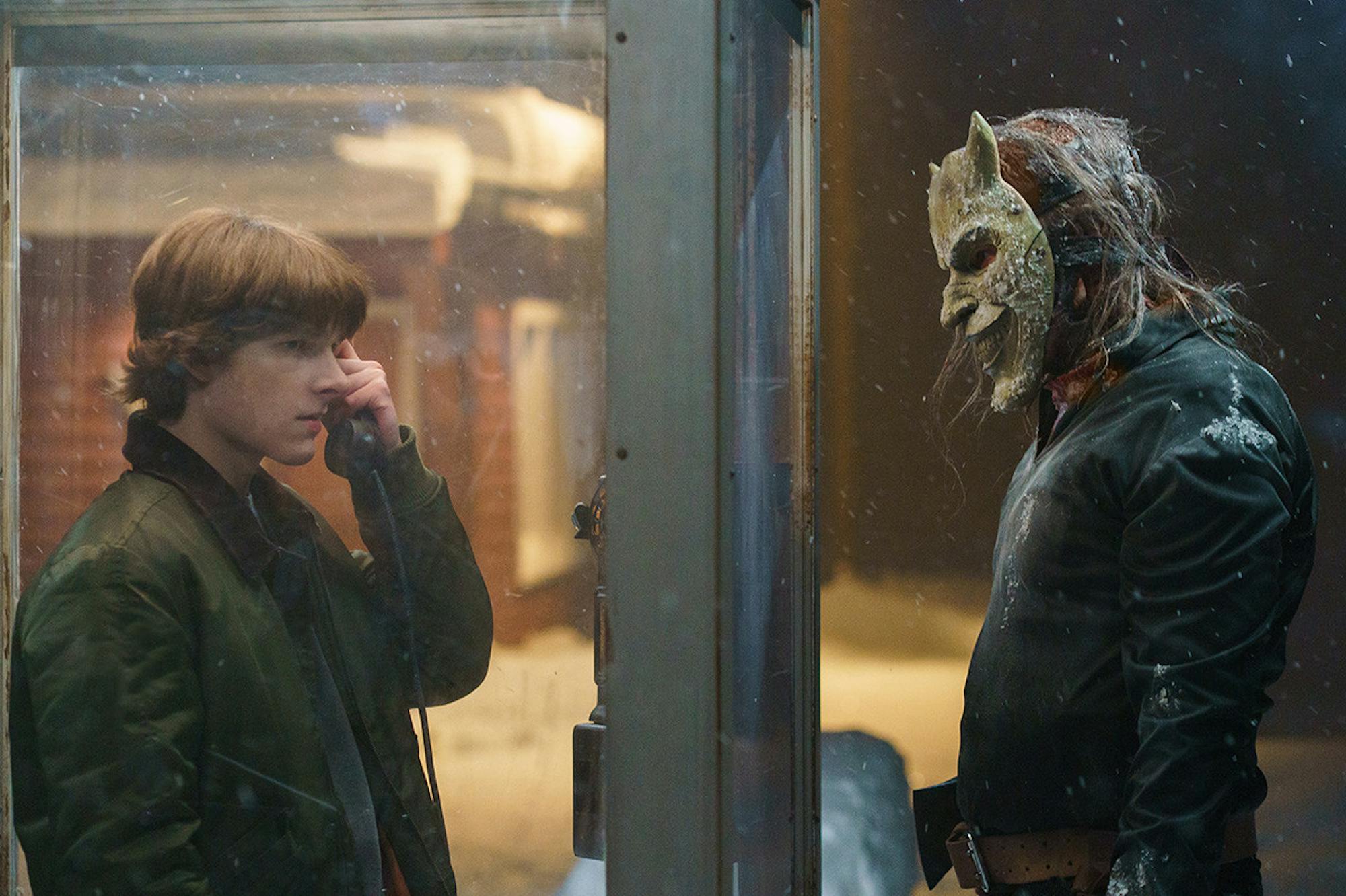
Though the acting in “Black Phone 2” is not a point of weakness, there are issues that detract from the film’s success. For instance, The Grabber fails to be a completely captivating villain, monologuing far too often and coming across as comically evil in his large, devilish mask. The Grabber’s dialogue is not very riveting, so the numerous scenes in which he verbally threatens the characters fail to build suspense. In a particularly laughable moment, he ice skates toward Gwen on the frozen-over lake, which is visually absurd, as opposed to menacing.
Though The Grabber’s characterization is not an issue unique to “Black Phone 2,” it seems that horror sequences relying less on The Grabber, and more on the horror of the setting and circumstances, are much stronger.
The film’s setting at an abandoned Christian winter youth camp is certainly a unique one, putting a spin on the familiar trope of summer camp slashers. Somewhat reminiscent of “The Shining”, this icy, barren landscape is an especially striking setting.
Another atmospheric strength of the film is the dream sequences. Showing Gwen’s visions related to the previous deaths that took place at the camp, these dream sequences take on a grainy filter, denoting them as separate and giving them a hazy feel.
Despite the creepy aura of Gwen’s dreams, it could be argued that the plot’s strong reliance on these dreams comes across as copying the horror classic “A Nightmare on Elm Street”, which also features a killer who chases his victims in their dreams. This argument has merit, and “Black Phone 2” does not bring anything fresh to the horror genre with its concept of dream-based conflict.
In terms of actual substance, the film does attempt to make some deeper points. In a continuation of plot points from the first film, Gwen’s interest in religion and personal understanding of spirituality continues to be explored. Though this is not extremely introspective, it does offer a deeper level of intrigue to “Black Phone 2.”
Additionally, the family dynamics of the Blakes are expanded upon, as Finney and Gwen’s alcoholic father gives up drinking, and their mother’s dream-based visions are also examined. Similar to the religion-related plot points, these parts of the story do not excel, but are decently interesting.
“Black Phone 2” would benefit from stronger writing, but overall brings forth a pleasantly straightforward narrative. Thames and McGraw are certainly names to watch as rising young actors, but hopefully, we don’t see a third installment in this franchise anytime soon.


