Ohio has recently seen a massive growth in the construction of data centers. There are currently 194 data centers in Ohio, the fifth most of any state in the country, trailing only Virginia, Texas, California and Illinois, according to the Data Center Map.
According to International Business Machines Corporation, a data center is “a physical room, building or facility that houses IT infrastructure for building, running and delivering applications and services. It also stores and manages the data associated with those applications and services.”
In Ohio, the majority of data centers are located within the Central Ohio region, with 121 of the facilities located in Columbus. These data centers are mostly owned by large name-brand companies such as AWS, Meta and Google.
A major concern regarding these data centers is the amount of water necessary for production. According to a report from the Environmental and Energy Study Institute, a large data center can use up to 5 million gallons per day, which is about 1.8 billion gallons annually.
Another common environmental issue cited concerning data centers is the amount of power they require. According to the Environmental and Energy Study Institute, about 56% of all data centers are powered by fossil fuels.
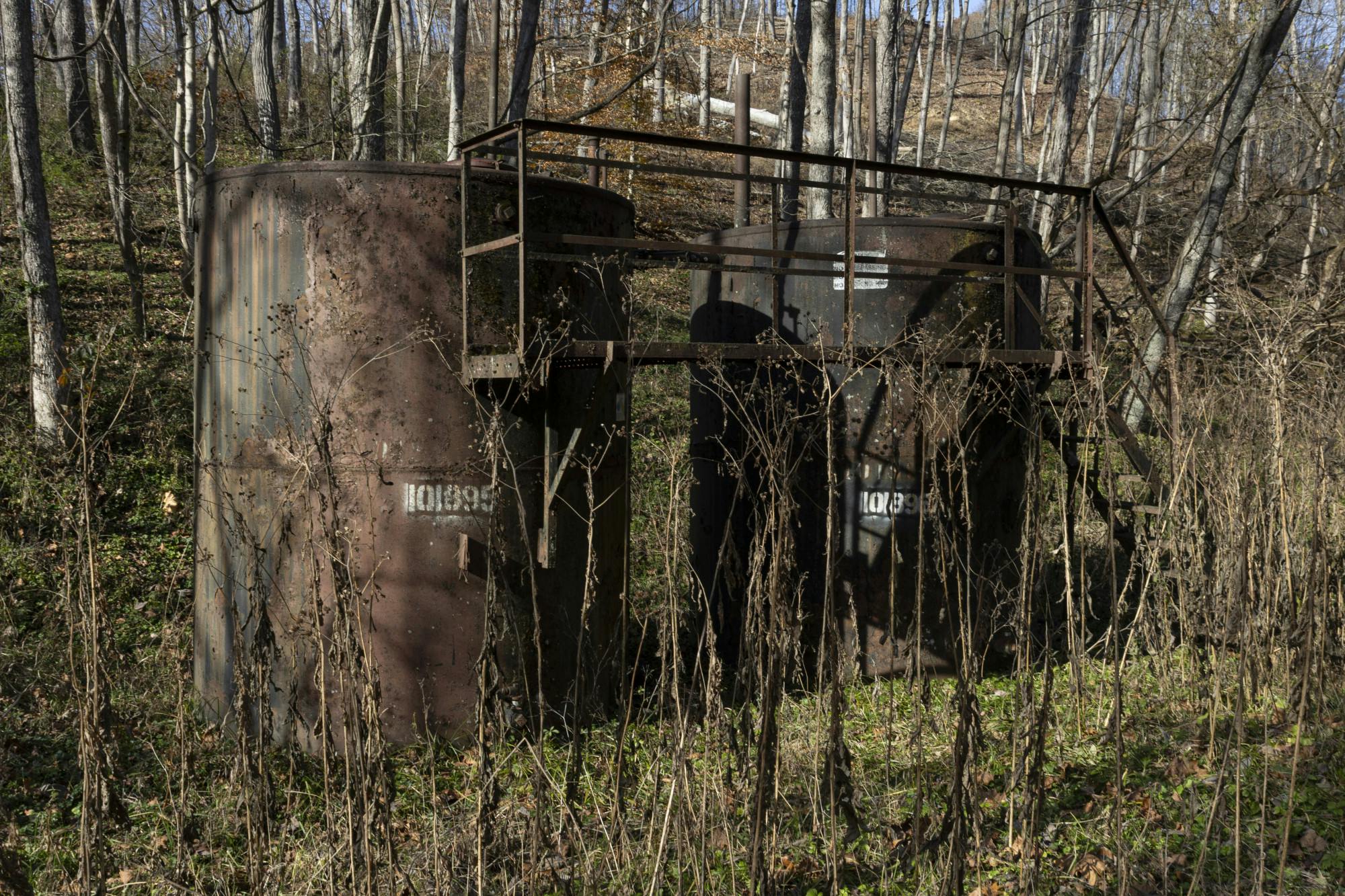
In Ohio, many have raised concerns about the environmental impact that will be seen as a result of growing fracking sites.
Resident of Harrison County, Randi Pokladnik, has her Ph.D. in environmental studies, and recently wrote a commentary article in the Ohio Capital Journal, which discussed how the boom in data centers is impacting, and will continue to impact, the environment across the state.
Pokladnik said the statehouse has passed multiple bills that effectively block solar and wind energy production across the state. She cited Senate Bill 52, which gave county commissioners the power to restrict the development of wind and solar energy in designated areas.
Pokladnik said legislation such as SB52 will only further the fracking of natural gas for powering data centers.
Cathy Cowan Becker, board president of Save Ohio Parks, said the oil and gas industry is in the pockets of many state politicians.
“The oil and gas industry provides a lot of campaign donations for a lot of politicians in the state house, and it’s documented, for example, on the carbon capture and storage bill,” Cowan Becker said. “The oil and gas industry basically wrote that bill, and basically wrote amendments to that bill.”
Cowan Becker said the burden of these fracking initiatives will be felt most in the Southeast region because the shale gas, trapped gas obtained through fracking, is found underneath the area of the state.
“There are two main, what they call shale plates, where the gas and some oil, but mainly gas, is,” Cowan Becker said. “One is the Marcellus, which is largely in Pennsylvania but comes into Ohio, and then also either on top or underneath that, is the Utica Shale, which is largely Eastern Ohio, and most of the fracking nominations and projects I have seen are in the Utica Shale, and that's across Appalachian Ohio.”
A growing issue for many residents of Southeast Ohio is compulsory unitization. Cowan Becker discussed how homeowners can be forced into allowing fracking under their property if a majority of the land area owners agree to it.
“If there is a particular land area that they want to frack, and 65% of the owners of that land agree, that could be just one or two large owners, and they say ‘yeah, you can frack it,’ then everyone else is what's called unitized, or forced, pulled in,” Cowan Becker said. “The fracking is forced under their property, whether they want it or not.”
Pokladnik had compulsory unitization occur under her land in Harrison County. According to Pokladnik, natural gas company Encino Energy had been petitioning for leases from homeowners in Harrison County until they received a majority.
“If they found anybody who did not sign the lease, then we got a notification in the mail, and we got, I think it was in January, two years ago, that we were involved in forced pulling,” Pokladnik said. “They had the name of the well and they had the name of the company, Encino, and they told us the time of the zoom hearing … once we got on the hearing, I got on the phone and the guy in the ODNR, who does this, he made it quite clear that he did not want to hear anything about environmental stuff, only involving economic stuff.”
Proponents of data centers cite job and economic growth to be the benefits. According to a study released by the Ohio Chamber of Commerce Research Foundation, over 95,000 jobs were supported in 2024 due to data centers. Additionally, the study claims data centers contributed $11.8 billion to the gross domestic product and $6.9 billion to labor income.
Pokladnik commented on the long-term effects the increase in fracking could have on the southeast region, specifically due to the history of coal mining and strip mining.
“I'm 70 years old, and I'm old enough to remember whenever they strip mined this area, Belmont County, Harrison, Jefferson,” Pokladnik said. “And when we were kids, we used to go out and fish in the strip pits, which were just areas where they had stripped and water filled up, or a stream fed into that area, and it never looked the same. And a lot of times it wasn't reclaimed, but you can't reclaim the damage that's being done right now.”