

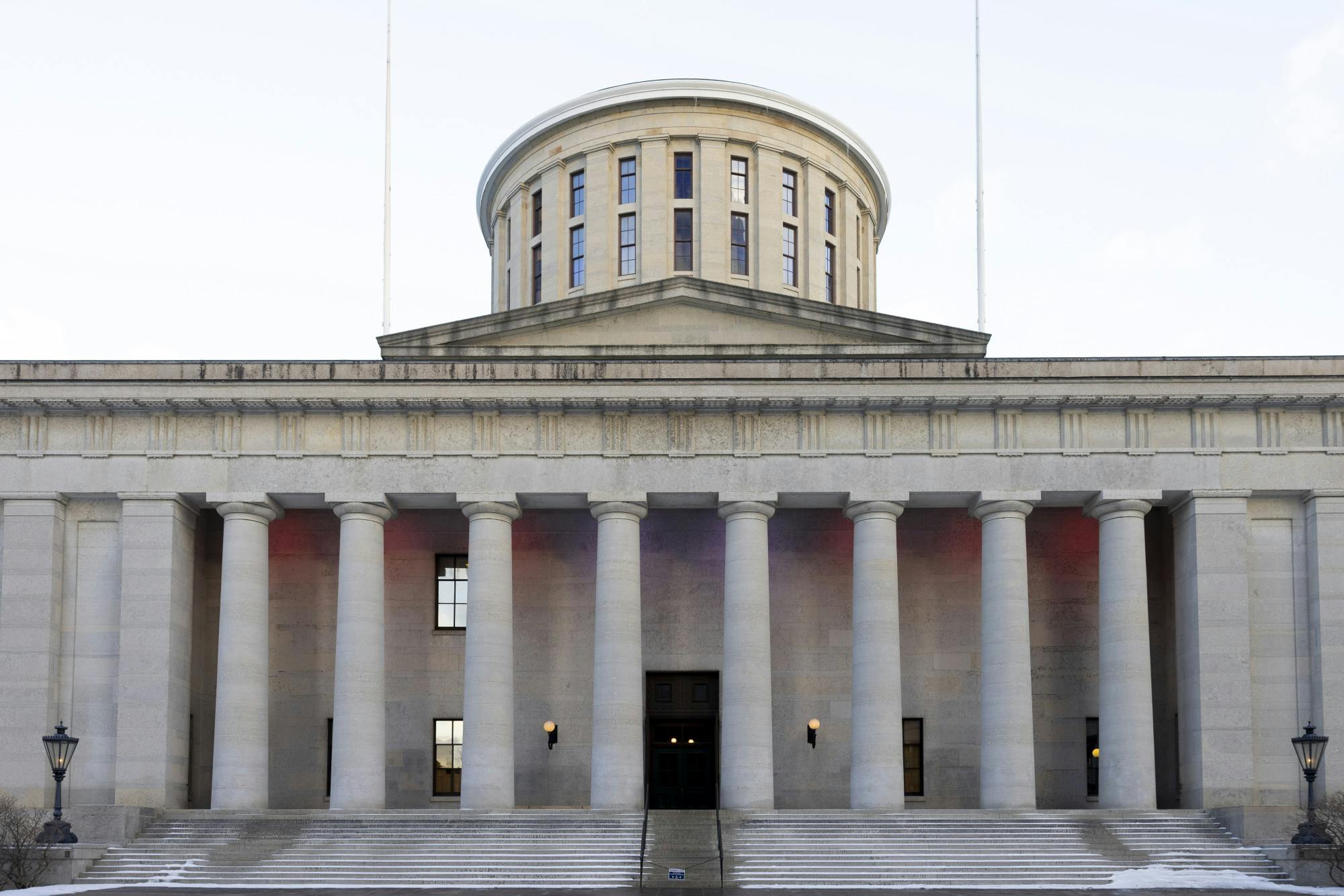
The U.S. Supreme Court justices heard oral arguments in Chiles v. Salazar on Oct. 7. The case challenges a Colorado ban on conversion therapy for minors.
The case was brought by Kaley Chiles, a licensed professional counselor in Colorado who utilizes her Christian faith and ideology in talk therapy. Chiles argues Colorado’s statewide ban on conversion therapy for minors, passed in 2019, violates her right to free speech under the First Amendment.
In 2023, 28 major medical and psychological associations in the U.S., such as the American Psychological Association and American Medical Association, condemned conversion therapy in a joint statement. The statement expresses these organizations' beliefs that same sex attraction is not a mental illness, and that conversion therapy is cruel, degrading and inhumane, according to the United States Joint Statement Against Conversion Efforts.
The case’s decision could have broad impacts on state and local bans of conversion therapy across the country, including in Ohio. Cities across the state, such as Columbus, Cleveland and Athens, currently have local bans on conversion therapy for minors.
Athens City Council At-Large Representative Micah McCarey previously served as the director of Ohio University’s LGBTQIA+ Center. McCarey commented on how Athens decided to enact a local ordinance banning conversion therapy.
“It was a united front from both Mayor Steve Patterson and the city council from 2017 when that legislation was adopted, banning conversion therapy in the city limits from specific mental health professionals,” McCarey said. “And that's at the advice of scientifically backed guidance from medical associations like the AMA and the APA for the purpose of protecting youth.”
McCarey mentioned the Council’s recent decision to declare the city of Athens a safe haven for individuals seeking gender-affirming healthcare. In the resolution, the council stated its dedication to supporting and protecting the well-being of transgender, cisgender and non-binary individuals by providing gender affirming care.
McCarey stated the resolution displays the council's current and ongoing opinions regarding LGBTQIA+ support. He discussed how the council intends to react to potential legislative issues moving forward.
“That unanimous passage of that resolution, again, with the support of the mayor, tells me that our city government, both on the executive and the legislative side, would do everything we can to protect the mental well-being of especially LGBTQ youth,” McCarey said.
Although Athens and several cities across the state remain committed to protecting the LGBTQIA+ community, the Trevor Project reported in 2023 that Ohio is one of the five states with the largest number of identified conversion therapy practitioners.
Amid division on the issue, Ohio Democratic Reps. Crystal Lett and Karen Brownlee are sponsoring House Bill 300, legislation that would restrict certain licensed health care professionals from performing conversion therapy on minors. The bill is currently in the House and has been referred to the Health Committee.
Jackson Coleman, an OU sophomore studying musical theater, is from Colorado and was shocked when he heard about the case. He expressed his fear the case and conversion therapy will harm those in the LGBTQIA+ community.
“Although we are a growing community and we have more of a progressive support system as a whole within our own community, I think it's really interesting that there are still people pushing back to continue to erase people like us,” Coleman said. “I think that's honestly horrifying, and that scares me.”
Although uncorrelated, Kaley v. Chiles comes after the recently passed Ohio Senate Bill 1, which effectively banned all diversity, equity and inclusion programs at public colleges across the state. Since its passing, OU closed down its Pride Center, Multicultural Center and Women’s Center. In addition, the bill requires professors to remain unbiased when discussing controversial topics.
Coleman discussed how SB 1, Kaley v. Chiles and other recent legislative decisions have concerned him.
“I think the biggest thing for me concerning right now’s current political climate, especially as an individual living in this country and being a college student who's gay and also had to kind of undersee and go through the SB1 bill, seeing what my faculty has to change and the centers that had to go along with the LGBTQ Center,” Coleman said.
According to Coleman, SB 1 has caused many of his professors to limit what they say in the classroom to avoid spreading biased points of view. He stated it is interesting, specifically within an arts program, how biases are built into the art being produced and studied.
“If we are going to use the idea of freedom of speech being used to support conversion therapy, why aren't we using the idea of freedom of speech more to support our educators who are helping us try to form our own opinions while also trying to show us art that goes along with what we're learning about,” Coleman said.
Kaley v. Chiles is currently pending a citation as of Nov. 2.


