

Black bears are an endangered species in Ohio, but their population has been increasing, and there were recent sightings of bears in the area. One such sighting was of a large black bear, referred to as Big Clyde by hunters.
According to the Appalachian Hillbilly People Facebook group, Big Clyde seems to be more than 400 pounds. The fact Big Clyde is roughly 400 pounds is notable, as the average weight for male black bears is around 300 pounds in Ohio.
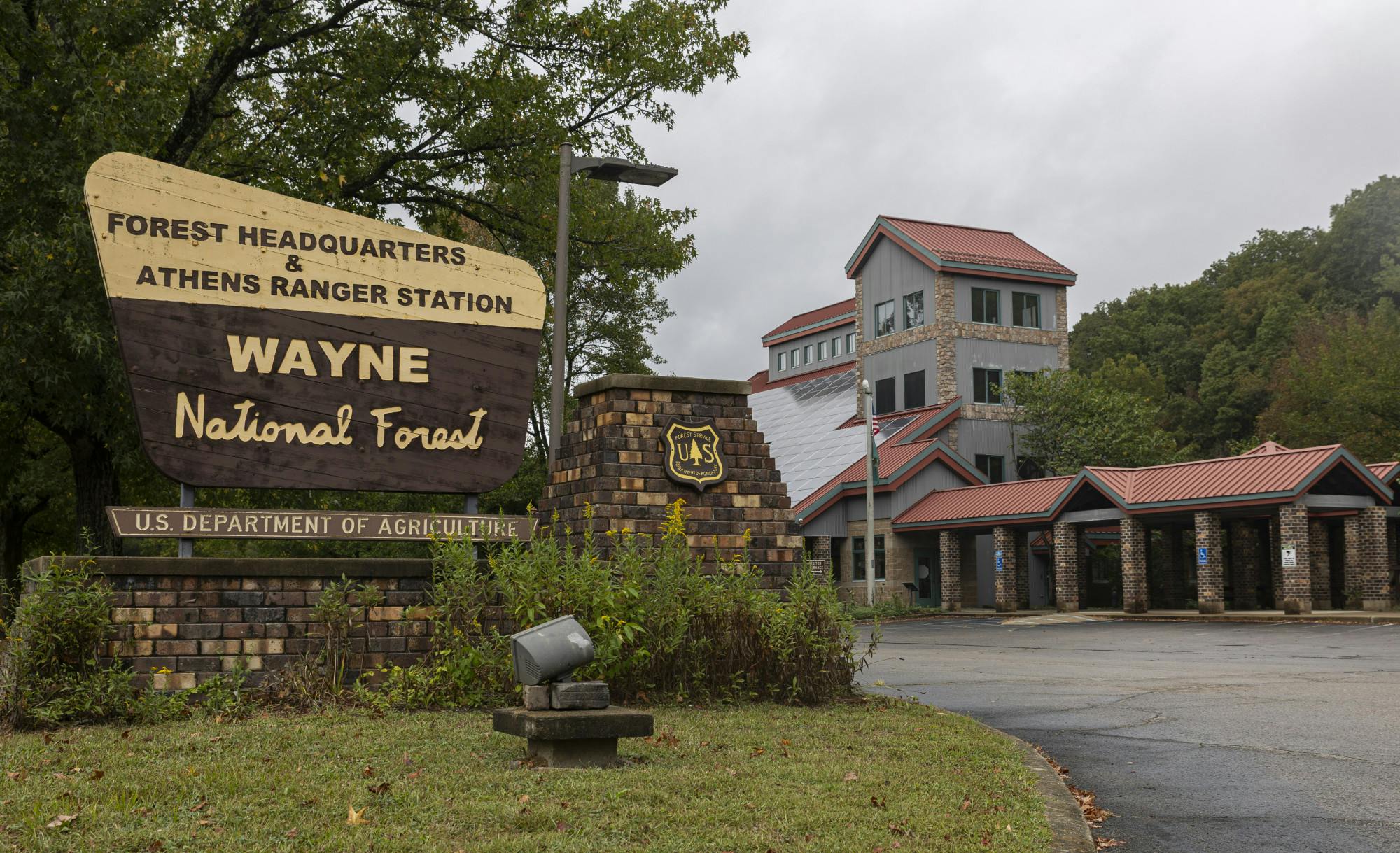
Anna Owens, the Wayne National Forest Public Affairs Officer, said there were no reports of a bear, but she knows the bear sightings have been quite popular on social media. Ryan Donnelly, Athens wildlife officer with the Ohio Department of Natural Resources, also said ODNR has not received any official reports of a 400-pound black bear in the area.
However, various hunting Facebook groups have posted about sighting Big Clyde.
The Hunting Report Facebook group reported similar findings, and said ODNR “confirmed three separate trail cam submissions within a five-mile radius over a 48-hour period.”
The post also said the bear has been captured on trail cams near Wayne National Forest since the beginning of October. Big Clyde has been spotted wandering around during the daytime as well, leading ODNR wildlife officers to be aware and cautious.
A 400-pound bear is above average in Ohio, but sightings of black bears in Southeast Ohio have increased. According to ODNR, 285 sightings were reported in 52 counties in 2022, 161 of which were confirmed from photos or tracks.
In 2022 alone, there were 19 reported sightings of black bears in Athens County, with 10 sightings confirmed, according to the Ohio Division of Wildlife. In the period from 1993 to 2022, there were a total of 45 confirmed sightings in Athens County.
ODNR said it is difficult to determine the exact number that stay in the state permanently, as it is likely the ones spotted are coming from Pennsylvania or West Virginia. Most black bear sightings in the state come from south-central, northeastern and southeastern Ohio.
No Man’s Life, a website dedicated to outdoor guides, public lands and national parks, published an article July 11, providing more information on black bears in Ohio. The guide stated Ohio counties like Jefferson, Belmont, Monroe, Athens and Washington remain the most common bear territory.
In 1850, black bears were considered extirpated, due to unregulated hunting, deforestation and settlers. Ohio state law now states black bears are protected from being killed or injured.
The ODNR website said black bears are active early in the morning and late in the evening, but daily movements can be influenced by human activity.
“Bears in high human activity areas tend to be more nocturnal in their movement, while dawn and dusk are the periods of primary movement among bears in low human activity areas,” the website said.
In the case of a bear encounter, bears a typically nonviolent. However, avoid getting close to the bear, as bears are just as scared of humans as humans are of bears. According to In Defense of Animals, the odds of being injured in a bear attack are 1 in 2.1 million.
Ellie Powell, a senior studying biological sciences, said she had not heard about the Clyde bear sighting.
Powell just hopes wildlife officers show communicative concern in the case of a bear near campus.
If a bear is sighted, report it by contacting ODNR on its wildlife reporting system website.


