

After Senate Bill 1 passed, the transparency between student and Ohio University administration became muddled. Both parties have attempted to determine what is permissible under SB1.
On Jan. 2, the Black Student Union posted a letter on Instagram directed at OU’s administration, which called out the lack of relationship between the administration and its students and expressed concerns with SB1 and its effects on the BSU and campus at large.
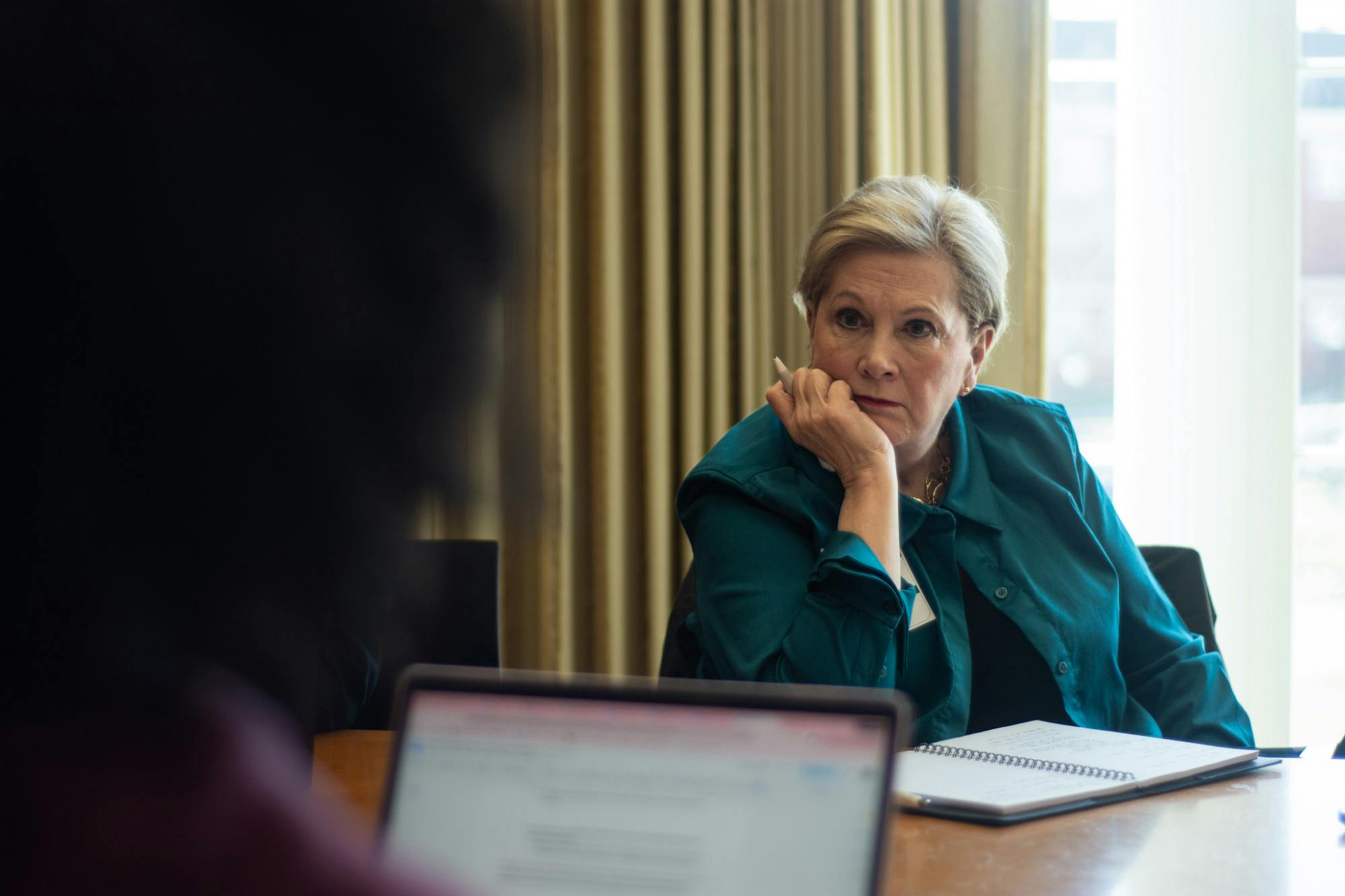
A meeting was held following the post, and another meeting was held Thursday. Among the attendees were the BSU, the Black Student Cultural Programming Board, Students for Justice in Palestine, the Ohio Student Association, President Lori Stewart Gonzalez, Dean Kathy Fahl, Vice President of Student Affairs Lyn Redington and Chief of Staff Carly Leatherwood.
Bailey Smith, a senior studying retail and fashion merchandising and president of the BSU, felt the effects of SB1 as well as other challenges regarding running her student organization. She expressed funding as one of her biggest concerns.
“A major concern is money and funding, especially for the Multicultural Expo … that’s my number one thing right now,” Smith said. “It isn’t just (for) Black students, it’s (for) people of all cultures, of all backgrounds. People don’t really understand, which is why it seems to go against SB1 regulation.”
The Multicultural Exposition lost nearly $6,000 in funding it used to receive from OU administration, according to a previous report from The Post. It now relies on out-of-pocket funding from BSU executive board members and community donations.
During the meeting, regulations around SB1 were discussed. Fahl said the administration learned heritage celebrations were permitted under state law, using the recent Martin Luther King Day brunch as an example. BSCPB President Kylie Bridgeman asked what the difference was between heritage celebrations and the Multicultural Exposition.
“I believe it's these are nationally recognized events, is what they are,” Fahl said. “They're historic.”
Attendees also asked if changing the name of the exposition would make it permissible. Gonzalez said the exposition could occur, but the university cannot pay for its programming.
“What the law says is you cannot just change the name of something and still do the same thing,” Gonzalez said. “What you're talking about is having an expo where it's organizations that would be targeting one set of students and somebody else targeting another. If we have these things that are open to all, and we aren't paying for the programming, then all of that can happen.”
Bridgeman, a senior studying journalism, said some of her concerns included the president’s visibility.
“Like Bailey said, that's the first time that she's seen her face,” Bridgeman said. “I've seen it a lot, and I think that comes from being in a tier one organization, but it shouldn't take that to have access to your university's president.”
Visibility was a hot topic during this meeting. Teresa Warren, secretary of the OSA, said the president’s State of the University address was held at a time when students were busy with classes and did not have time to attend. Gonzalez said she is hosting office hours soon. The idea of a student town hall was also discussed.
Henry Turner, a junior studying history and creative writing, represented Students for Justice in Palestine. Other than funding, Turner expressed concerns around staffing and the layoffs that occurred following SB1.
“SB1 laid off a lot of employees that were extremely valuable, had resources and skills that could help people of different diverse backgrounds, and represented diversity within faculty,” Turner said. “The university understands how difficult it is to bring in diverse faculty when something like SB1 is state law, but it is really important … I believe the university made a major mistake in their hiring practices, and they need to take steps to address it.”
During the meeting, Bridgeman brought up that OU staff and administration do not adequately reflect the students. She requested there be a more concentrated effort on diverse staffing because prior staff members who were let go created comfortable environments for the students they served. She also made it a point to extend her definition of diversity outside of race and culture.
“Diversity is not just in skin color and appearance, but also in life experience,” Bridgeman said.
The loss of centers like the Multicultural Center, Pride Center and Women’s Center deeply impacted students. Many students found solace in those centers in times of adversity. Another representative for the OSA during the meeting brought up hearing slurs on Court Street. Her solace was once the Pride Center, but now she doesn’t feel comfortable receiving aid anywhere else.
The meeting touched on several relevant topics to the student body and student organizations, and all the administrative leaders took notes.
“We all took notes,” Gonzalez said. “We will get action steps from those, and it will be: ‘Here's one answer, we can share one answer, here's another answer.’ So we'll try to see how we can come up with some ways to bust some of the barriers that you all brought up.”
For the most part, attendees felt positive after the meeting and shared their thoughts afterwards.
“I hope that she takes these meetings and our asks,” Bridgeman said. “I'm excited to see how the office hours go, and I hope that that's something that continues throughout her tenure.”
Smith felt positive about potential change, even if it happens after her graduation.
“I am confident something's going to happen,” Smith said. “Might not happen while I'm here, but just as long as it happens for other people, I'm OK.”
Turner also felt the meeting went well and valued the administration's listening to student perspectives.
“I think it was a constructive meeting, and I think it's very valuable to have the president and other major university administrative decision makers listening to students in that environment and responding to those students' concerns and those needs,” Turner said.


