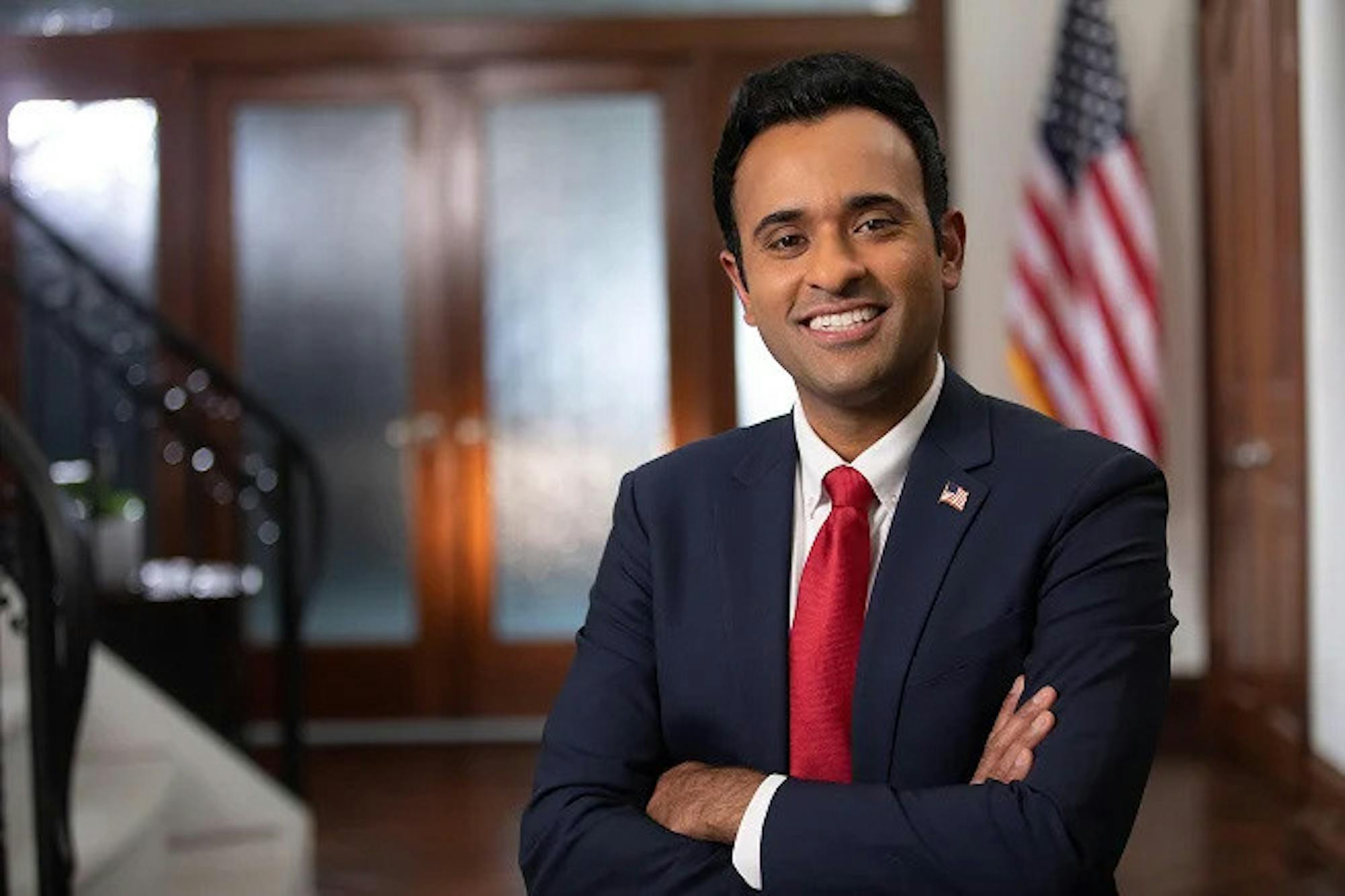
Vivek Ramaswamy, the leading Republican candidate in Ohio’s Gubernatorial race, recently mentioned a plan to consolidate and close some of Ohio’s public universities. Ramaswamy made the remarks initially in a campaign speech.
“I love universities in Ohio, I want us to have the best universities,” Ramaswamy said in a video posted on Threads. “We have too many of them. They need to be consolidated. And when you consolidate them, they can actually be centers of excellence who are actually the best in their respective domains, instead of trying to create replicas and clones of one another.”
Ramaswamy’s team was unable to provide a comment to The Post.
David Pepper, the running mate of the leading Democratic candidate, Dr. Amy Acton, said the two of them have had good conversations with higher education leaders, and stated their goal is to have higher education connect young people and communities to jobs of the 21st century.
“We want to make sure that we're making investments to do that,” Pepper said. “But that once those investments are made, that schools across the state are really effectively connecting young people to not just the education that makes them good citizens, but also the education that leads them into good jobs and creates a workforce that employers around the state can rely on for 21st century jobs.”
Ohio has 14 public universities with 24 regional branch campuses, 22 community colleges and over 70 adult workforce education and training centers, according to the Ohio Department of Education.
A main concern many opponents have with Ramaswamy’s plan is the impact some universities in Ohio have on the towns they are situated in.
Nicholas Stroup, assistant professor of higher education at Ohio University, mentioned what the loss of colleges would mean for the local areas surrounding them.
“It would mean a loss of local business, industry in the area, professional training for people who might move and stay there,” Stroup said. “We know that universities are these drivers of economic activity, and so it would make a big difference in those local communities.”
OU is most likely not one of the colleges being considered by Ramaswamy due to its position on the national scale, Stroup said. OU is the largest employer in Athens and has a positive impact on the economy in Athens, according to an OU press release.
Another concern that has arisen since Ramaswamy's statements is the loss of access to education. Ramaswamy mentioned the proximity of schools to one another, stating many universities are too close together.
Pepper responded to those claims, saying people all across the state in every region deserve the opportunity to attend a university next door.
“This is a guy who didn't go to school here, who hasn't even taken the time to understand these schools,” Pepper said. “And he just, in this very sort of dismissive way, says they're all clones of one another … to an extent, there is some overlap. Well, that's because kids in one part of the state want an opportunity in their region of the state that kids in another region of the state also want.”
Stroup discussed the harm that closing schools close to small communities could have, recognizing that many people are unable to make the journey to farther schools.
“There would be great harm to communities where there is not nearby access to take away the closer university, the closer college, because that's going to diminish the opportunities for so many people who can't get away because they have other work to be doing,” Stroup said. “They can't balance their caretaking needs with family, with their studies, because commutes make a big difference.”
Gov. Mike DeWine, who endorsed Ramaswamy, disagreed with the plan. According to the Statehouse News Bureau, DeWine is not in favor of consolidation because it is important to give people all across the state access to commute to school.
Additionally, Ramaswamy backs his plan up by noting the lowering enrollment in universities across the state; however, Stroup argued there are other ways to increase enrollment.
“The college-age learner is not the majority of learners in post-secondary education in the U.S. today,” Stroup said. “And if colleges were serious about addressing questions related to enrollment dips, there would be more wraparound support for non-traditional-aged learners.”
Stroup mentioned some policies that would work to implement that, such as online education, academic forgiveness and academic fresh starts. OU recently passed both academic forgiveness and academic fresh start programs.
Ramaswamy is not the first person to propose a plan to consolidate and close universities. Stroup said they surface almost every election cycle in states across the country, and there were about 20 similar cases in the last five years.
Stroup discussed how similar plans that were implemented look.
“In other attempts to consolidate public universities, we've seen that they typically result in a lot of administrative overhead,” Stroup said. “And even though the goal is to cut costs, they actually increase costs … what we would see is likely a reduction of access for students who are seeking to attend college where they live.”