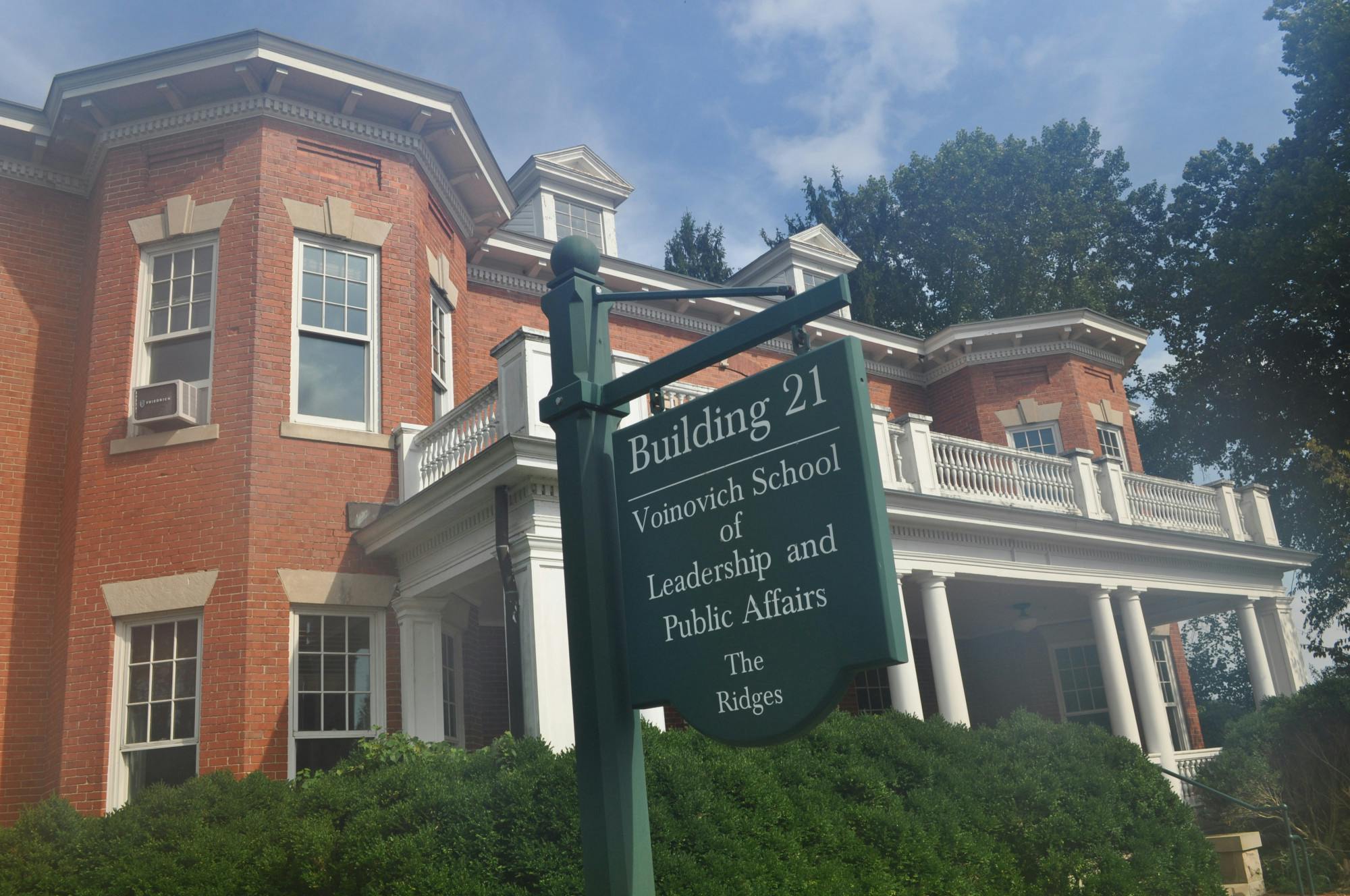
This fall, Ohio University’s Voinovich School of Leadership and Public Service is launching a new series of free learning sessions called Building Resilience for Older Adults in a Changing Environment.
The learning sessions are held once a month and are intended for professionals in fields such as gerontology, social work and climate resilience to learn how to address local environmental challenges for older adults.
The sessions are part of a larger program, known as Project Extension for Community Healthcare Outcomes, or ECHO.
Jennifer Morel, managing director of the Ohio Center of Excellence for Behavioral Health Prevention and Promotion, and Sara Condrac, partnership strategist for the Voinovich School, started the ECHO program through the Voinovich School in 2024, making it a “hub” for the adult learning program.
“The Voinovich School Leadership and Public Service serves as the hub, and so we have multiple programs that we facilitate,” Condrac said. “Each hub can have different topics, so a different ECHO series, and then we pull together the appropriate people that are experts in those topics for that series.”
Dr. Sanjeev Arora founded Project ECHO in 2003 at the University of New Mexico after losing a patient to hepatitis C, a treatable disease, due to a lack of access to consistent and affordable medical care.
Today, there are over 8,000 ECHO programs worldwide that adopt Dr. Arora’s solution: to bring specialist knowledge to local care providers. The program has also expanded beyond healthcare to include other topics, such as education and environmental action.
Dr. Geoffrey Dabelko, a professor in the Voinovich School and senior adviser to OU’s Environmental Change and Security Program, plans to launch the upcoming series for older adults in collaboration with the Grey Green Alliance.
The Grey Green Alliance is a research and practice collaboration between OU’s Voinovich School and The Ohio State University’s College of Social Work and Age-Friendly Innovation Center. The program’s most recent efforts have focused on aging with emerging heat and flood threats, as well as affordable housing and health.
“The Grey Green Alliance has helped inform the topics that were selected for the series,” Condrac said. “So they're really sort of more programmatically helping with this ECHO, not facilitating the ECHO itself and providing, you know, some research and support that way.”
Every ECHO session consists of a 20-minute lecture-style presentation by a subject matter expert and a situational presentation by a community practitioner to discuss problems they deal with in their work, which the audience helps them solve.
According to Condrac, the questions and conversations following the presentations engage problem-solving research and programs.
“We're excited to bring it to Athens, but we really do serve a large global audience in these ECHOs,” Condrac said. “So we leave them open for registration, and so anyone who wants to join can. And you know we advertise locally, but there's so much interest in these topics, and so much value in having diverse perspectives join.”
According to Morel, in previous ECHO sessions, there were international audience members and learners from over 40 states.
“The focus is truly, you know, the Appalachian communities in Ohio,” Morel said. “Our reach is so much broader, and so it’s really that beauty of, again, that democratizing knowledge, right? We know what we need, and sometimes we need thinking partners to help us move ideas to action.”
Anyone interested in joining a session or giving a presentation can submit a situation presentation form or register via the OU website for the six Building Resilience for Older Adults in a Changing Environment sessions. Each session offers one continuing education credit, which teachers can use to meet some employment or certification requirements.
“While they all fall under that umbrella of aging and resilience, the content doesn't necessarily build on each other,” Morel said. “So, each can be a standalone session, so you can attend as many or as few sessions in the series as you want, and really get what you need. So, it offers adult learners a lot of flexibility as well.”
Dr. Angela M. Chalk, a visiting adjunct professor from Tulane University, is speaking at the first session, “A Changing Landscape: Trends in Aging, Environment, and Community Well-Being” on Sept. 23.