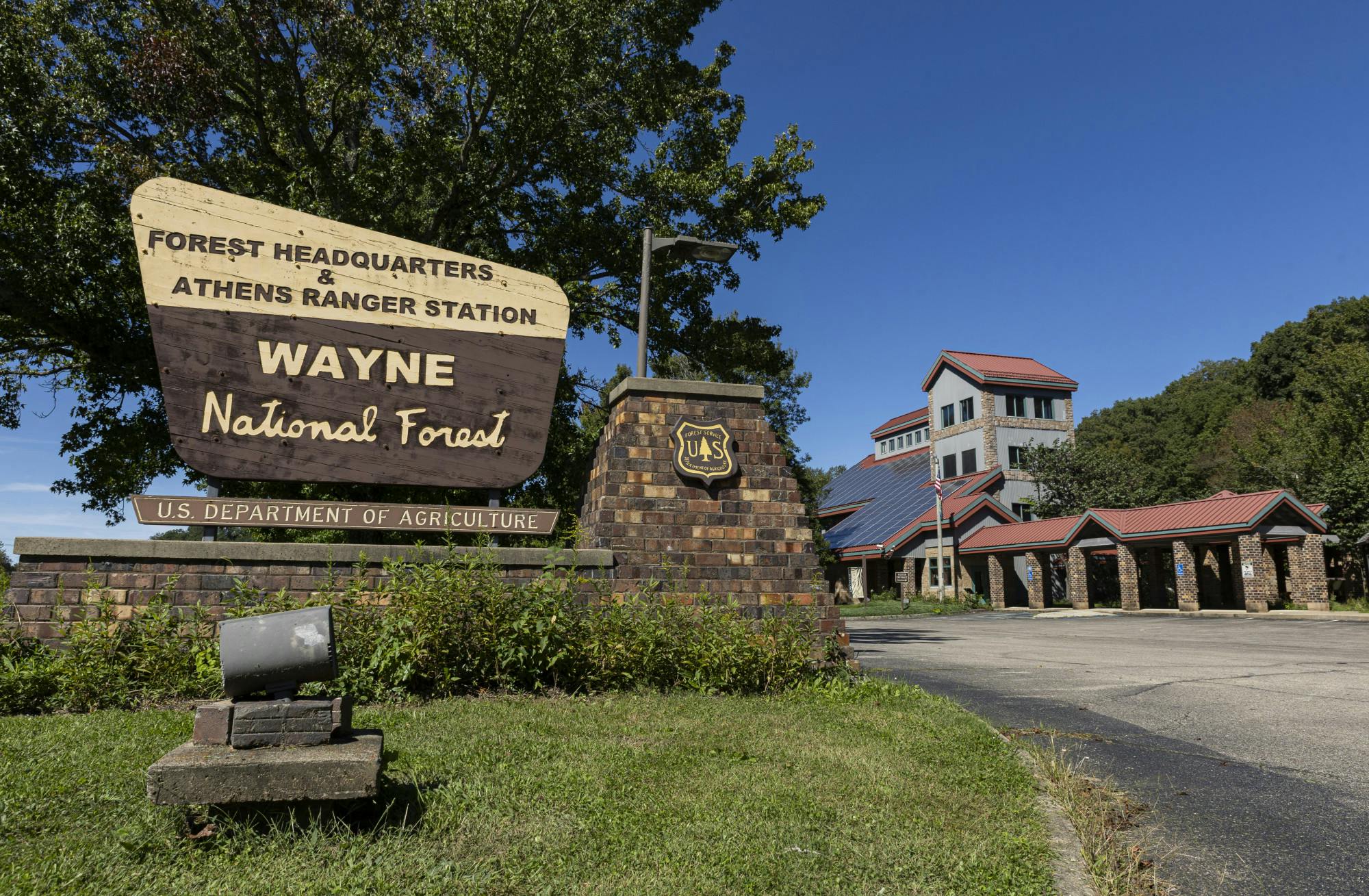
The U.S. Bureau of Land Management announced an oil and gas sale of 41 parcels, totaling 2,840 acres within Wayne National Forest on July 17, according to the BLM. The sale concluded with 40 out of the 41 parcels being leased, or 2,777 acres, and generated over $11 million in revenue.
The parcels have been leased by five out-of-state companies with intentions to frack the land. Two of the companies are based in Pennsylvania, two in Texas and one in Oklahoma.
According to the National Institute of Environmental Health Sciences fracking, or hydraulic fracturing, is a method of extracting natural gas and oil from underground rock formations. During the process, drills force water, sand and a mix of chemicals into wells, cracking the rocks, which leads to the release.
The development of oil and gas companies in protected Ohio forests is not new. Since 2024, about 22,000 acres of Ohio’s state parks and wildlife areas have opened to oil and gas companies. Although fracking would be new to Wayne, the forest has had conventional oil wells since 1990, according to The Associated Press.
As the sale has unfolded, environmental ethics, economic benefits and forest preservation are recurring conversations. Chris Hite, branch chief for Energy and Minerals Operations within the Eastern States region of the BLM, said maintaining Wayne is the top priority.
“We want any development that is done in conjunction with these leases not to have a detrimental impact on other resources that we protect in that area,” Hite said.
Hite said the BLM makes a significant effort in evaluating the land before leasing and implements measures throughout the lease to preserve the forest. Specific stipulations will come with each lease depending on where the land is and what resides within it. The U.S. Forest Service will also add its own stipulations to the leases.
“When the company that holds the lease gets ready to do specific development, they have to come back to us again with their specific plans,” Hite said.
Hite said it will be a few more weeks for the leases to be issued. After that, the leases have to come back with a specific proposal for development plans. That will be reviewed and can often take months to years before approval is received.
The leases that have been signed contain a 10-year primary term. That means a company has a window of 10 years to get the lease producing quantities sufficient to make the operation “economically worth it,” or the lease will expire.
“If they do get it producing, then it can continue indefinitely as long as they’re able to continue that production,” Hite said.
Ohio will see about 50% of the total revenue from the sale of the lease and any production on that lease. That money typically is used for infrastructure development including roads, bridges and schools, according to Hite.
The other 50% will go to the U.S. General Treasury. Many in support of the leases look at the economic benefits it will bring to Southeast Ohioans.
Republican Rep. Kevin Ritter of District 94 believes the sale of land to be “transformational” to Southeast Ohio. Ritter’s district spans over Washington County, where most of the newly leased parcels reside.
“This leasing will drive tens of millions of dollars to public and private entities throughout Washington and Monroe counties,” Ritter said in an email. “That sort of economic benefit would be unprecedented in this area in this century.”
Proposed Ohio House Bill 522, regarding mineral royalty payments and the allocation of their funds, is sponsored by Ritter as well as Rep. Adam Bird.
The legislation, which is in house committee, amends the Ohio Revised Code and require all funds raised from sales or payments of federal land, including national forests, to be allocated to the county the land resides in.
The money can then be used by county commissioners for planning, construction, maintenance of public facilities and provision of public services, according to the bill.
“Right now, Washington and Monroe counties produce all the valuable commodities, but see only a fraction of the benefit,” Ritter said via email. “I am confident Senator Moreno and Congressman Taylor will fix this. They have both committed to me that they will.”
Assuming that legislation is passed, Ritter is confident the leasing of land will financially benefit the region.
Those who oppose the sales have focused heavily on the potential environmental impact. Melinda Zemper, board member of Save Ohio Parks, believes the approval of development in Wayne to be harmful.
Save Ohio Parks is a social welfare organization focused on opposing oil and gas extraction on Ohio’s public lands. The organization formally opposed fracking and development within Wayne and has shown their disinterest in this sale through action alerts and emails to the federal government.
“Our national forests and national monuments are specifically set aside for the public, for posterity, and they need to be protected from industrialization and extractive industry like mining and fracking and logging,” Zemper said.
Wayne National Forest is home to a wide array of species, including endangered, rare animals and plants. Zemper said Save Ohio Parks believes those species, along with the forest itself, will be in danger, and the environment will see negative effects.
“To bring fracking in will industrialize this area. It will cause noise concerns, air emissions, pollution and respiratory concerns,” Zemper said. “It will cause forest fragmentation and diminishment of the ability for insects and plants and animals to propagate and survive.”
Zemper commented on the privatization of public lands in Ohio to be used for fracking, saying it is not only undemocratic, but unethical due to ongoing climate change. She stated the economic benefits related to this sale do not outweigh the potential harm.
“Eleven million dollars is minuscule in comparison to the amount of damage that’s going to be done to the environment, to our air, our health and our water quality,” Zemper said.