On Sept. 18, a Mississippi grand jury found no evidence of foul play in the case of Nolan Wells and maintained that his death is undetermined but consistent with drowning. Wells was an 18-year-old high school graduate who went missing and was later found dead and submerged in the waters of Horne Island after spending Independence Day with his mostly white friend group.
Concurrent with this case is a plethora of Black people found hanging from trees across the country. Many have been ruled as suicides by police. In both instances, family members and people across the country contest the nature and handling of these cases.
This contestation is not born from mere hysteria; these questions exist within a longstanding history of racial terror, state racism and negligence.
Understanding the history of racial terror in the U.S. better explains why certain images, motifs and dogwhistles continue to exist in the consciousness of Black people in this country.
Instances such as the mass destruction of Black towns such as Tulsa, Oklahoma, and Rosewood, Florida, by racist mobs, the Birmingham Church bombing which killed four young Black girls and various lynchings which were treated as entertainment for white audiences who took photographs and used them for postcards, as well as collected and sold dismemberments as souvenirs. This illustrates a deep-rooted history of racial disdain, terror and violence that has haunted the Black American psyche for centuries.
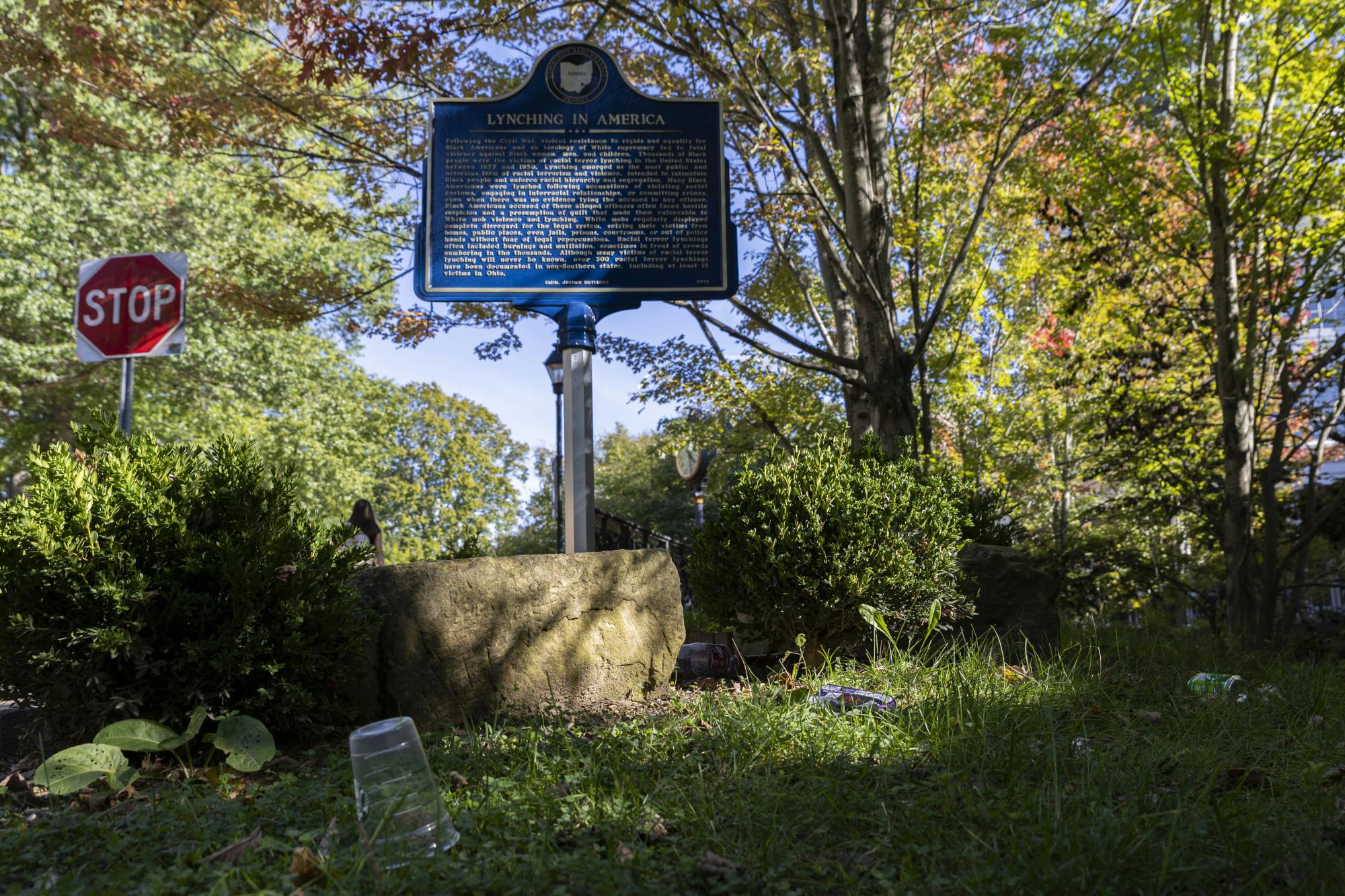
In fact, here in Athens, Christopher Davis, a farm laborer living near Albany, was accused of assaulting a white woman. Despite maintaining his innocence, before he could even get to trial, a racist white mob tied a noose around his throat, dragged and lynched him. On Mulberry Street, he has a memorial.
While extralegal and terroristic violence plagues Black people, the other half of this reality is the negligence and complicity of law enforcement and judicial entities in systemic injustice. Modern-day policing in the U.S. has roots in slave patrols.
The patrols began emerging in the late 17th and 18th centuries, as the colonies began bringing enslaved Africans over during the Transatlantic Slave Trade. This legacy set a precedent for unequal, biased and brutal law enforcement in post-Civil War constructions of policing.
On the other hand, both racist legislation and judicial precedents helped further subjugate the Black population in the U.S. Infamously, Black Codes and Jim Crow limited the freedoms and mobility of Black people, and court decisions such as Dred Scott v. Sanford or Plessy v. Ferguson further reinforced ideas of inferiority and discrimination against Black people.
Also, all-white, prejudiced juries further sealed the fate of Black people in the courtroom by supporting racist prosecutors, harsh sentencing and convictions. According to the Equal Justice Initiative, they “allowed for the murder, rape, assault, and economic exploitation of Black women and men, because all-white juries refused to hold the perpetrators accountable.”
As ugly as this history is, the residuals of centuries of systemic anti-Blackness were not extinguished after the Civil Rights Movement or the first Black president. The ugliness still permeates to this day, which is why in both the case of Wells and the many mysterious cases of hangings across the country, questions of concern are being raised toward every facet of society.
Doubt in Wells’ case or any of the victims of hangings is not about families looking to falsely incriminate, defame or spur conspiracy theories. Exhausting all angles, possibilities and options is a response built out of historic and systemic instances of negligence, prejudice and dismissal of Black life.
While some may feel these families’ insistence on a clear truth plays into conspiracy theories and hysteria, this particular response is devoid of empathy. Death is already a subject hard for many to grapple with, but deaths which resemble characteristics of some of the nation’s worst sins against humanity introduces a chilling possibility for the fate a loved one may have endured.
It is also incredibly exhausting to never feel completely settled because every facet of society through which these victims have to be filtered has historically failed victims.
Apathy for the history of racial terror is not rare nor is it shocking. Hordes of people saunter idly past Baker University Center and up Mulberry Street daily. They pass Davis’ memorial almost every day and may not even notice it is a memorial. It is essentially a bus stop at this point. Conversely, I notice how trash-ridden, defaced and littered the memorial of a lynching victim is left in a predominantly white town.
As contemporary cases of Black death pile up, concurrently, a victim from 150 years ago is still being disregarded.
It is complete negligence, the same ongoing negligence that prompts Black people to question every facet of society when seeking justice.
Dawnelle Blake is a sophomore studying journalism at Ohio University. Please note the opinions expressed in this column do not represent those of The Post. Want to talk to Dawnelle about their column? Email them at db948724@ohio.edu.