

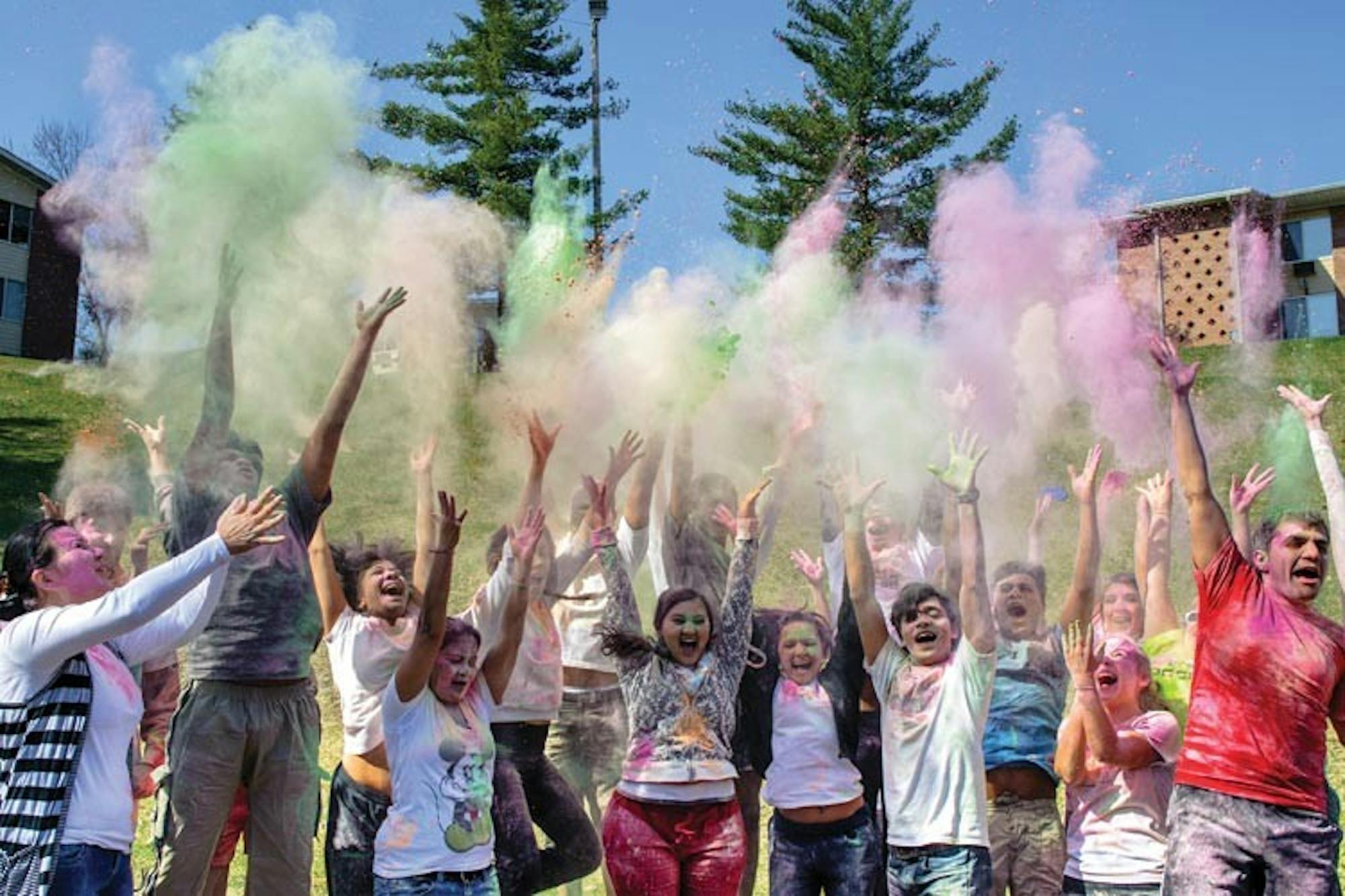
From The Color Run to the Festival of Colors, events incorporating the throwing of colored powder have been gaining popularity and spreading across the nation in recent years.
Many of these events draw their color-throwing inspiration from Holi, the Hindu celebration known as the color festival.
Holi is a holiday during late February or early March that celebrates legends of Lord Krishna, said Bhakti Shah, executive committee member of the Indian Students Association.
“We throw color and often times dump water to mimic the pranks he would pull on people,” she said. “There’s more that goes into the holiday, but that’s what has caught on in America.”
The Festival of Colors is described on its website as “the world’s happiest event” and as “the modern American version of a traditional Indian Holi Festival.”
The festival coordinators have kept some aspects of the traditional festival and Indian culture, but are celebrating it the American way with a variety of food and music, said Vrindavana Das, the project manager for the Festival of Colors.
“What we are trying to do is bring cultures together and to unite them in friendship,” he said. “It is a great opportunity to share and care with others in a community.”
One of the American aspects regarding Holi is making it a music festival, Shah said.
“I attended Color Dance —the Athens festival — when it happened, and even though it was different than what I am used to, it was fun,” she said.
Although the Festival of Colors and many other events have Americanized Holi, there is no problem with people wanting to play with colors, said Bhakti Shah, executive committee member of the Indian Students Association.
“With the genuine concept of Holi, you play with color the day after the actual holiday, so it’s not disrespecting anything,” Shah said. “When people throw color, it’s just promoting Holi, not hurting it.”
Jasmine Shafley, a junior studying dance, threw colors for the first time when she participated in the Columbus Color Run this past summer.
“I just liked this run because it promoted healthy living in a fun way,” she said.
“You didn’t have to know anyone, but it was still a community having fun together and making a colorful mess in a big city.”
Most people enjoy letting loose and hanging out with friends while having an excuse to make a mess, Shafley added.
No matter what the reason is for throwing color, these events help people get to know Indian culture, Shah said.
“People ask questions, and we like getting questions because we like helping people get to know our culture,” she said.
ao007510@ohiou.edu
@thisisjelli


