

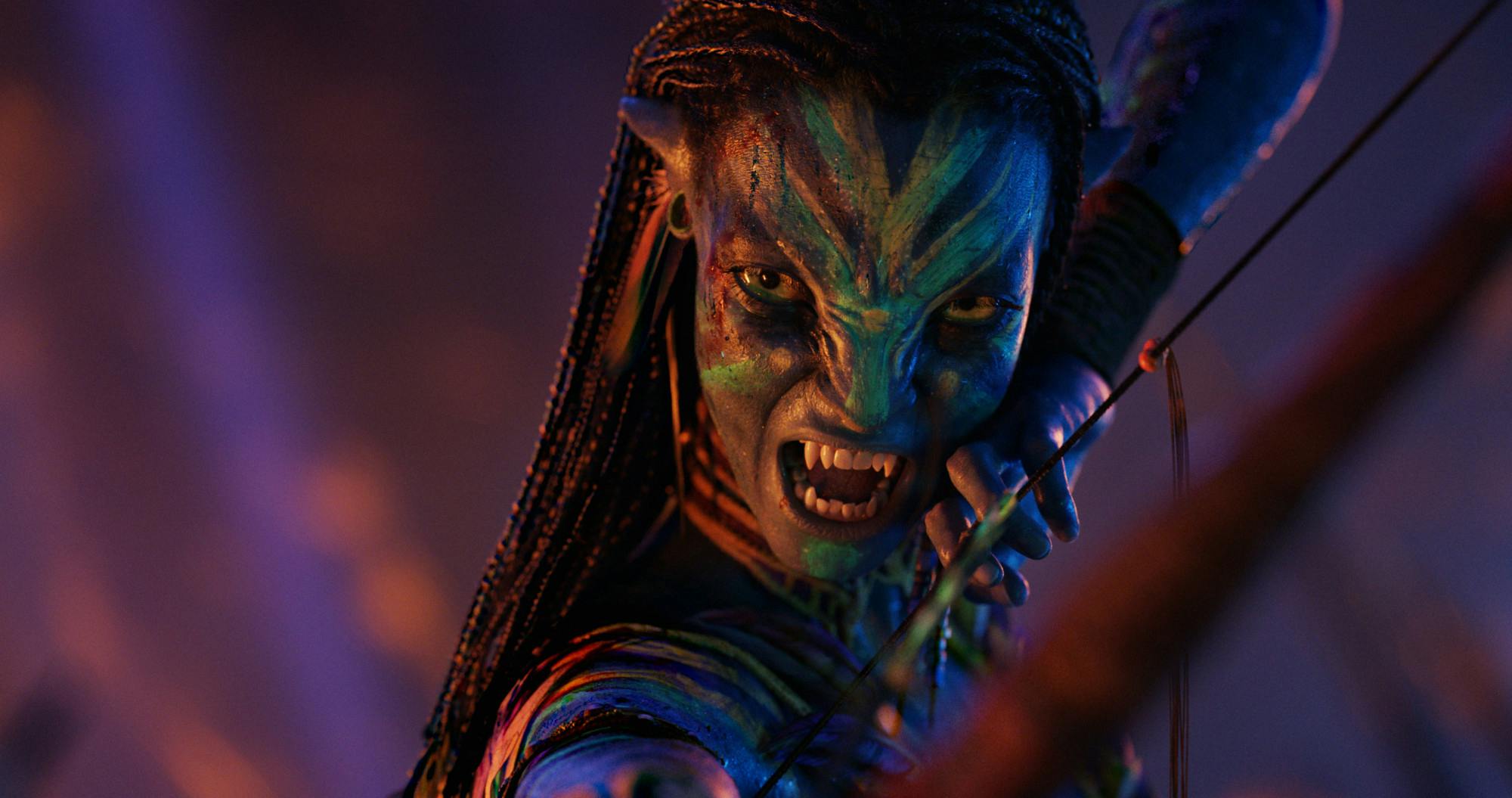
The third installment of James Cameron’s Avatar franchise was released to theaters nationwide on Dec. 19 under the title “Avatar: Fire and Ash.” “Avatar”(2009) introduced audiences to the world of Pandora with a fairly straightforward story, and “Avatar: The Way of Water”(2022) served as a strong, character-oriented sequel.
The trilogy has gained popularity for its boundary-pushing visual effects and its captivating, otherworldly setting. Fortunately, “Fire and Ash” upholds this tradition of spectacular VFX work and immersive worldbuilding. Beyond that, “Fire and Ash” stumbles when it comes to plot and character.
The film picks up shortly after where “The Way of Water” left off, with the Sully family mourning the loss of Neteyam, the eldest son in the family. Each character deals with Neteyam’s death differently, but the story seems to focus on Lo’ak’s grief the most, as he serves as the narrator throughout “Fire and Ash,” detailing his struggle and guilt surrounding his older brother’s tragic demise.
This family-oriented, character-based approach to storytelling serves as a strong foundation for the opening of “Fire and Ash.” Unfortunately, things soon become overcomplicated when the plot seemingly fragments into five separate storylines, burying any meaningful moments between its characters under a mountain of exposition, choppy editing and convoluted conflicts.
In fairness, the preceding film, “Avatar: The Way of Water,” set up a lot of plot threads “Fire and Ash” so often finds itself tangled up in; humanity’s desire for the rare substance “amrita,” Colonel Quaritch’s hunt for Jake Sully and for Quaritch’s biological son and adoptive member of the Sully family, “Spider.”
Along with Jake and Neytiri’s eldest daughter Kiri’s innate connection to the Na’vi deity Eywa, Lo’ak’s involvement with the Tulkun, Jake Sully’s acceptance of his role as Toruk Makto, and the impending war between humanity and the Na’vi all take up a fair bit of the film’s screentime. All of this proves to be too much for one film to juggle, even if that film stands at a whopping 3 hours and 17 minutes runtime.
Unfortunately, despite the rich worldbuilding of Pandora and the interesting ideas at hand, “Avatar: Fire and Ash” centers around its least compelling concepts. The first act is a mess that adds very little to the story, other than introducing the Mangkwon tribe or “Ash People," while the rest of the film fails to prioritize its most engaging characters while also serving as a less captivating retread of “The Way of Water.” The center of this overcluttered film is Spider, who more or less serves as a living, breathing MacGuffin, perhaps the most boring character in the entire franchise.
With that being said, “Fire and Ash” is not without its strengths. Sully and Quaritch’s dynamic evolves interestingly; the film looks fantastic (as per usual), its action scenes are awe-inspiring and exciting to witness and the newly introduced Ash People manage to steal the show whenever they are on screen. The leader of the Ash People, Varang, is a particular standout character, especially when she shares scenes with her fellow antagonist, Quaritch.
Unfortunately, despite being the namesake of the film, and being at the forefront of the marketing for “Fire and Ash,” the Ash People are often relegated to the sidelines in favor of the far less appealing human villains.
Overall, “Avatar: Fire and Ash” thrives when it focuses on the strengths of the “Avatar” franchise: fantastic worldbuilding, thrilling action, visual spectacle and Jake Sully and his relationships. This film is particularly interesting when it examines his dynamics with Neytiri, Lo’ak and Quarritch. In the same breath, it really drags when it centers around its human characters, particularly Spider and the dull, cliched RDA antagonists.
After “Avatar: The Way of Water,” James Cameron proved that his success with the franchise's first installment wasn’t a fluke; he proved that there was merit to the series beyond its technical mastery. “Avatar: Fire and Ash” had the potential to deliver another enthralling entry to the Avatar franchise, but it falls short.
Any potential for greatness that “Fire and Ash” had was squandered by a needlessly overstuffed story. While there were compelling and emotionally powerful moments throughout the film, they were undercut and overshadowed by the sheer glut of unnecessary scenes and plotlines.
Despite all of this, “Avatar: Fire and Ash” remains a testament to James Cameron’s ability to transport audiences to Pandora. Technical innovation, masterful immersion, and unbound creativity are all at work here, and they make for a fun, often breathtaking cinematic experience that must be seen in theaters. Though flawed, “Fire and Ash” leaves plenty of room for the “Avatar” series to grow in the next two installments, set to come out in 2029 and 2031, respectively.
Rating: 2.5/5


