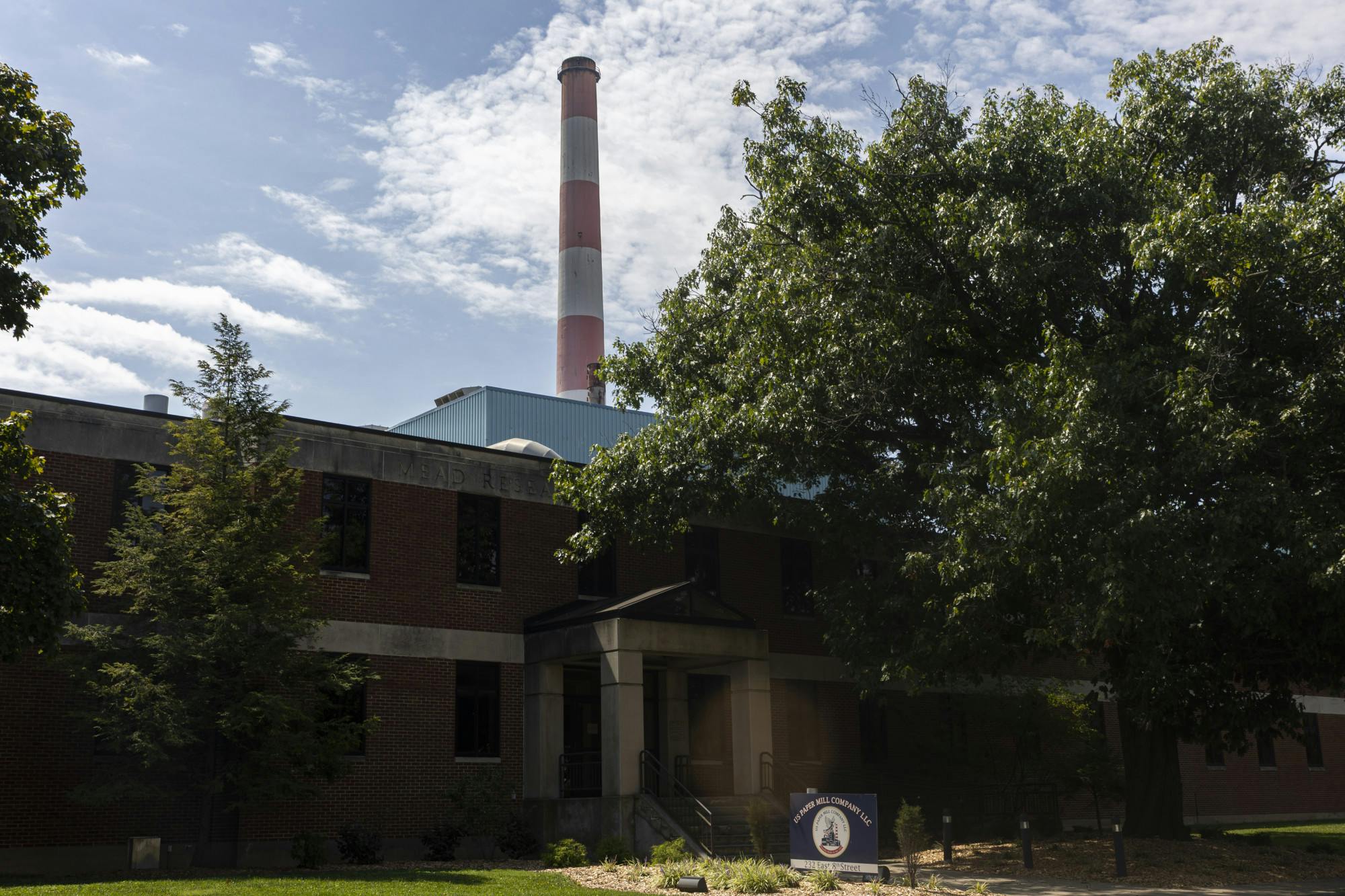
When Pixelle Specialty Solutions closed its Chillicothe paper mill, not only did 800 employees lose their jobs, but no one was left to regulate the toxic plume threatening to rise out of the groundwater underneath the site.
The U.S. Department of Energy defines a groundwater plume as a contaminated groundwater area beneath a mill site that contains radioactive or non-radioactive hazardous materials due to the uranium milling process.
The WearEver Aluminum factory operated in Chillicothe from 1948 until the late 1990s. Following its closure, the factory left a legacy of poisonous chemicals in the soil and groundwater underneath the site.
According to a fact sheet published by the Ohio Environmental Protection Agency, trichloroethylene, lead, cadmium and other metals were among the waste produced by the factory. Following EPA investigations that began in the 1980s, the waste was discovered to have become a plume of pollution in the groundwater beneath WearEver Aluminum.
Amanda Bowdle is a freshman at Ohio University’s Chillicothe branch studying computer science. Bowdle worked at the Pixelle mill for seven years before it closed and was unsurprised to hear about the pollution so close to where she was working.
Bowdle worked as a sheeter operator and didn’t manage the water pumps.
“I've always heard that there was water underneath the paper mill,” Bowdle said. “But I've never seen it with my own eyes.”
The Ohio EPA has worked with the current owners of the former WearEver facility, Howmet Aerospace, to install many wells over the years to monitor the groundwater. The Ohio EPA also attempted to treat the groundwater in 1999 with air sparging/soil vapor extraction, but stopped in 2006 when Ohio EPA and Howmet determined it was no longer effective.
According to the Howmet WearEver Facility Groundwater Monitoring Report, published in July 2026, the residences located southeast of the contaminated groundwater site are connected to the municipal water supply and are not at risk.
Two production wells located near the WearEver site, known as Collector Wells 17 and 18, feed into the groundwater beneath Howmet’s facility.
During low pumping or no pumping time periods, the groundwater is seen to likely flow east-southeast toward the Scioto River.
“The good news,” Throne said, “is that since the U.S. Paper Mill has taken over the paper mill site. They've been pumping enough water, even though they don’t use it all, to keep that plume at bay.”
The Ohio EPA ordered Howmet to increase its monitoring and submit a long-term plan to control the plume. According to the Ohio EPA’s fact sheet, if the plume was left alone, it could make its way to other public drinking water sources in about five years.
U.S. Paper Mill now intends to develop the old Pixelle site, which has served to develop nitrile medical gloves, into a multi-purpose campus.
Throne expressed his excitement about the potential industrial developments in Chillicothe.
“It was never really about replacing what was lost, it was about trying to reimagine that campus as a multi-use facility that supports a diversity of high-skilled, high-paying, high-technology jobs,” Throne said.