

Though the music industry isn’t exactly lacking in female artists, when it comes to certain genres, the boy’s-club mentality hasn’t quite vanished.
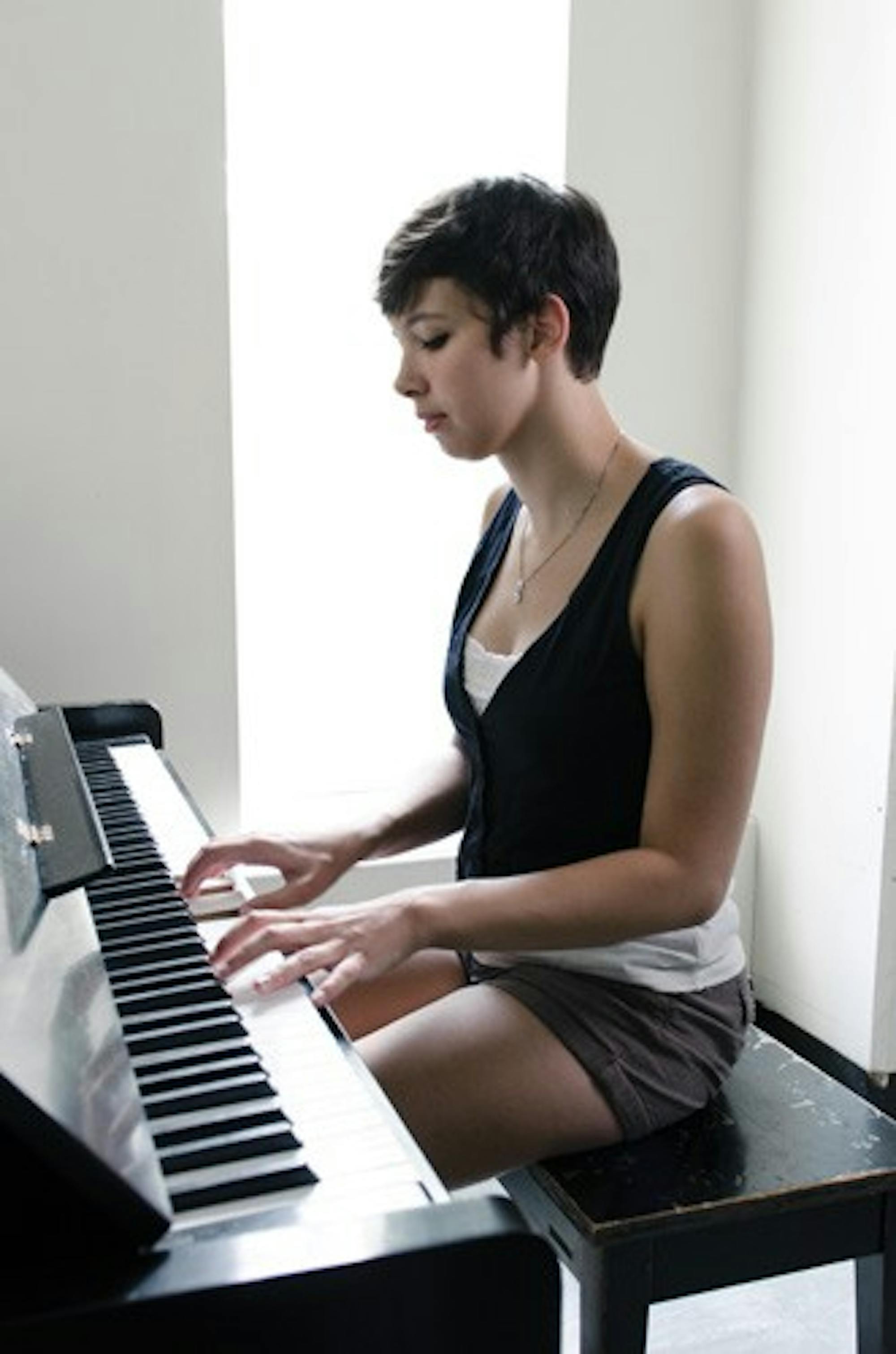
Kaitrin McCoy, a local singer-songwriter and Ohio University student, said one of the misconceptions of female musicians is that there is a certain type of music women should perform.
“There’s that genre thing, where (people think) women ‘can’t do’ rock music,” McCoy said. “Women are typically seen as producing prettier sounds, but (I’ve seen) women in bands (that are rock or hip-hop).”
Bailee Moore, who recently nabbed the top spot in ryanseacrest.com’s “Queen of Rap” poll, said she’s received negative comments about her gender on YouTube videos.
“There are people out there that straight up don’t think girls can rap at all,” Moore said. “No matter who you are, no matter what race you are, there are some guys out there that are just (not accepting).”
And it’s not just outright criticism that might deter women; in some genres, women face being far outnumbered by men. OU’s composition program for example, hosts about four female students, said professor Mark Phillips, who teaches all levels of composition.
“I want to go into movie scoring and video game scoring,” said McCoy, who is one of the few female undergraduates. “It’s a very male-dominated field, and it’s incredibly intimidating.”
Phillips said the School of Music has produced prize-winning female composers, adding the composition field is opening up to women.
“The situation is changing,” Phillips said. “But it’s changing somewhat slowly, and part of that is because the number of female students that enter the program is lower than that of men.”
McCoy said the proliferation of top female performers is inspiring to women, including her idols, such as Imogen Heap, Regina Spektor and Kimbra.
“For instance, I’m not a big fan of Taylor Swift, but (rise of women like her to fame) is encouraging for women,” McCoy said. “It makes women be like, ‘If she can do it, I can do it too.’ ”
Despite these stereotypes, being a woman has some advantages in the music industry, McCoy said.
“Female musicians can obviously bring the experience of being a woman to the table,” McCoy said. “It’s easier for women to appear more vulnerable than men. … Not because men aren’t as a gender, but because from an early age we’re taught that ‘boys don’t cry,’ but women aren’t held to that standard.”
McCoy added that especially with the singer-songwriter type of music, she often plays shows with one or more women, including a Sibs Weekend show that she played with a group of sisters.
Moore said despite some criticism, being a woman in the rap industry makes people take notice.
“It’s because it’s different,” Moore said. “The perfect example is having my first video title be ‘White Girl Raps Fast.’ It’s something that’s going to be shocking when you first see it or listen to it, and (makes people want) to stay up with what I’m doing.”
eb104010@ohiou.edu
This article has been updated to accurately reflect the female prize-winning conductors OU has produced.


