

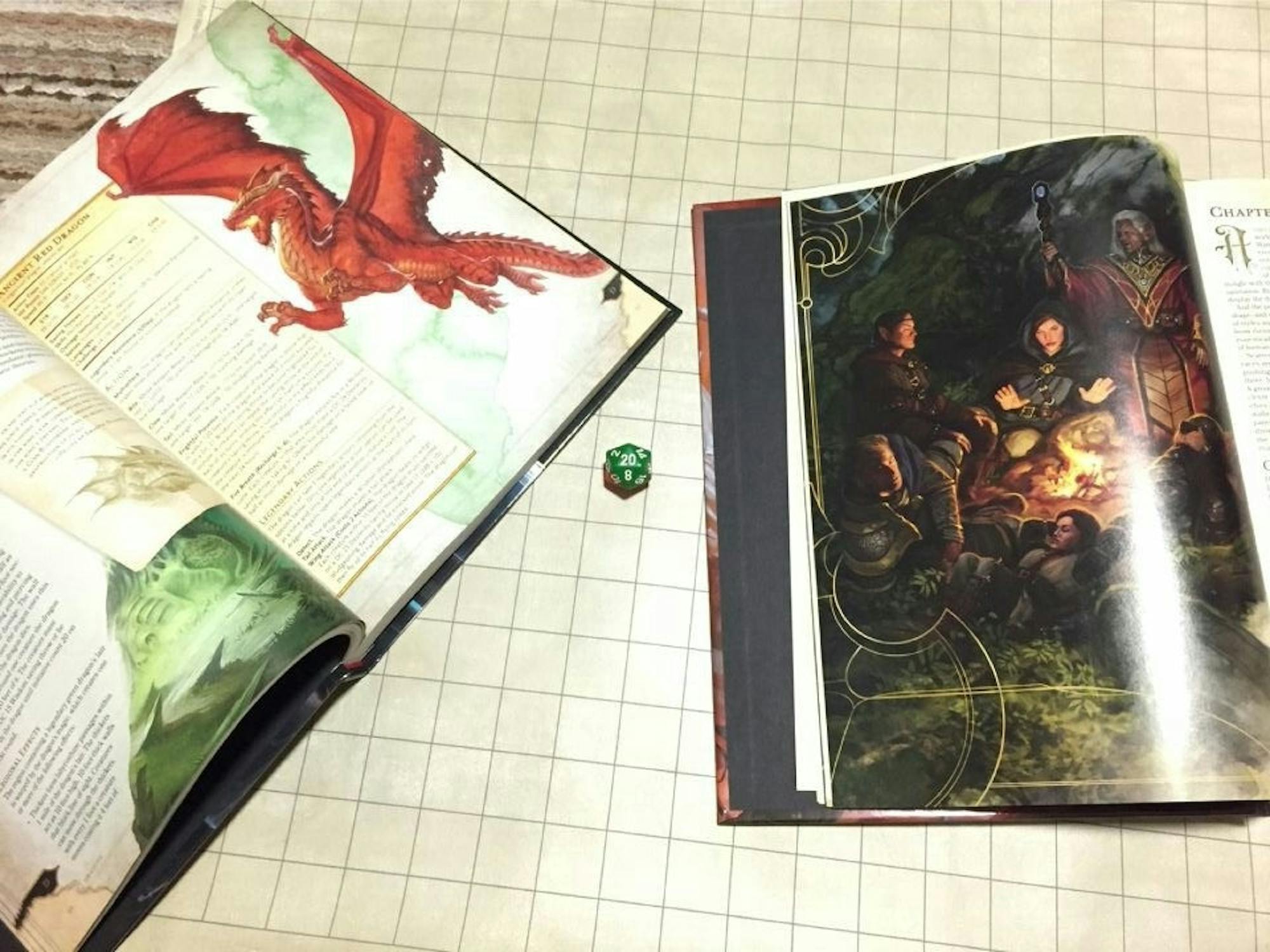
Ohio University’s lack of an official Dungeons and Dragons club has inspired one group of students to take matters into their own hands.
Despite being more than 40 years old, Dungeons and Dragons still remains popular. In 2014, D&D released their fifth edition of the game. According to a Forbes article, Nathan Stewart, the brand director of D&D believes that the newest release will be the most popular.
Dungeons and Dragons, commonly referred to as D&D, is a role-playing game which involves players create a character which will participate in an adventure orchestrated by the narrator, or the Dungeon Master. The rules vary from very strict, where a setting and quest is decided before the game begins, to very open-ended where players make up the rules as they go.
A group students living in Johnson Hall are embracing the game despite it not having a formal club.
Nicolas Paredes, a freshman studying history, was the first one to suggest playing.
“We were kinda just goofing around Johnson Hall, hanging out, and I was just like one night ‘Hey, I used to play this back home, I haven’t had a chance for a few months now, so let’s do it’, and then we started the group,” Paredes said.
The idea was instantly popular with nearly fourteen people wanting to play in the first game, according to Paredes.
Many students in Johnson hall have become closer because of the game, Paredes said.
“We got to know each other more through D&D,” Paredes said.
Alexander Schlosser, freshman studying finance, said he and many others in the group have never played D&D before coming to OU.
“I learned the game, like, (during) that first game,” Schlosser said. “(Paredes) was like ‘You want to play? You can be whatever you want.’ ”
Paredes said most of the group has never played before now and that it’s been a learning experience for many students.
Even though the group is not a formal organization, Paredes said they’re not deterred, and even prefer it that way.
“When you do it more informally, its more casual and it’s easier for newbies to come and learn the game,” Paredes said.
Initially, the group was more formal, with rules and a more structured meeting time, but that changed after their first game.
Paredes said that originally, the group used official books to orchestrate the games.
“I looked through the book and we were just like, screw it. So we took the dice and started screwing around.”
It’s the informal, meet on a day-by-day aspect that the group says they like best, and is why they don’t intend on becoming an official campus club in the future.
“There’s not the obligation to go, and I don’t think it’s the kind of thing that should have an obligation,” Schlosser said. “It’s more of like a spontaneous thing … like going outside and throwing the football around.”


