

For better and for worse, Ohio University has changed over the past 40 years.
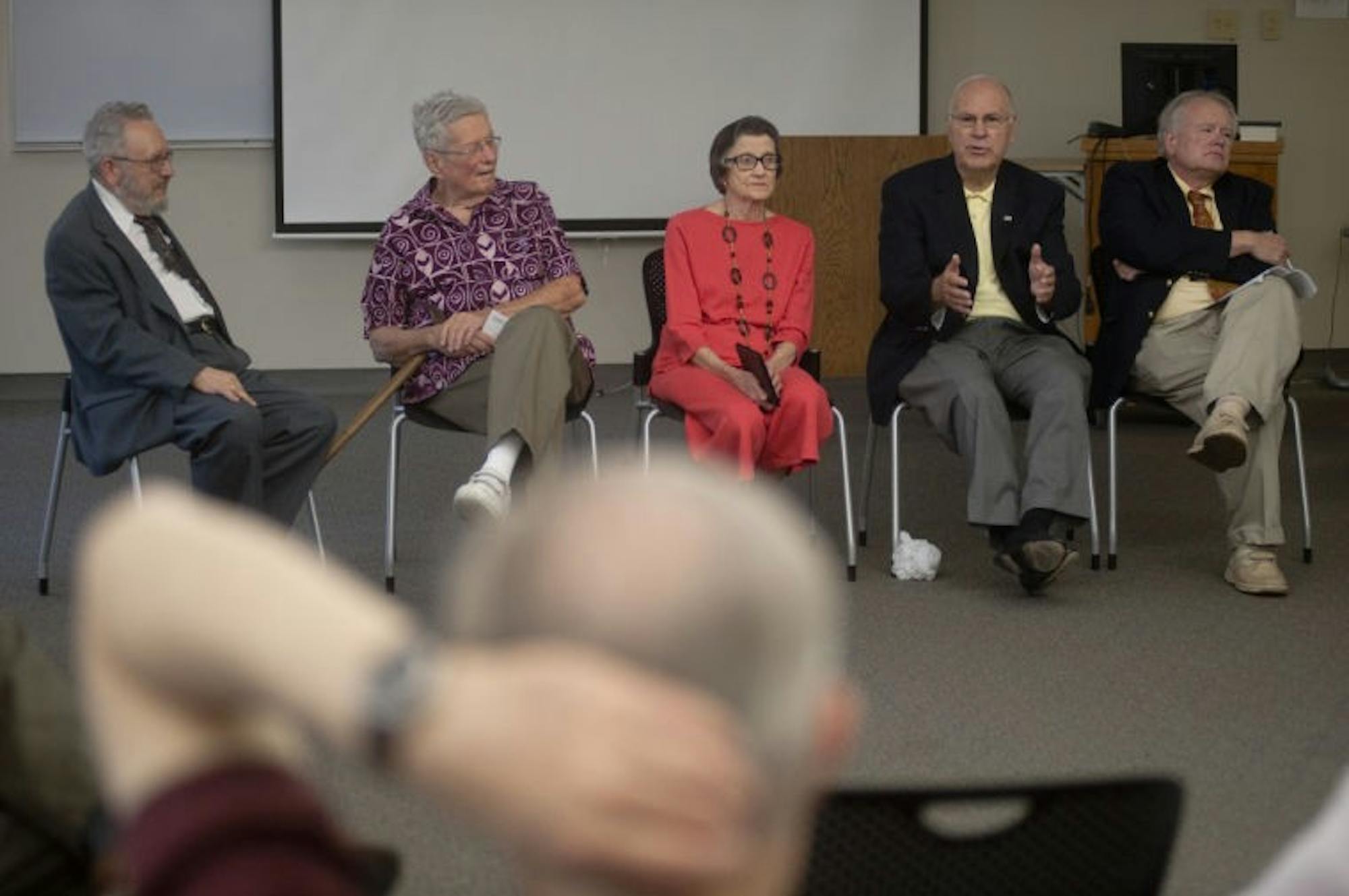
A panel of emeriti professors and retired faculty were invited by the Emeriti Association to speak about their experiences with the university during OU’s first Emeriti Day Saturday.
The Emeriti Association, which maintains the Emeriti Park near Baker University Center, consists of former faculty with emeriti status. George Weckman, president of the association, moderated the panel and organized the event.
The association especially wanted to address “the good ol’ days and the bad ol’ days” and the budget cuts and economic decline of the 1970s, which were much worse than today’s, Weckman said.
“Things certainly had to change,” Weckman said. “The world doesn’t stay the same; we maybe would like to think that our institutions are eternal and are exactly the same as they were... but they do change.”
The panelists touched upon the construction of the Convocation Center in 1965, the 1970 riots at OU and the various university administrations.
As an adviser to the OU chapter of Alpha Gamma Delta, OU alumna Jo Prisley had quite a lot to say about the changes in “young women and young men,” saying college-aged girls now dress in “hooker chic” when they go to the bars.
“I would never dream of going into a bar by myself,” Prisley said. “Now the girls go into bars, they travel in packs. Many of them will go with their friends, and then they break off from their friends, and they hook up.”
The worst decision OU ever made was to do away with curfew hours, Prisley said. Female students’ curfew was 10 p.m. Sunday through Thursday and midnight Friday and Saturday. Prisley also said that denim and flip-flops have caused many problems in the world.
“If I were in charge of the world, I would do away with denim, and I would never allow a flip-flop to be worn,” Prisley said.
Fellow panelist Richard Vedder, professor emeritus of economics, spoke about his experiences with the various administrations. He said that President Roderick McDavis’ administration has been the darkest period of OU’s last half century.
“There’s no clear academic focus or emphasis and key personnel hires have been spotty: some good, some very, very bad,” Vedder said.
Although McDavis has done a better job in the last four years of his presidency than in the first three, Vedder said, “we’re starting from a very low base.” McDavis’ conduct toward “his detractors and his enemies” has been very respectful and is a tribute to his character, he said.
The other two panelists were Guido Stempel, professor emeritus of journalism, and Alan Geiger, assistant to the president and secretary to the Board of Trustees emeritus.
km100299@ohiou.edu
@ThePostCampus


