The university didn’t move mountains this summer.
Instead, it spent $50,000 to haul one of its six award-winning trees to a home that would protect it amidst campus construction.
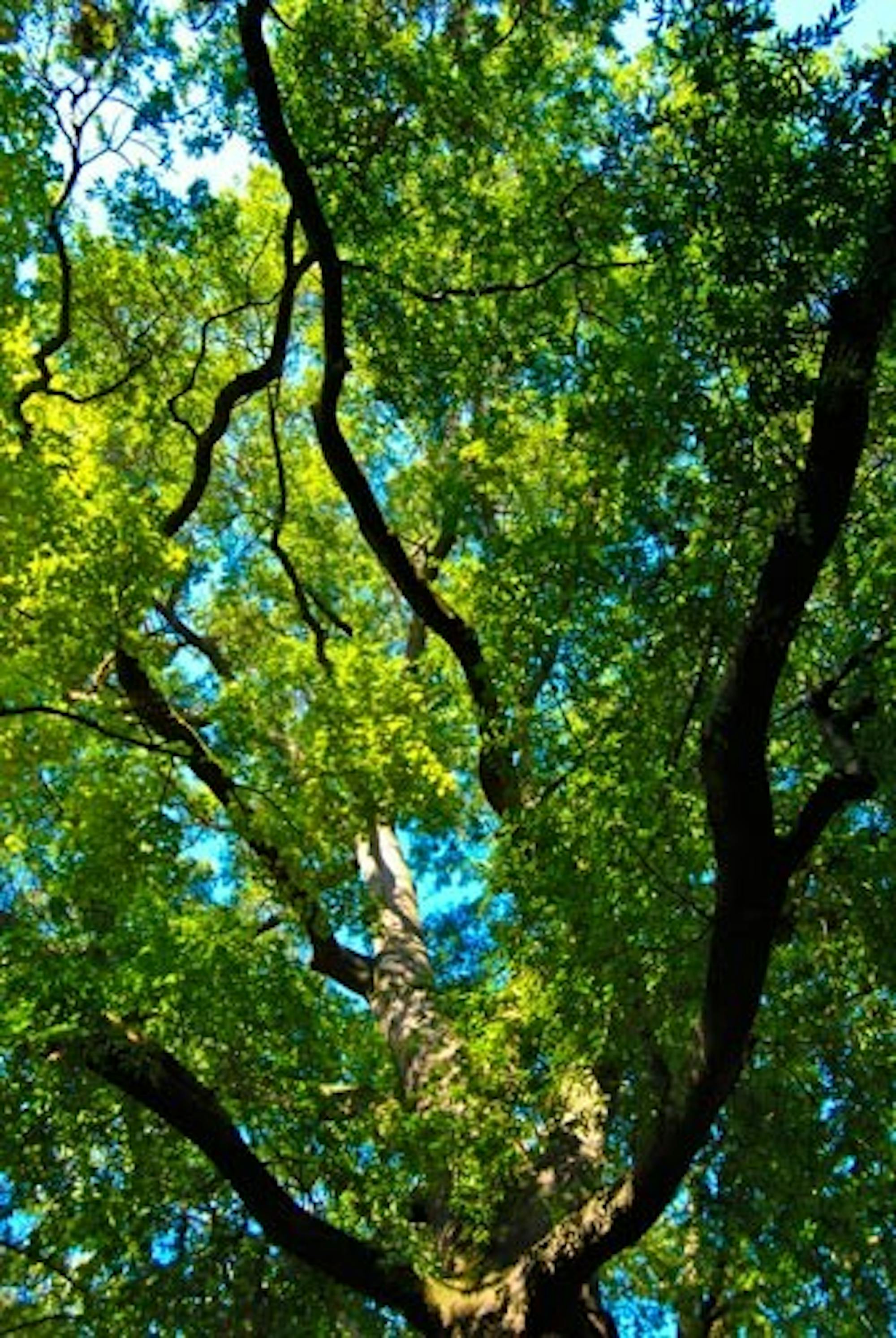
Ohio University’s Virginia Pine reached 79 feet at its former location near Wolfe Street Apartments before being carried to its current spot near Morton Hall.
“It’s remarkably lush, and I don’t use that word for pines,” said Susan Calhoun, OU’s landscape coordinator. “This special tree called for spending more money to move it.”
The move was worth it to maintain the history and natural beauty of the campus, Calhoun said.
The pine is a “state champion,” deemed by the Ohio Department of Natural Resources Division of Forestry’s Big Tree Program.
“(OU) is a very nice campus as far as the trees and the diversity of the different types of trees they have,” said Lisa Bowers, program administrator of ODNR’s division of forestry.
Anyone can nominate a tree for the Big Tree Program by submitting the species, location, height and circumference of the tree’s crown and circumference from four feet above its base.
ODNR will use that information to calculate a “score” for the tree and will travel throughout the state to track down the winners.
If the tree’s score is higher than average, an ODNR representative will visit the tree in order to verify its measurements. If the results are extraordinary, the tree get a spot on ODNR’s website.
“We have to periodically update the measurements, make sure the trees are still there and update the numbers,” Bowers said.
The Carolina Silverbell located next to Chubb Hall is another state champion, but it’s also one of the largest of its species in the nation, according to the American Forests’ National Big Tree Program.
Other state champions at OU include two Pacific Silver Firs, a Sweetgum at The Ridges and the Willow Oak by Galbreath Chapel.
The Silverbell is among the largest of its species in Ohio and a state champion, but John Knouse, a board member of the Athens Conservancy and a Glouster resident, said he questions whether the tree he submitted to the Big Tree Program is really a Carolina Silverbell.
“It would be very strange for the other species to reach this record high in southern Ohio,” Knouse said.
Knouse keeps his own updated list of impressive Southeast Ohio trees just in case ODNR’s database is inaccurate.
Although ODNR cannot always keep up with the tree growth in all of Ohio, Knouse said he appreciates the state’s effort to recognize old growth trees — those that have been undisturbed for decades.
“I realized years ago that if you want to preserve quality land and if you want people to have sympathy for nature, you really need to get people out in nature,” Knouse said.
Although ODNR doesn’t offer special tree maintenance or protection for its award winners, OU takes special care of its gentle giants.
The university spent $50,000 to maintain trees across campus, including those on The Ridges property, this summer — the same amount of money it took to move the Virginia Pine, said Harry Wyatt, associate vice president for Facilities.
“We could’ve planted 200 good-sized trees, but protecting our special trees is fairly easy and inexpensive too,” Calhoun said.
OU maintains trees with selective removal of weeds and proper pruning to keep their branches healthy and out of roadways.
Trees are also watered with bags that leak 20 gallons of water over a 24-hour period, an “IV for the tree,” Calhoun said.
Facilities doesn’t put chemical treatments on the trees, but it did use a BioFlex formula on the Virginia Pine to protect it during its move.
“Having trees for generations to come doesn’t mean just protecting our big trees but (protecting them on) a continuous cycle, particularly when they’re diseased or damaged, so we won’t be faced with a College Green area where the trees are just gone because they got so old,” Wyatt said.
dk123111@ohiou.edu
@DanielleRose84