Scripps College of Communication faculty finally tore down the painter’s tape and construction wrap covering the new Schoonover Center during finals week last semester.
But Ohio University isn’t yet done with the construction company that worked on the project. OU is suing Quandel Construction Group, Inc. after it took an extra semester to complete its portion of the construction.
The building’s first construction phase was delayed because a wall built in the Radio-Television Building was not in original blueprints. Several decorative accessories, such as cornices on the corners of the building, were also not properly delivered and further delayed the process, according to a previous Post article.
The university won’t release the court case’s details until it’s closed, said Harry Wyatt, associate vice president for facilities.
OU is not the only one taking Quandel to court. Several subcontractors have also filed against Quandel for not compensating them, including Spectrum Commercial Coatings.
Eric Bull, vice president of Quandel’s branch in Westerville, Ohio, has previously said the payment dispute stems from the university rejecting Spectrum’s work. As OU has yet to pay Quandel, Quandel cannot pay Spectrum.
Quandel isn’t involved in other ongoing university construction projects, Wyatt said.
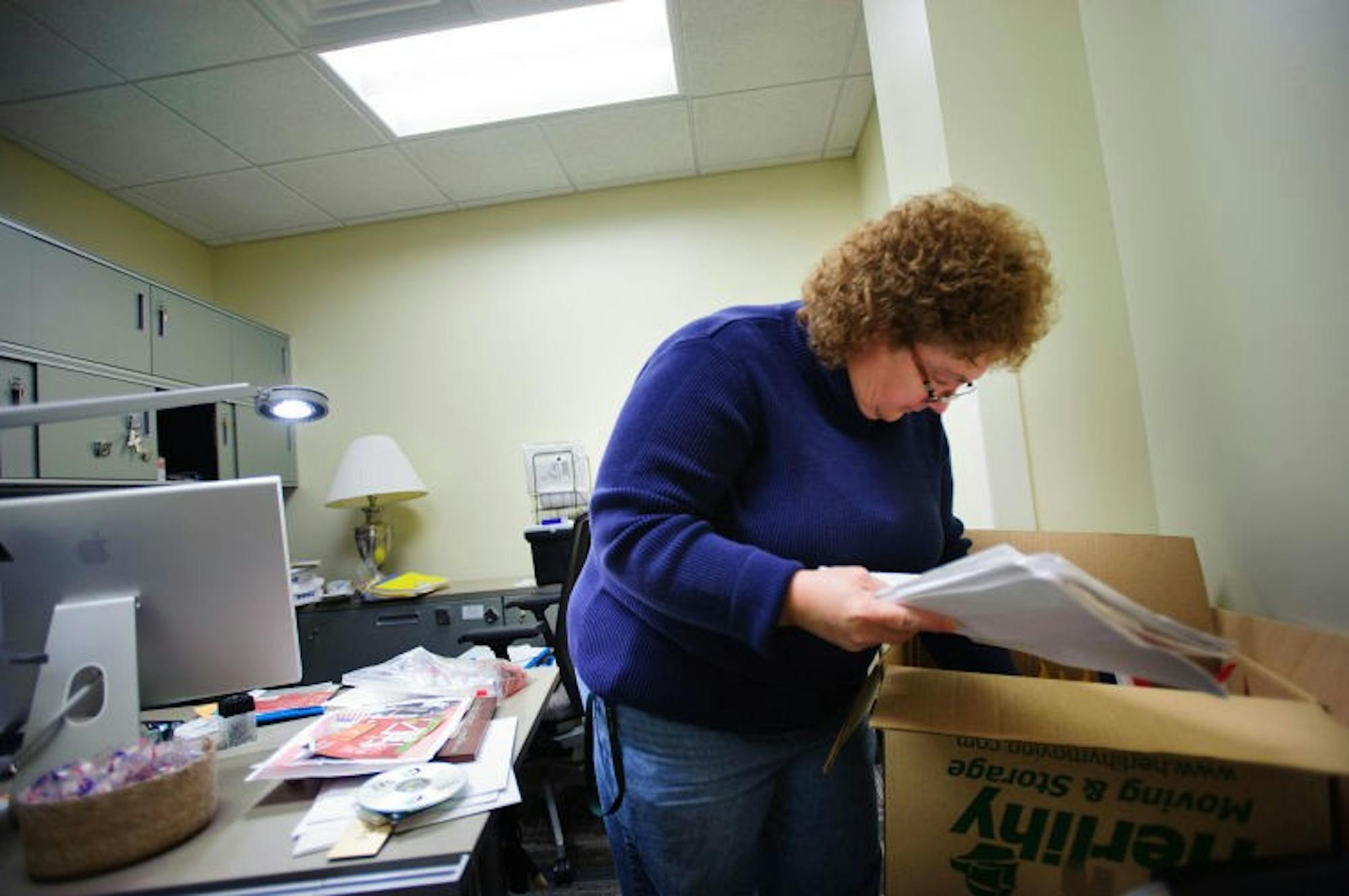
Only some faculty and administrators in the Scripps College, in accordance with “phase one,” moved into Schoonover during break.
The E.W. Scripps School of Journalism, the School of Media Arts & Studies and the college’s dean’s office uprooted from their offices across campus, where some had been for as many as 30 years.
The project, which began in 2012 after OU alumni donated $7.5 million for the project, started as an effort to bring together a college that had otherwise been spread throughout campus, said Scott Titsworth, dean of Scripps College.
“There’s not many places at all where students (in the college) have a chance to bump into each other,” Titsworth said. “There’s that opportunity for dialogue that will just naturally occur.”
Those who come in through Schoonover’s main entrance walk into a lobby and workspace, originally Front Room when the building was the old Baker Center. Students can gather around a table and connect their laptops to a projection screen at each workstation.
Schoonover visitors can also enter through a connecting entrance to the R-TV building on the first, second and third floors. A fourth floor portal is on the way, Titsworth said.
Televisions throughout the lobby will display announcements and students’ projects, Titsworth said.
“This digital signage is a way that our students can apply what they’re learning for digital communication,” Titsworth said.
The dean’s office is directly across from a lobby fireplace. The goal is to make students feel like the college’s administration is close and accessible, and to further demonstrate this, advising will be moved into space next to the lobby during the next phase of development.
The schools of Visual Communication and Communication Studies, as well as the J.W. McClure School of Information and Telecommunication Systems, will move in at the end of phase two of the project, which Wyatt speculates will be completed by the end of 2015 or beginning of 2016.
Those currently residing in Schoonover will also be waiting for the second phase for several new classrooms and spaces, Titsworth said.
The building, at its completion, will contain a multimedia lab in the basement and a large, tiered lecture hall that could also hold university events, Titsworth said.
After using his personal desk in his office in the R-TV Building since 1984, Don Flournoy, professor of media arts & studies, moved to an office in Schoonover Center with a university-provided desk personalized to his desires, he said.
In the R-TV Building, Flournoy built his desk so he could work while standing, but he was provided a desk already at his standing height in Schoonover.
“I have some idea as to whether it is raining, snowing, sun shining,” Flournoy said. “It’s such a relief to look out onto the College Green and see what a beautiful campus we have.”
Lynette Clouse, OU’s senior design and construction project manager, said after she held a vote from Scripps College faculty, she chose a set of office furniture that could be adjusted to several different positions.
“This is such a big school, there are a lot of different ways people work,” Clouse said.
The Global Leadership Center and Forensics team will eventually occupy the current Scripps building.
From the ground up:
November 2011
OU’s Board of Trustees resolves to begin construction on phase one of Schoonover Center in 2012 with a total budget of $19 million
November 2012
Scripps College of Communication receives a $7.5 million gift toward construction of the Schoonover Center
August 2013
Schoonover Center opening date is pushed back to late September due
to complications with a wall between the Radio-Television Building and the building
November 2013
Contractors resolve the issue concerning the wall, costing the university an extra $55,000, but push the opening further back because cornices arrived with the incorrect finish
December 2013
Faculty members begin moving into the building during finals week. They’ve had boxes packed since early August, said Don Flournoy, professor of media arts and studies
dk123111@ohiou.edu
@Daniellerose84