

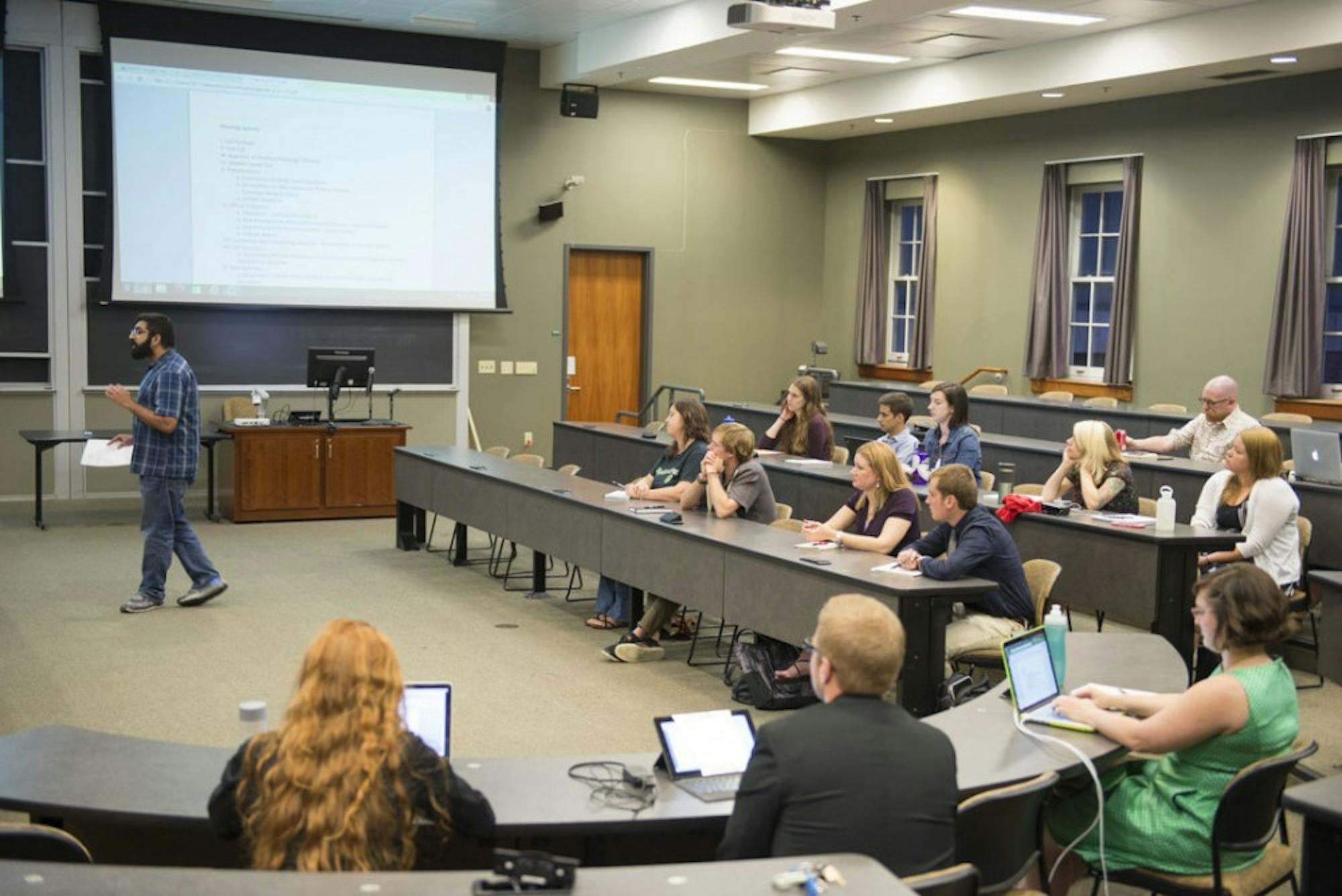
Between proposed presidential committee boycotts, general fee protests and a president having balanced a run for state representative in 2015-16, Ohio University’s Graduate Student Senate had a busy year despite having an incomplete executive council.
Now, led by an entirely new executive council backed by like-minded senators and new representatives, members of the next generation of GSS are ready for the new academic year, with all the challenges and triumphs it may entail.
A look back: General fee stirs discontent
In October, GSS moved forward with the passage of a much-debated resolution that effectively boycotted graduate student participation in presidential committees until OU President Roderick McDavis addressed concerns over the general fee.
The general fee has been a hot topic of discussion for graduate students, many of whom argue they are simply too busy to attend the free events covered by the mandatory fee tacked onto tuition and fees each semester.
During the 2014-15 academic year, the university collected more than $27.4 million from the student general fee, according to a previous Post report. Nearly 34 percent of that total, or about $9.3 million, was allotted to OU Athletics.
Though the body later voted to nullify the boycott after McDavis addressed the senate’s concerns during a special meeting in Alden Library, the general fee is likely to remain a crucial topic of discussion for the group. New GSS President Ian Armstrong hopes for “new approaches” to addressing the issue with administration.
More meetings could mean more productivity
Though the last year and a half saw the general body meet only once per month, a resolution passed in the spring with hopes to create a new momentum by having the group meet twice per month.
“There are a lot of difficult issues that graduate students continue to face, and we (the executive team) could pick specific issues for the senate to focus on, but I don't think that is the best course,” Armstrong said in an email. “I want to encourage the senate body to dictate the direction that we take this year, as much as possible, so that we are unified in our efforts.”
Board decisions to be addressed
Despite not meeting during the summer, GSS members have been staying in touch with ongoing university decisions, such as the Board of Trustees’ recent approval of the Perry and Sandy Sook Academic Center, which will be open exclusively to student-athletes.
As of February, the university had raised more than $5.6 million for the center, according to a previous Post report.
“The GSS executive officers are not in support of any university policy or program that segregates students from their peers, such as the Sook Academic Center for student athletes,” the executive council said in a public statement. “We believe instead that the university should focus on strategies that foster inclusivity and cohesion among all students.
What’s Next for GSS?
Looking forward to the coming year, Armstrong hopes to go above and beyond the implementation of the “Five Point Plan,” the ticket upon which his party ran during the election in March.
The plan focuses on five core issues in the graduate student community: transparency from OU's administration, providing an outlet for graduate students to voice concerns, improving community and university relations, creating a stronger graduate student community and improving health and safety conditions.
The executive council hopes to further unify supporters by addressing the specific issues graduate students face.
“I would expect to see work on issues such as: healthcare policy with respect to international students on campus, new approaches for tackling the graduate general fee, pushing for a parental and extended sick leave policy for graduate students, as well as increasing the number of professional development events focused towards graduate students,” Armstrong said.
@lauren__fisher
lf966614@ohio.edu


