

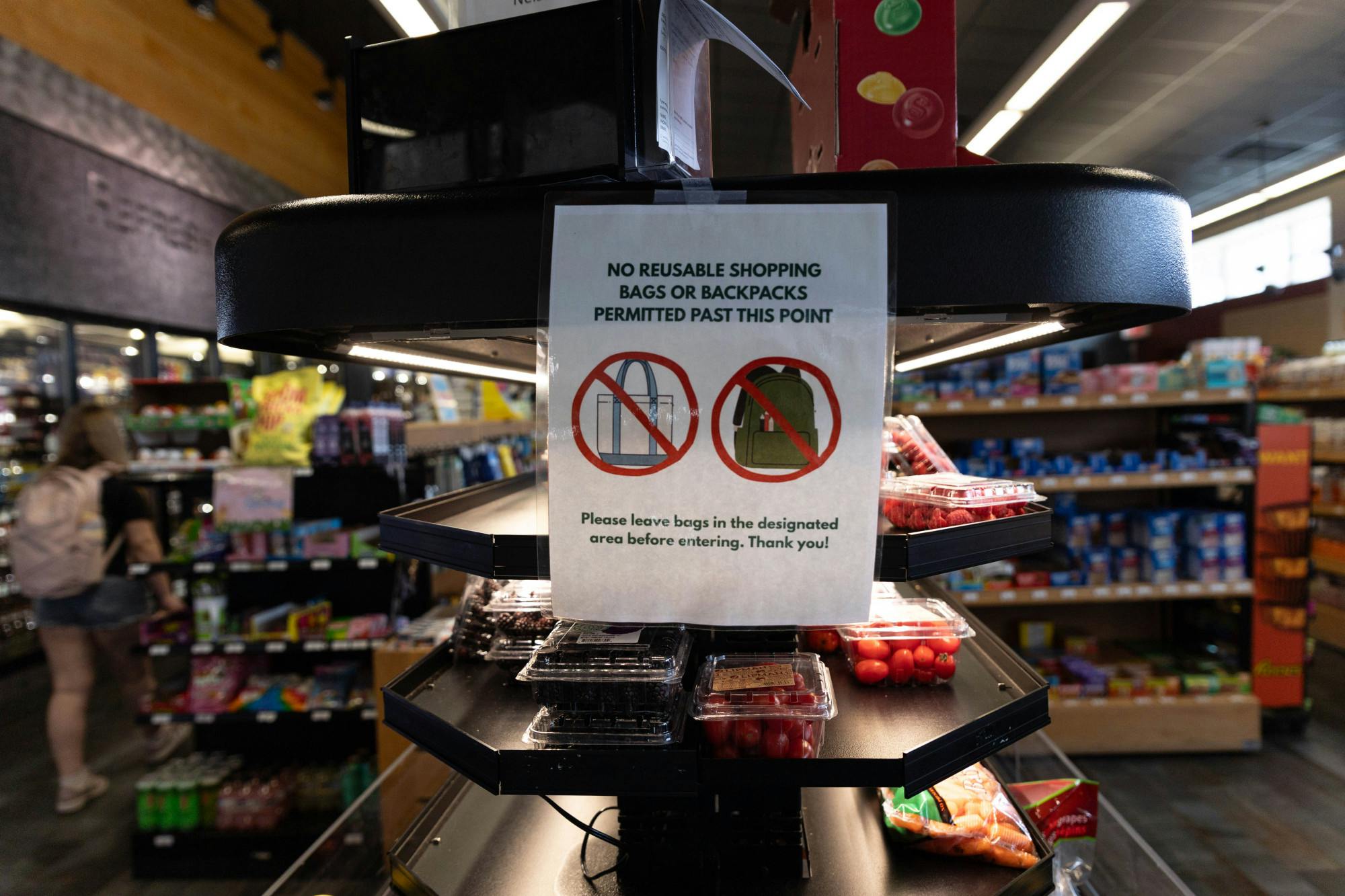
Campus markets at Ohio University recently implemented new measures in response to increased theft, including a ban on backpacks and large bags inside stores.
At market entrances, metal racks have been installed for students to leave backpacks, reusable shopping bags and large purses before entering. The change took effect when students returned from spring break.
On March 15, posts on the anonymous student forum YikYak drew attention to the new policy.
One user said, “Welcome back to school! Starting today you cannot have backpacks in the market. There is a shelf at the front you are required to put your bag at. If you don’t, you can’t come in.”
Students responding to the post expressed frustration with the change. One commenter said, “So can I have my $150 of theft protection back?”
Chito Trinidad, assistant director of retail operations, said theft has had a measurable financial impact on Culinary Services.
“Market theft has had a significant impact on the overall profitability of Culinary Services, especially because the items taken are often high‑value products,” Trinidad said in an email. “Protecting the financial health of our markets is essential to ensure we can maintain proper staffing levels and continue offering high‑quality products and services.”
Trinidad said reducing theft is critical to maintaining both the quality and variety of products available in campus markets. Continued losses could lead to fewer options for students.
The bag ban follows what Trinidad described as a significant increase in theft, often involving backpacks or reusable bags used to conceal items. Metal racks have been placed near entrances at locations including Jefferson Market and Boyd Market.
Signs posted on the racks instruct customers to leave bags before shopping.
Trinidad said the increase in thefts was heavily aided by backpacks and other reusable bags concealing items.
“We determined that additional measures were necessary to protect University resources—resources that ultimately support students through services and scholarships,” Trinidad said in an email.
Danie Scamorza, a sophomore studying marketing and management who has worked in Jefferson Market since September 2025, said she has witnessed instances of theft but not daily.
She recalled one instance of a person caught stealing from the market by off-duty police officers.
“He did not react too well to it,” Scamorza said. “He completely broke down a little bit, which was interesting, but I haven’t seen anything else other than that.”
Scamorza said she does not anticipate the new mandate of leaving bags stopping the theft issue.
“People are really creative when it comes down to different ways that they can steal,” Scamorza said. “I personally think banning the backpacks is kind of a good thing, but at the same time, it’s tricky for students who are just passing by on their way to class. I think it definitely causes a problem.”
Both Trinidad and Scamorza noted how busy the campus markets can be, with students quickly passing through. While the racks might reduce theft, they could also slow down the shopping process.
“They just need to honestly find ways that aren’t going to interfere with students' commute through Jeff (market),” Scamorza said.
Trinidad said similar measures are becoming more common across university markets in an effort to reduce theft.
“This approach is also consistent with common practices at University convenience and grocery stores, which often face similar levels of theft, particularly in locations with heavy foot traffic or a mix of on‑ and off‑campus customers,” Trinidad said in an email.
If theft continues, Trinidad said the university may need to reconsider the range and quality of items offered in campus markets.


